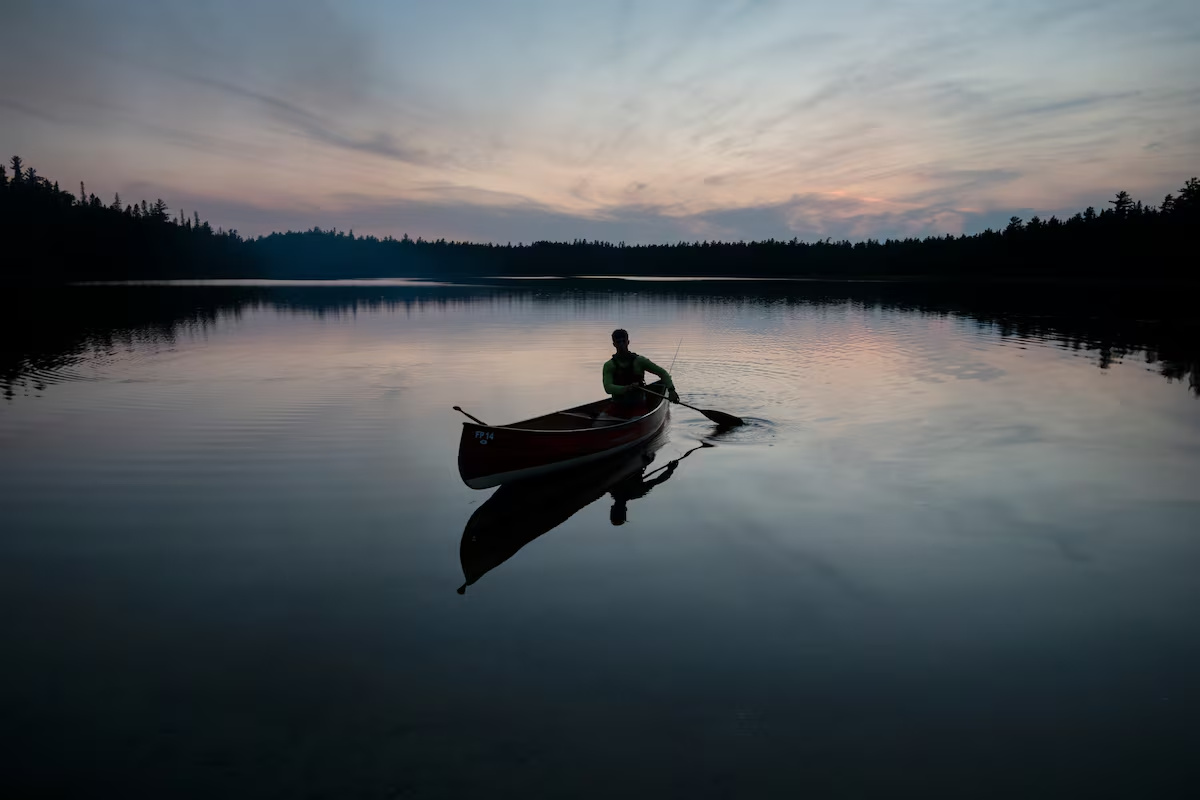
Since 1995, a non-profit organization operated entirely by volunteers has been running trail maintenance programs that aim to clear and monitor the conditions of canoe routes in the Temagami region of northeastern Ontario.
This is not just simple trail maintenance. Instead of clearing easier routes, the Friends of Temagami are preserving the original Nastawgan, an Anishinaabe word for the traditional network of travel ways.
It is arguably the largest remaining intact network of traditional Indigenous trails in North America.


“It’s a very complex land management area in that it’s a combination of seven provincial parks, 14 conservation reserves and the remaining area being Crown land,” notes Mike McIntosh, president of Friends of Temagami. The group’s volunteers work to clear the Crown land portions of the network.
Over eight days, a group of six people – and one dog – covered approximately 38 kilometres, including six kilometres of portage routes.

john sopinski and fred lum/the globe and mail,
Source: OPENSTREETMAP

john sopinski and fred lum/the globe and mail, Source: OPENSTREETMAP

john sopinski and fred lum/the globe and mail, Source: OPENSTREETMAP
A portage connects two bodies of water, often with rocky launching points at either end. It typically involves some uphill and downhill over narrow and overgrown paths. One portage a little more than a kilometre long involved deep mud holes that threatened to pull shoes off, followed by a long boulder field to navigate.
It’s a lot to manage while carrying up to 25 kilograms of gear, let alone canoes.
Volunteers usually carry most of their gear – packs, food barrels, fishing gear – in the first trip, drop it at the end of the portage, and then return for the next load.
Along the way, volunteers clear away brush and overgrown foliage, widening the path so future visitors can navigate the portage more easily.
From left, Ben Chamberlain, Sarah Pihel and Mike McIntosh chat at a Temagami campsite while Chase, a Belgian Malinois, sits in the tent belonging to Globe and Mail photographer Fred Lum.
During those return trips, volunteers carry loppers to clear away brush and overgrown foliage, widening the path as they go.
If there’s a tree across the portage, the trip leader, Mr. McIntosh, uses the chainsaw to clear it. It usually takes two or three trips to carry all the group’s gear from one end of the trail to the other. If we were counting steps, then the six kilometres of portage routes would mean covering an actual distance of closer to 19 km.
As they clear overgrown paths and remove fallen trees, volunteers install signs along the portage indicating the locations of camping sites and thunder boxes (open-air backcountry toilets) to aid future visitors.
Mike McIntosh assembles a pre-made thunder box while Ben Chamberlain and William Maki dig out a hole near the Eagle Lake campsite where the box will be installed.
Campsite maintenance is part of the gig, too. Mr. McIntosh said the group typically builds about 20 thunder boxes a year – open-air backcountry toilets. He said he is planning a “build party” at his canoe shop in the spring to make more of them for the next season.
While these maintenance trips can be hard work, volunteers usually have time for a relaxed coffee and breakfast before heading out for the day’s work. When they make camp in the afternoon, they try to find a campsite early enough so they can have some downtime to relax, sit around the fire and inevitably share past canoe trip stories.
At the end of the day, the group convenes by the campfire to relax, share a meal and swap stories.