
Open this photo in gallery:
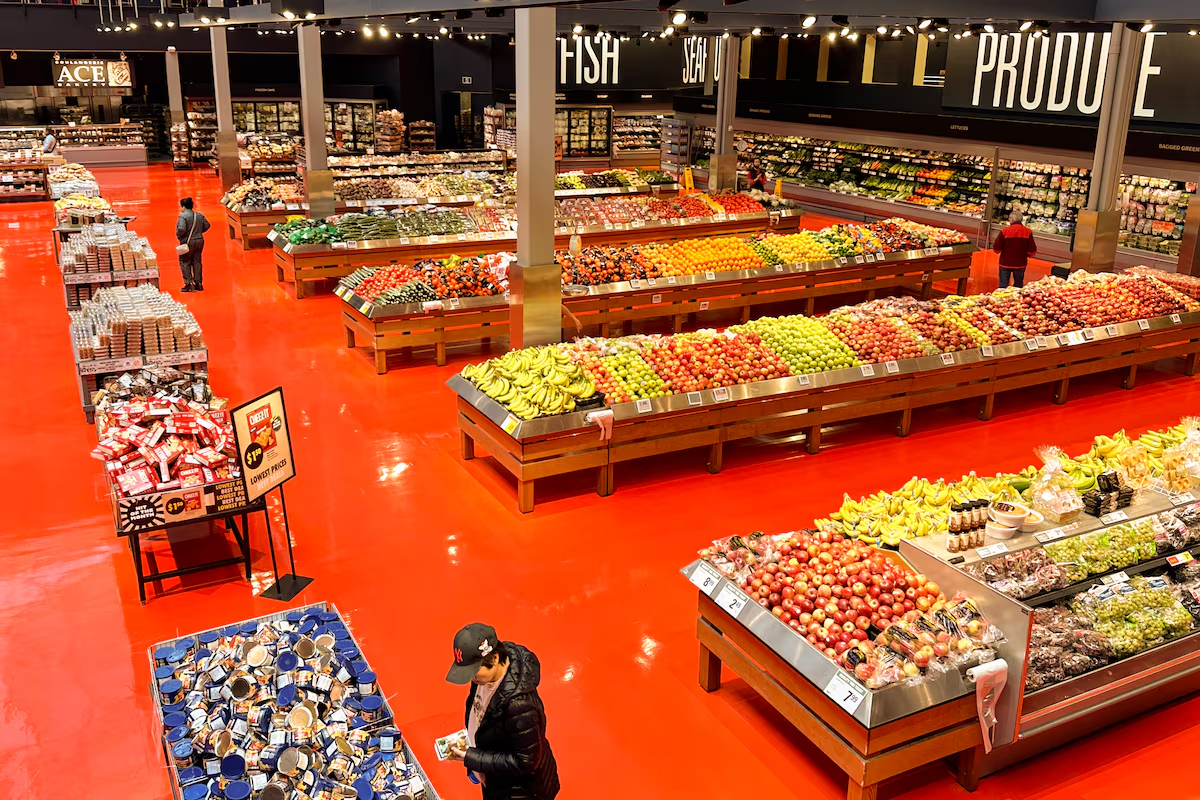
Shoppers browse goods in the produce section of a Loblaws in Toronto.Chris Young/The Canadian Press
At a Loblaws grocery store in Toronto on Tuesday, Matthew Avenins and his girlfriend Sarah Baldwin took care to select produce from Canada.
Keeping their dollars at home is their way of protesting, Mr. Avenins said, a practice they have pursued since early 2025, when U.S. President Donald Trump launched his trade war against Canada.
“The more that we can support our own economy, the better. The less reliant we are on the U.S., the better off we’re going to be,” he said at the Loblaws on Dupont Street in the city’s west end.
The couple also abandoned their March travel plans to attend a music festival in Houston, to further avoid supporting the U.S.
As Loblaw Cos. Ltd. recently learned, escalating tensions have reinvigorated the “elbows up” movement that has led Canadian consumers to avoid U.S. travel and prioritize buying Canadian goods.
Initially, Loblaw was among the retailers that lent its support to the cause, slapping a “T” symbol on shelf labels to identify U.S. products that were subject to Canada’s retaliatory tariffs.
The Big Guide to Canadian Shopping
By last fall, after Ottawa had pulled its countertariffs, the “T” markers were removed, Loblaw spokesperson Youmna Rab said. Signs indicating the country of origin of products were removed last week, she said.
However, public pressure from the renewed “Buy Canadian” trend has pushed the national grocer to bring back the labels that identify where grocery items are sourced from – and to restore its “T” signage as Canada’s new countertariffs roll out.
“We are reinstating the T symbol on shelf labels for products sourced directly from the U.S. that are affected by tariffs. Customers will begin to see the T symbol appear as affected products are identified and shelf labels are updated,” Ms. Rab said in an e-mail.
“As Canada enters another period of trade uncertainty with the United States, we are once again taking steps to give customers clear information about products affected by tariffs and make Canadian products easier to identify,” she added.
Inside the Loblaws grocery store on Dupont Street on Tuesday, red Maple Leaf tags lined the shelves. A sign hanging above stacks of broccoli said “Product of The U.S.A.” in the bottom left corner, while across the aisle a similar sign above another stack of broccoli displayed the Canadian alternative.
David McLachlan, 64, was at the store to pick up his daughter after she finished a shopping trip.
Opinion: Premiers now lead the charge in the trade war. Ottawa must recognize that
When Mr. McLachlan buys blueberries for his cereal, he said the first thing he checks is if they are Canadian grown. Mr. McLachlan said he’s been resolute in buying Canadian since Mr. Trump first threatened tariffs last year, and he won’t buy any American produce – even if its cheaper.
“I’m going to pay more for Canadian stuff every time. I’m voting with my wallet,” he said.
Ellen Goddard, agricultural economist and professor emerita at the University of Alberta, was not surprised Loblaw reintroduced the labelling measures, especially after the “shocking” Canada-U.S. trade deal collapse on Friday.
“It was probably a surprise to Loblaws, and they probably thought, ‘Oh dear, this is not the time that we want to be seen to be not providing information to allow people to support Canadian purchasing,’” she said, noting grocers don’t want to risk losing trust with consumers.
Prof. Goddard said updating produce labels, signs and flyers to display the country of origin is a logistical “nightmare” for grocery stores.
To ensure products, such as strawberries and peaches, are stocked consistently across a national grocery chain’s stores, retailers often have to quickly source products from different countries, including the U.S., she explained.
Andrew Coyne: The whole world is watching as Canada stands up to Trump
The company’s earlier move to stop displaying countries of origin was likely designed to eliminate the risk of any labelling mistakes, Prof. Goddard said.
Loblaw has previously been punished for inaccurate labelling by the Canadian Food Inspection Agency, which has cracked down on Canadian grocers for “maple washing,” a phrase that describes products being inaccurately or misleadingly identified as Canadian.
In March, the agency announced it imposed $47,000 in fines on five business for the practice since April, 2025, including two $10,000 penalties in January on grocery stores owned by Loblaw. A spokesperson for the company apologized at the time.
Back at the Toronto Loblaws parking lot, Stephanie Turner loaded shopping bags into her car. She said she sometimes travels to three grocery stores in one day to get all of her food and ensure that its all Canadian.
She said she makes a point of buying Canadian to show her friends and family that people can band together to fight against U.S. tariffs.
“We want to support our friends and merchants here to make sure that Canada remains the amazing country it is,” she said.