
Open this photo in gallery:
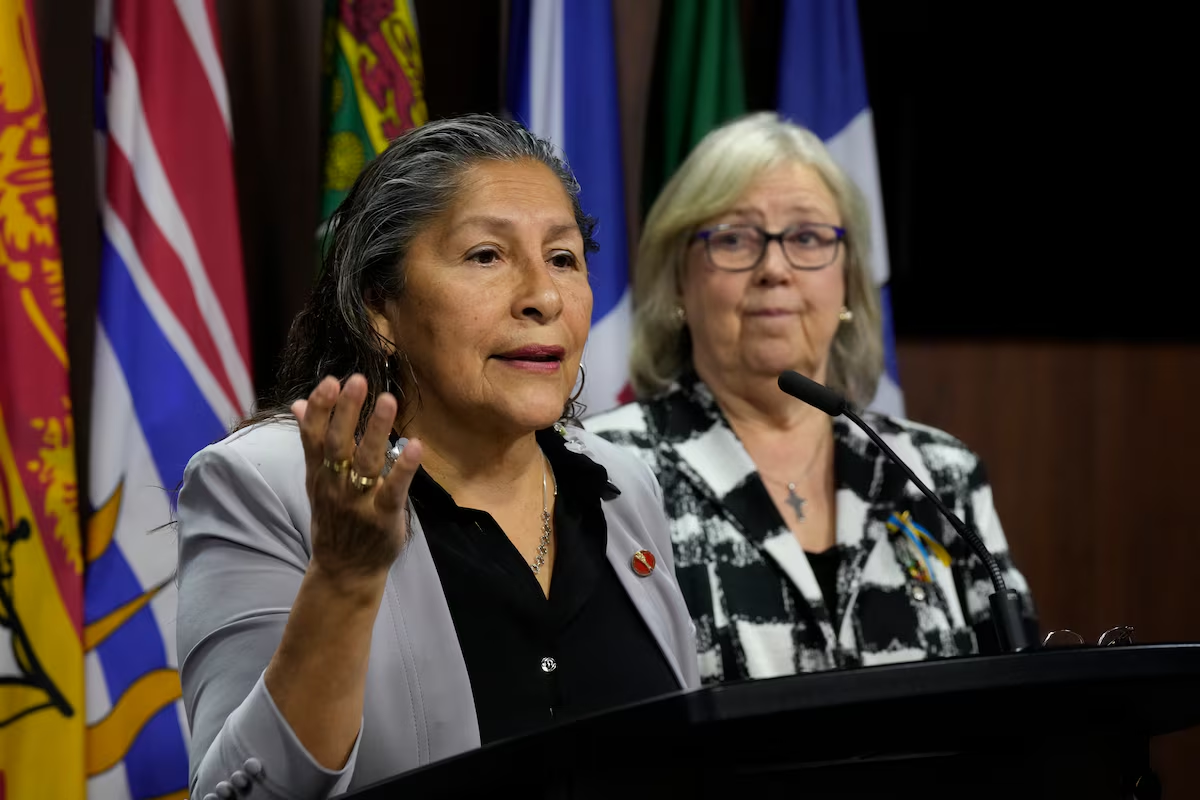
Green Party Leader Elizabeth May looks on as Sen. Rosa Galvez speaks during a news conference on Parliament Hill on June 17. In response to Bill C-30, Ms. Galvez said ‘we cannot let politicians make the decisions that science should be doing.’Adrian Wyld/The Canadian Press
Canada’s goal of boosting trade with countries outside the United States could be thwarted by its new pesticide rules, a senator warns.
Bill C-30, an omnibus bill implementing the spring economic update, passed both the House of Commons and the Senate last week.
The legislation includes a change to Canada’s Pest Control Products Act that allows cabinet to override Health Canada and authorize the use of banned pesticides in the interest of economic or national food security, or in response to “seriously detrimental infestation.” Ban exemptions can last for up to six years.
Sen. Rosa Galvez, an expert in pollution and its effects on human health, said the change works against the government’s goal of diversifying trade.
She said Prime Minister Mark Carney “is saying that we must absolutely find other clients” outside the U.S., “other markets for Canadian products, and this is non-coherent with that.”
“We cannot let politicians make the decisions that science should be doing,” she added. “It’s very dangerous.”
How Saskatchewan’s soft power’ laid the groundwork for Canada to diversify trade
Galvez said France rejected Canadian lentils in 2025 due to residual levels of the herbicide diquat.
“With respect to pesticides, the approach that is used in Europe is really precautionary,” she said.
The federal government has set out to double non-U.S. exports over the next decade. The government’s spring economic update said non-U.S. goods and services exports increased by $33-billion in 2025 over 2024.
The Liberals have boasted about signing at least 20 strategic trade and defence agreements around the world over the past year.
Bill C-30 also made amendments to the Canadian Food Inspection Agency Act to allow cabinet to override some laws to protect national economic security, regional economic security or national food security.
The National Farmers Union has pushed back against those changes, calling them “contrary to Canada’s democratic governance norms” in a submission to the House of Commons finance committee. It said the changes also come as the department cuts its research capacity.
“Exempting certain persons, things and/or activities from the CFIA’s authority, combined with reducing the agency’s capacity even further, would increase the probability of widespread economic, health and environment costs, making Canada more vulnerable to economic and food security crises instead of solving them,” said the union.
Alexandre Bergeron, a spokesperson for Health Minister Marjorie Michel, said in an e-mail that “the health and safety of Canadians will always be the priority.”
He said the government has amended the Pest Control Products Act and the Canadian Food Inspection Agency Act because rising food costs are a major source of anxiety for Canadians.
“With respect to situations in which economic security may be prioritized, these authorities are intended to be used only in exceptional circumstances and are not exercised lightly,” he said. “They would allow for the temporary use of certain pesticides under specific conditions when the Governor in Council considers it necessary to protect Canada’s economy or food security.”
Federal proposal to amend food safety laws sparks concern from union, non-profit
Bergeron said the government will be required to clearly explain any such decisions and to justify them.
The federal government’s website says pesticides can pose risks to public health and the environment, which is why they are highly regulated products.
Bronwyn Roe, healthy communities program director at Ecojustice, said the amendments to the pest control law are alarming because they allow politicians to override science-based decisions.
She said additional amendments included in Bill C-31, which have not yet been passed, would eliminate mandatory re-evaluations of the health and environmental risks of pesticides.
Roe said Canada already has weaker pesticide regulations than many other jurisdictions, including the European Union.
“The EU bans several pesticides that are still in use in Canada and the EU is Canada’s third-largest agricultural market, so this could have real consequences for our ability to trade with countries in the EU,” she said.
“I would certainly agree that we shouldn’t be limiting the markets that we can trade food to due to lax pesticide regulations.”