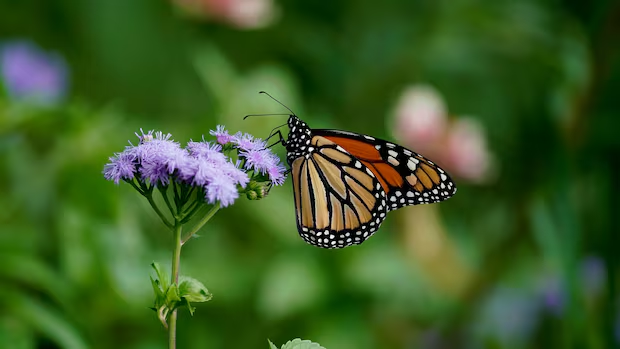
MaryAnn Lepp has never seen so many monarchs go through their magical metamorphosis in her garden — counting 20 caterpillars munching on her swamp milkweed in a single day this week.
She’s among hundreds of Canadian monarch enthusiasts witnessing an apparent boom emerge in backyard milkweed patches flourishing amid wet and hot conditions on parts of the Prairie this summer.
“This is chrysalis No. 2 … I’m so excited,” Lepp says, scanning her garden for monarch cocoons in La Broquerie, about 60 kilometres southeast of Winnipeg.
“We’ve seen a lot more butterflies this year than we have in the past.”
Conservation experts can’t say for certain whether favourable weather is the main thing driving the surge, which butterfly nerds are giddily chronicling in social media groups like Manitoba Monarch Mission.
But they can say the wave of anecdotal reports of caterpillars, chrysalises and monarch butterflies — known for their epic annual migration between Canada and Mexico — is a good sign for the federally endangered species.
“We’re seeing lots and lots of monarchs this year in Winnipeg, tons,” said Marika Olynyk, curator of the Living Prairie Museum, which just wrapped its annual monarch festival.
 A monarch caterpillar chows down on swamp milkweed leaves at the museum Wednesday. (Bryce Hoye/CBC)
“There’s sort of been a steady amount of caterpillars, chrysalises and butterflies almost all summer long.”
The tall grass prairie preserve in Winnipeg hosts many native plants pollinators love, including several milkweed varieties.
Monarch butterflies enjoy nectar from milkweed flowers, but they have a broad enough palette to sup from a number of flowering plants, including the pokey-looking meadow blazing star in full bloom at the prairie museum.
But monarchs are very picky at the caterpillar stage. The so-called “cats” only eat milkweed leaves.
Despite scores of people like Lepp planting milkweed, it and native wildflowers still aren’t nearly as plentiful or widespread as they were historically due to the conversion of native grasslands to farmland.
Habitat loss is the biggest threat facing monarchs, Olynyk said.
“Tallgrass Prairie used to cover huge amounts of the centre of North America. Almost all of it is gone,” she said.
“One of the things that we see as we lose the species, we’re also losing the habitat. Monarchs are a really good symbol of that species loss and that habitat loss, unfortunately.”
 One of two monarch chrysalises to pop up in the swamp milkweed patch of MaryAnn Lepp’s garden in La Broquerie, Man., this week. (Submitted by MaryAnn Lepp)
Ottawa faced calls for years to upgrade the legal threat level for monarchs from “special concern” to the more critical “endangered” label due to perceived gaps in protections.
The Committee on the Status of Endangered Wildlife in Canada, which advises the federal environment minister, listed the monarch as endangered in 2016.
It wasn’t until December 2023 that the federal government did the same, making it illegal to harm or capture monarchs at any stage of development on federal lands.
The only way researchers from across North America can estimate how many are left is through counting how many acres of trees are covered with monarchs in the forest wintering grounds in Mexico.
“We’re only at about 50 per cent of the sustainable population right now for monarchs. So, although a lot of people are helping, and there’s a lot of awareness about this species, we’re definitely not out of the woods,” Olynyk said.
 Olynyk holds up a City of Winnipeg map with hundreds of pins denoting known gardens and outdoor spaces where people have planted milkweed for monarchs. (Bryce Hoye/CBC)
Monarch numbers have also been “bumping” at the native prairie garden at the Assiniboine Park Zoo, says Laura Burns, conservation programs manager at the zoo.
Conditions have also been favourable for an even more critically endangered butterfly.
“We have species that maybe don’t lend themselves as well to being on posters or being on Instagram, like the Poweshiek skipperling,” Burns said.
The less-showy Poweshiek skipperling facing even more extreme odds and is teetering on the brink of extinction.
The only place you can find them in Canada is in one small patch of native grassland in southeastern Manitoba, Burns said.
 Laura Burns gingerly releases a Poweshiek skipperling butterfly, reared at the zoo, on a lazy Susan flower growing in a tall grass prairie patch in southeast Manitoba in July. (Submitted by Assiniboine Park Zoo)
The zoo breeds and releases Poweshiek skipperling, hoping to help them get a foothold. After nearly a decade of doing so, there is a glimmer of hope this summer.
“We saw more Poweshiek than we’ve ever seen before. We saw them in areas where we hadn’t seen them ever in the past, and it seems like we’re taking those first steps toward recovery and that our releases are actually making a great impact on the population,” Burns said.
“And it seems that maybe these weather trends this year have been helping not just monarchs, not just Poweshiek, probably other butterflies as well.”
WATCH | Butterfly species booming this summer:
These endangered monarchs are booming in wet, hot prairie summer
Monarch butterflies are booming on parts of the Canadian prairie, thanks in part to a wet and hot summer that’s produced a healthy population of flowering plants and milkweed that the endangered species depends on.
Zoo staff will be helping monarchs more this fall by placing itty-bitty radio transmitters on adults as part of a Canadian Wildlife Service project to track their perilous migration south to Mexico.
In the meantime, enthusiasts like Epp remain committed to ensuring caterpillars and chrysalises under their watch get a fighting chance to grow wings and fly away.
“It’s really about saving our planet. It’s about creating community with nature and with living things around us and, you know, we’re part of it,” she said.