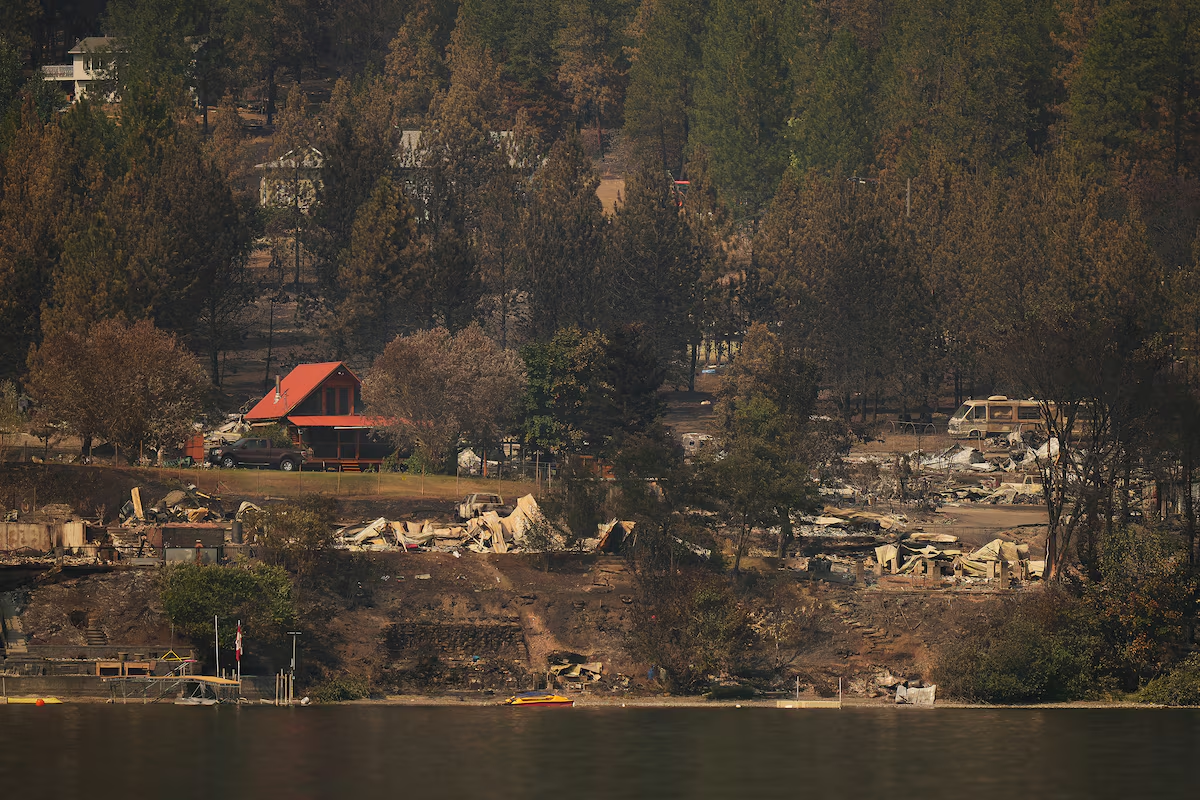

Open this photo in gallery:
Properties on Okanagan Indian Band land that were destroyed by wildfire, in Vernon, B.C., on Tuesday.DARRYL DYCK/The Canadian Press
As wildfires bore down on communities in British Columbia’s North Okanagan region, Gena Barzan turned her thrift store in Vernon into an essential-goods supplier.
She and her volunteers are doling out necessities to those fleeing the fires. That includes offering a comforting ear to those facing the loss of their homes and pets.
While the emergency support services centre is keeping busy assisting people, many evacuees are also in need of a hug.
“We hold them and tell them, we’re very sorry, and just try to comfort them and help them with whatever we can,” Ms. Barzan said. “You feel for these people because they’ve lost everything.”
Her operation in Vernon provides donated toiletries, snacks and “every pet need they could possibly want” to hundreds of neighbours suffering with loss because of the Bradley Creek wildfire.
Opinion: As wildfires rage, it’s a moment for carbon removal technology to shine
Okanagan Indian Band Chief Dan Wilson said Tuesday that 30 homes of band members and 200 non-band homes have been destroyed in the wildfire, which started late Friday and prompted the issuing of evacuation orders Saturday.
He described the event as “surreal” and said the scope of destruction was just sinking in.
With winds gusting up to 115 kilometres an hour, the fire spread quickly.
“The point that I really want to make to everyone is that the fire spread so fast that some of our members only had five minutes to evacuate,” Mr. Wilson said.
He said that when he took a helicopter tour of the area, at the northern end of Okanagan Lake in the B.C. Interior, his community was almost unrecognizable.
Mr. Wilson said he could see how close they came to losing key infrastructure, including the powwow arbour, a daycare centre and the new school, all of which were saved by aircraft saturating the area with water.
Where does wildfire smoke actually come from? When we’re talking about wildfires and the smoke in the air, it’s natural to think about the trees that are burning and the carbon that’s in the branches and leaves. But that’s only part of the story.
Reserve resident Louis Fred and his wife, Shorty, said they barely made it out on Saturday, with the wind-driven flames on their heels.
“I’ve been living here all my life, and I’ve really never seen anything like this one here, this weekend here,” Mr. Fred said. “Even 2021 was bad. It was huge. But the wind wasn’t nothing … compared to this one.”
The BC Wildfire Service said the province had about 120 active wildfires as of Tuesday, with roughly 50 of them burning out of control.
Major fires are active in the Fraser Canyon, Thompson-Nicola and East Kootenay regions near communities including Boston Bar, Clinton and Kimberley.
Officials warn things are likely to get worse this week.
The southern Interior will enter drought conditions with hot temperatures and dry lightning, creating new fire starts and exacerbating the challenge of existing wildfires, Cliff Chapman, director of provincial operations for the BC Wildfire Service, said in an update Tuesday.
B.C. wildfires force more evacuations as wind gusts fan flames
Kelly Greene, Minister of Emergency Management and Climate Readiness, said the province has 37 evacuation orders in place, affecting 8,000 people.
The orders triggered by the Bradley Creek fire expanded on Tuesday, as the Regional District of North Okanagan added more than 40 properties because the fire blocked some road escape routes.
Jeff Dunn, the fire centre manager in the Kamloops region, said the Bradley Creek fire had not grown much since the cold front that brought high winds moved through on Sunday. He said they were quickly trying to get control lines around the fire in order to try to hold it when the weather shifts again over the next few days.
The wildfire also caused extensive damage to power lines in the area, with at least 150 poles needing to be replaced and 1,700 customers still without power, BC Hydro said in a statement Monday.
Ms. Barzan said she’ll keep providing pet and human food for weeks, maybe months.
“Vernon is a city, but it’s still a tight community. We know these people, most of them, we’ve seen them, we’ve talked to them. It’s personal,” she said.
With reports from The Canadian Press