
Open this photo in gallery:
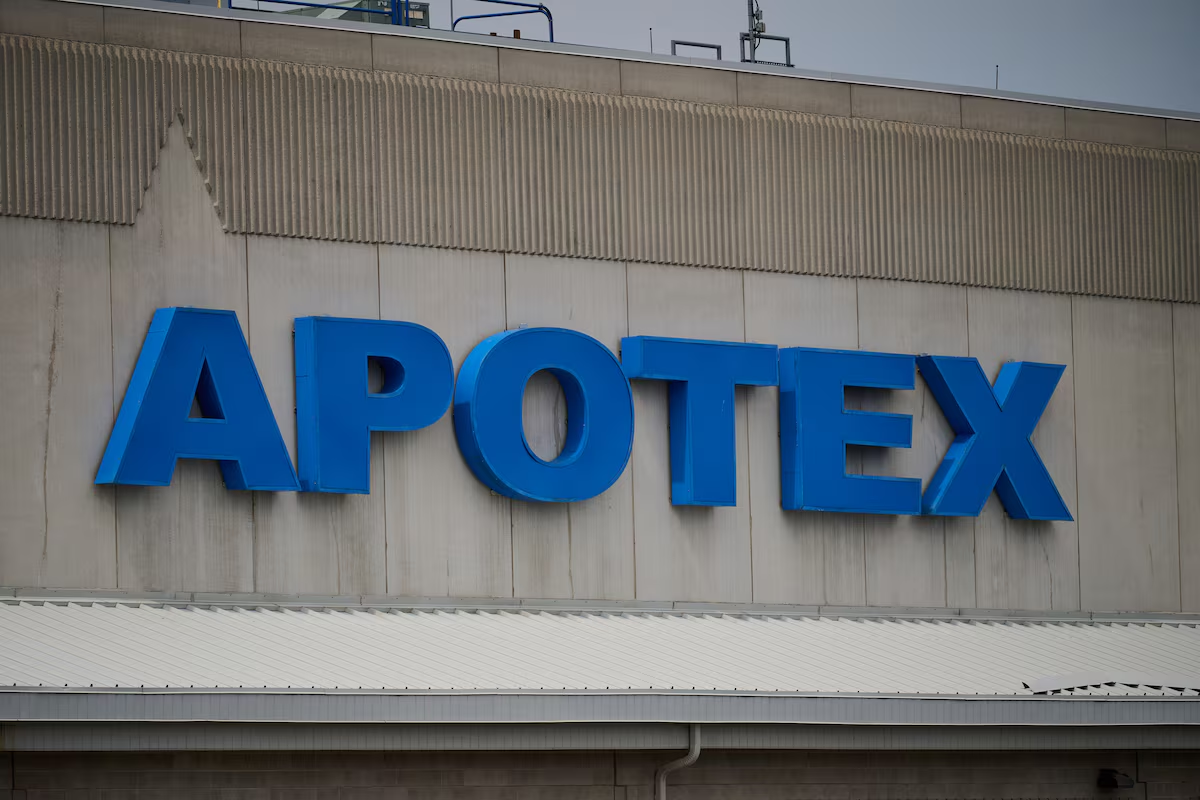
An Apotex pharmaceutical manufacturing facility in Richmond Hill, Ont., on June 9.Sammy Kogan/The Globe and Mail
As the Canadian drug maker Apotex Health Corp. APTX-T faces potential impacts from fresh threats of U.S. tariffs, analysts say the stock is still well-positioned for growth.
On Friday, the Toronto-based Apotex traded around $37 a share – more than 30 per cent higher than its debut trading price of $28. The stock rebounded late last week, after falling in the wake of Washington’s plan to introduce tariffs on generic drug imports.
The drug maker’s debut on June 10 was the largest life sciences and pharmaceutical initial public offering in Canadian history with Apotex raising $1.3-billion. It’s also the Toronto Stock Exchange’s largest listing in five years.
Relative to other Canadian health care companies that have gone public on the TSX – such as Jamieson Wellness in 2017, DRI Healthcare and DentalCorp in 2021, and Bausch + Lomb Corp. in 2022 – Apotex’s stock performance has been a “standout,” National Bank analyst Nathan Po said in an interview.
Apotex emerges as only supplier of generic Ozempic in Canada for now
On July 21, the United States administration announced its plan to impose 100-per-cent tariffs on generic pharmaceuticals starting Aug. 1, 2028, a figure that would rise to 200 per cent the next year.
Shares of Apotex plunged 8 per cent the day following the announcement, as investors took stock of how the levies could threaten the company’s ambitious growth targets.
National Bank maintains an “outperform” rating for the company with a price target of $43 a share, although Mr. Po said the uncertainty of the tariffs could lead to choppy short-term performance.
Analysts are hoping for more clarity from the company’s Aug. 12 earnings call, with its fiscal first-quarter results.
In its 2026 fiscal year, Apotex made $374-million with 45 per cent of sales from Canada, 46 per cent from the U.S. and the rest in international markets.
With two years until the U.S. tariffs are set to go into effect, there is still time for Canada or large pharmaceutical companies to negotiate individual deals with the U.S. administration. In the interim, uncertainty could dampen the industry’s outlook.
“Ultimately, we think the U.S. administration walks the tariff rate back or provides some way for these generic producers to circumvent that,” Mr. Po said.
After the tariffs were announced TD Cowen analyst Michael Nedelcovych said in a note: “We do not yet believe this news creates cause for serious concern.”
Apart from trade policy, Mr. Po said other risks to the sector include shifts in the regulatory environment for generics – which have been favourable thus far – and the deflation of generic drug prices – something more pressing in the U.S. where there is intense competition and less pricing governance.
Before generic drugs became the latest target on Mr. Trump’s protectionist agenda, several analysts were bullish on Apotex for reasons that still stand.
Apotex, which was founded in 1974 by the late Barry Sherman, fills about one-fifth of generic drugs in Canada, making it the largest generics player in the country. The manufacturer’s website states it is among the top five generic drug makers in the U.S.
The company boasts a vast lineup of 800 pharmaceutical and consumer health products globally including generic pills, topicals, biosimilars, liquids and inhalers, where no single item dominates its sales portfolio.
While conventional generic drugs now account for 51 per cent of Apotex revenue – down from 59 per cent in 2023 – the company expects that to drop further to 33 per cent by 2031 as it increasingly focuses on its newer, faster-growing therapeutic offerings.
Mr. Po said that contrasts with some other firms in the space. “We’ve seen in the public markets some other pharmaceutical companies who have a strong concentration in only several products. We’ve seen their share price get punished when those products don’t deliver.”
Apotex has also recently emerged as the only maker of generic Ozempic – or semaglutide – for Canadians after an issue at an Indian production facility wiped out competitors Dr. Reddy and Aspen Pharmacare Holdings Ltd. until at least late October.
“Apotex being one of the few with access and the ability to service the Canadian market is definitely going to be a positive for them in the short term,” Mr. Po said.
Based on index requirements for inclusion, and assuming liquidity remains high enough, Scotiabank analysts estimate Apotex could be added to the Solactive Canada Broad Market Cap index on Aug. 5 at the earliest.
In addition, the Scotiabank analysts said in a recent note that the company could be eligible for entry to the MSCI Canada Small Caps and FTSE Canada Small Caps later this year.
“Overall, the sustained expected buying pressure from indexers should help price performance in the coming months,” Scotiabank analyst Jean-Michael Gauthier wrote in the July 15 note.
With reports from Chris Hannay, Tim Kiladze and Sean Silcoff