
Open this photo in gallery:
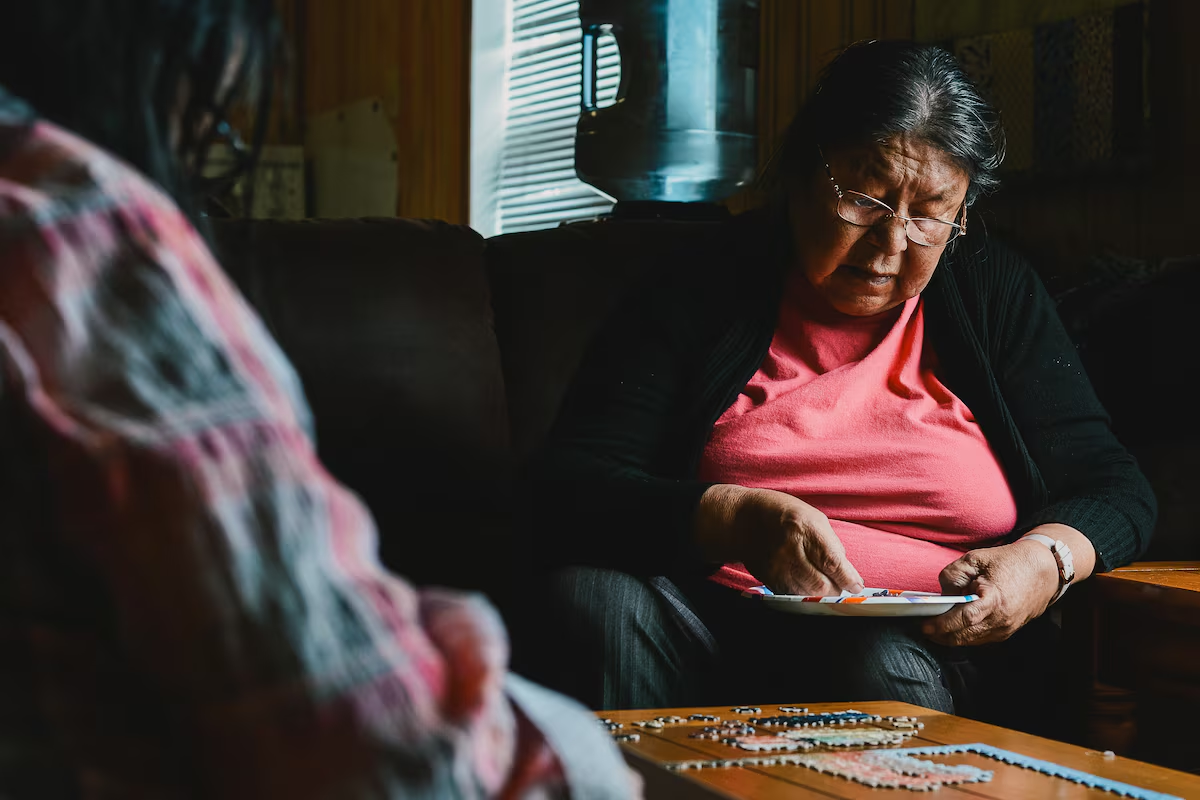
Elder Alice Wavey, who was forced to evacuate her home due to wildfires, works on a puzzle at Onaman Ziibi lodge in Sioux Lookout, Ont., where some evacuees from Mishkeegogamang are staying.Willow Fiddler/The Globe and Mail
In a tiny cabin, elders Evelyn Kwandibens and Alice Wavey sit on couches in front of a sliding door that overlooks the Vermillion River, west of Sioux Lookout, Ont.
A 1,000-piece puzzle lies on the coffee table between the women, its border assembled, as the pair sift through the other pieces.
The outdoor view is one the elders are familiar with. The pair are from Mishkeegogamang First Nation, a community abundant with the same lush greenery and fresh lake water just outside the glass door. The scene is their comfort zone and helps keep them calm as uncertainty abounds.
“It keeps me busy,” Ms. Kwandibens, who uses a wheelchair, says about her interest in jigsaws and word puzzles.
She and Ms. Wavey are among some 41 elders and caregivers from Mishkeeogamang who were forced by wildfires last week to evacuate to Sioux Lookout and Lac Seul First Nation, about 250 kilometres south of home.
Canada wildfire maps: Where and how many are currently burning
More than 180 active wildfires continue to rage in Ontario’s north. Some 3,000 people have been forced from their homes, with evacuees scattered as far south as Toronto and Niagara Falls, as part of the province’s emergency response system.
But for Mishkeegogamang Chief Merle Loon, the goal was to keep the elders from his community as close to home as possible.
They are now at the Onaman Ziibi lodge, run by the Sioux Lookout First Nations Health Authority, where donations of puzzles and other pastimes are intended to keep evacuees’ minds off the fire devastation hitting much of the region.
In the coming days, they will be moved to vacant teacherages in nearby Lac Seul, where about 16 additional evacuees are staying in an assisted-living facility.
It’s part of a service agreement with Mishkeegogamang that Lac Seul Chief Clifford Bull calls unprecedented.
First Nations chiefs demand public inquiry, resignations over Ontario’s wildfire response
While Lac Seul has hosted evacuees from nearby communities before, Mr. Bull said it’s the first time they’ve co-ordinated this through a direct nation-to-nation agreement, which began with a late-night call from Mr. Loon last Tuesday.
“We devised a plan on how we would get these elders,” Mr. Bull told The Globe and Mail.
Hours after that call, Lac Seul councillor DeShawn Littledeer was travelling on a northern road in a convoy of vans and SUVs to pick up the evacuees at a highway junction.
Mr. Loon said his priority was making sure the elders were being cared for, safe and close to home. Within two days of the wildfire threatening his community, flames had cut phone and fibre lines and shut down the highway.
He said a well-organized and co-ordinated response by the health care and evacuation teams from both communities ensured the elders had their medications and kept their appointments.
Having the evacuees nearby also means Dr. Marilyn Koval can check up on her Mishkeegogamang patients in person.
The family physician of 30 years says communication among health care teams during evacuations is key to ensuring people’s medical needs are met, from caring for wounds to changing catheters.
She also sees the benefits of the evacuees staying close to home.
“I think geographically, being closer to the land that one feels connected to is huge.”
Open this photo in gallery:
Dr. Marilyn Koval, right, chats with her patients Charlotte Wassaykeesick and grandson Phoenix, following a check-up about a week after they were evacuated from Mishkeegogamang.Willow Fiddler/The Globe and Mail
Communities like Lac Seul also tend to have better access to culturally appropriate resources that can be difficult to find in large urban centres, including wild game that is often a staple in elders’ diets.
A call-out to Lac Seul community members for such food resulted in frozen fleshes of moose meat being dropped off for the next day’s meal and an excursion to set fish nets on the lake.
Derek Maud, a Lac Seul councillor, agreed that keeping evacuees in a familiar place has benefits.
“[First Nations evacuees] would rather stay in an environment that they’re more used to … like a First Nations community or somewhere near a lake. They always talk about being near a lake,” he said.
Plans to build capacity with a 50-bed evacuation centre in Lac Seul are being discussed, Mr. Bull said.
“Because we all know that climate change is happening, and it’s going to get worse every year. … It could be us next year. Who knows?”
Open this photo in gallery:
The community of Lac Seul First Nation is hosting evacuees from Mishkeegogamang and has plans for a 50-bed evacuation facility.Willow Fiddler/The Globe and Mail
In Ontario, First Nations evacuations from wildfires and other emergency events are co-ordinated by the provincial emergency operations centre, with the federal government footing the bill.
A declaration of a state of emergency by an affected First Nation usually triggers the provincial emergency response system. In cases of wildfires, evacuation orders by the province’s Ministry of Natural Resources also activate an emergency response, which is often co-ordinated by independent third-party agencies that place evacuees in large urban centres in Southern Ontario.
It’s a system that many have called broken. Several First Nations leaders have slammed the province’s response this month to the wildfires that have destroyed at least two communities.
Mr. Loon has learned not to wait for the province to step in during emergencies when it comes to the safety of his people.
“Eventually [the province will] fall in line, but it’s going to take time. Experience has shown it takes time for them to get things together, especially with all these other nations going through these evacs,” he said.
Editor’s note: An earlier version of this article incorrectly identified Alice Wavey in the first photo.