
Open this photo in gallery:
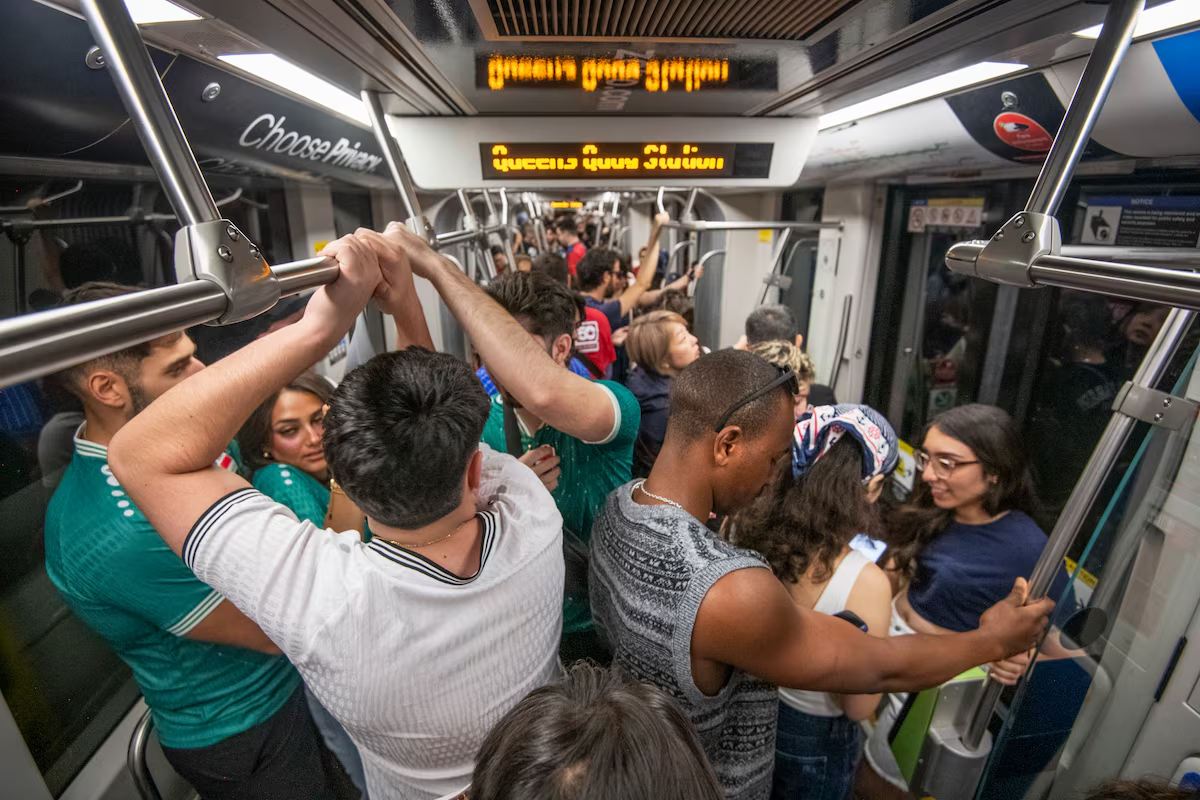
Soccer fans pack the TTC’s 509 streetcar on the way to the Iraq-Senegal World Cup match in Toronto on June 26.Fred Lum/The Globe and Mail
Toronto’s stint as a FIFA World Cup host showed that public transit can deliver higher levels of service and rider satisfaction when the city makes the system a priority, as it did for the mega event, Toronto Transit Commission executives told city councillors on Wednesday.
The executives said they hoped the lessons learned will guide planning for the future.
Chief executive officer Mandeep Lali, who took over the TTC last fall, and a handful of his deputies used a TTC board meeting to tout the organization’s successes during the global tournament.
Those included what Josh Colle, the TTC’s chief strategy and customer experience officer, said was overwhelmingly positive media coverage, a shortened incident response time, continued evolution of service through the city’s six matches and a satisfaction rate of 92 per cent among riders on four key transit routes to and from the stadium.
“The World Cup gave us a unique opportunity to test our organization under extraordinary circumstances and conditions,” Fortunato Monaco, the interim chief operating officer of the TTC, said.
He said some of the lessons learned were already being put into place for future events such as the Toronto Caribbean Carnival and the Canadian National Exhibition.
Transit services navigate the unknown to get fans to World Cup matches
The TTC announced earlier this month that ridership on the five key surface routes serving BMO Field (renamed Toronto Stadium for the tournament) and the official FIFA Fan Fest was up 42 per cent compared to last year at the same time: 1.14 million trips on the King, Dufferin, Bathurst, Ossington and Harbourfront corridors versus 802,000 in 2025.
On Wednesday, the commission offered a more thorough look behind those and other numbers, as well as examples of how the service evolved over the course of the tournament.
Cameron Penman, the TTC’s head of wheel-trans – the para-transit service for people with disabilities – and a member of its core World Cup team, said during service for the first match, on June 12, the commission realized “many visitors were unfamiliar with TTC branding and did not immediately understand signs directing them to TTC.”
Some riders were also unaware of temporary stop closures or the special pedestrian routes between Fleet Hub, the streetcar terminus designed for the tournament, and both BMO Field and the official FIFA Fan Festival. The TTC subsequently deployed new wayfinding signage and on-the-ground staff to help direct riders.
By the second game day, on June 17, the TTC also recognized large bottlenecks were forming at the Presto pay stations outside of the stadium after matches, which they resolved by deploying extra staff with hand-held fare payment scanners.
Open this photo in gallery:
The TTC ferried riders to six World Cup matches in Toronto.Fred Lum/The Globe and Mail
Mr. Monaco said a pair of express corridors created as part of the city’s RapidTO transit improvement plan helped cut some average travel times by minutes during transit before and after the matches.
But he noted the corridors alone did not achieve those results. Teams in the field noticed that a long pedestrian walk signal near the Fleet Street Hub was holding up the flow of streetcars, so it was cut from 80 seconds to 40. That reduced streetcar bunching and subsequent delays.
“The lesson here is that small operational and signal changes can make a meaningful difference to what we do,” Mr. Monaco said.
“When transit priority, active traffic management and strong partner co-ordination come together, we can and will deliver faster, more reliable service, even during a global mega event, while still supporting everyday customers across the line.”
Mina Papic, the TTC’s manager of climate and resilience, noted the sixth and final match in Toronto was in some ways the most challenging.
“This was the match with the highest stakes. It was Toronto’s final match, and featured Portugal – a team with a very large and highly engaged following in the city, on one of the hottest days of the year,” she said, noting humidex values reached the mid-40s.
The temperatures “placed an added strain on the electrical infrastructure, and that risk was amplified by the additional streetcar service. More service meant more electrical load, combined with extreme heat, which can cause heat-related damage to our cables and related infrastructure, increasing the risk of service disruptions and infrastructure damage,” Ms. Papic said.
The lasting image from a World Cup on Canadian soil: Pure joy
The TTC placed staff in the field to monitor temperatures, streetcar movement and other conditions in the network. To prevent overheating they reduced service on segments of one streetcar line and supplemented it with buses.
“This experience reinforces the importance of proactive monitoring and real-time oversight and protecting our infrastructure in the future as we face more extreme operating conditions,” Ms. Papic said.
Mr. Colle said customer feedback indicated approval of a host of innovations rolled out for the World Cup, including new information displays at bus stops, refreshed screens aboard buses and new wayfinding system pilot projects.
“These are elements that we hope will become a regular part of life for TTC riders,” Mr. Colle said.
Mr. Monaco said the commission was still analyzing the World Cup data and would make a full report to the TTC Board in early 2027.