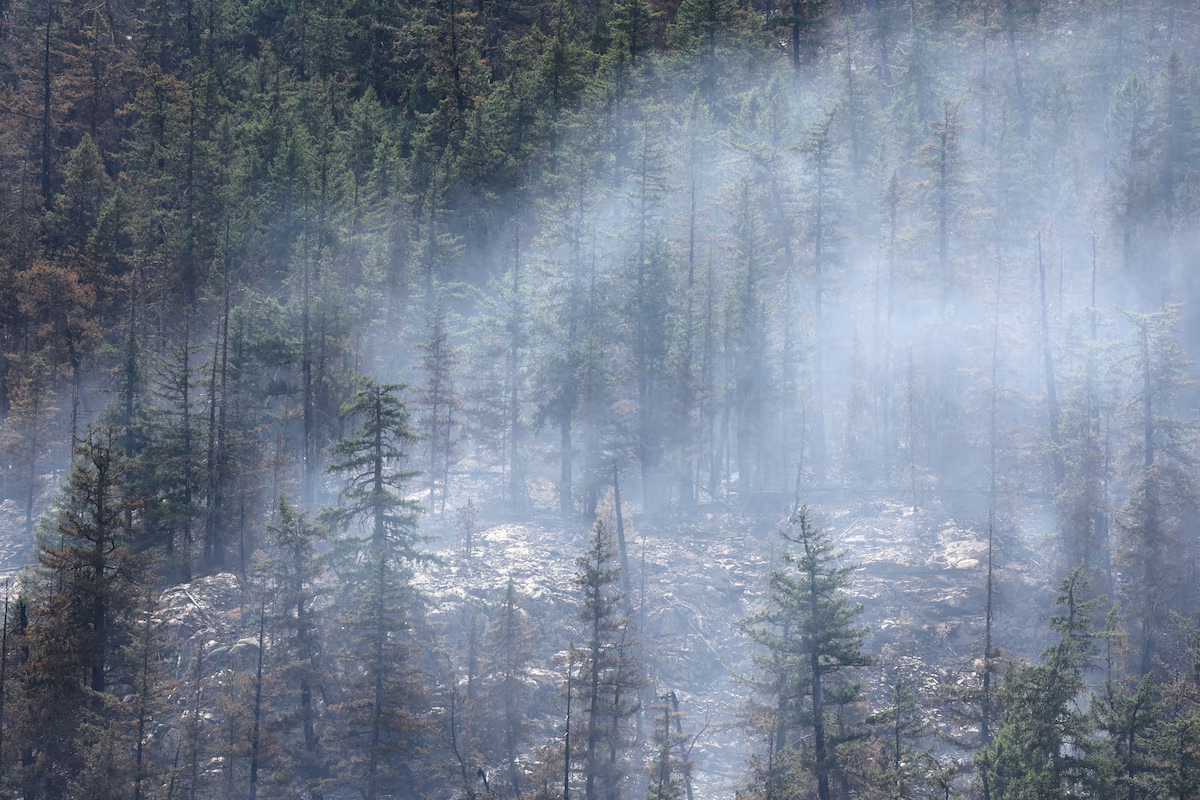

Open this photo in gallery:
Smoke rises from the Signal Hill wildfire in Pemberton, B.C., Saturday. Nearly 1,000 fires were active across the country Sunday.Chris Helgren/Reuters
Wildfires continued to rage across Canada on Sunday, after a violent lightning storm ignited more blazes in British Columbia, although the thick haze of smoke that choked many eastern North American metropolises eased off, in part due to thunderstorms.
According to the Canadian Wildland Fire Information System, there were 956 active fires as of 1:15 pm ET Sunday – 139 of which were out of control. More than 2.9 million hectares have burned across Canada in 2026.
Data on the federal fire tracking system shows both the five year averages of number of fires and hectares burned across Canada – 3,739 and 4.3 million, respectively – is substantially higher than the 10, 15 and 20 year averages. Fire levels in Ontario and the Northwest Territories so far this year are more than three times the 10-year average.
So far this year, more than 700,00 hectares have burned in each of Ontario, Quebec and the Northwest Territories, the three most affected jurisdictions. In British Columbia, fire activity had been relatively low this year until thousands of lightning strikes across the province Friday. They are largely to blame for 100 fires burning in the province, according to the B.C. Wildfire Service. The province had a calamitous fire season in 2023, with 2.9 million hectares burned.
Smoke from the fires sent a thick haze across a band of eastern North America this week, prompting criticism of Canadian fire control efforts from U.S. politicians including U.S. President Donald Trump, who threatened to respond by imposing tariffs on Canada. Air quality improved on Sunday in many of the heavily affected areas in eastern North America, with smoke expected to be mostly clear in the New Jersey area in time for the start of the World Cup Final Sunday afternoon.
Wildfire expert offers reality check for U.S. lawmakers who castigated Canada for smoke
In Canada, Yellowknife faced the most severe air quality among Canadian cities on Sunday, according to Environment Canada’s Air Quality Health Index.
Meanwhile, residents in the Mooseland Road area of Halifax got some good news Sunday as the city lifted a mandatory evacuation order that had been issued Thursday. While a fire in the region covering 1,447 hectares has now considered to be held by firefighters, the city of Halifax cautioned in an online statement “there is still a wildfire in the surrounding area and this remains an active scene.”
The government of Ontario – whose largest uncontrolled fire covers more than 300,000 hectares in the Thunder Bay area – has also faced criticism from two First Nations that the province hadn’t done enough to help them as wildfires threatened their communities.
Namaygoosisagagun First Nation Chief Helen Paavola said last week that she called the Ministry of Natural Resources for evacuation help before fire destroyed her community on Monday, but no help arrived. Residents fled across a lake in small boats, and there were no fatalities.
Why did members of a northwest Ontario First Nation have to be ‘their own heroes’ amid wildfire?
Natural Resources Minister Mike Harris subsequently said that fire had started unusually close to the community and that the province didn’t have enough lead time to send crews, who were already spread thin fighting fires elsewhere, and that smoke made it difficult for aircraft to reach the area.
Meanwhile, an official with Whitesand First Nation said some members had begun returning to the evacuated community over concerns the province wasn’t committing enough resources to protect their homes.
Ontario Premier Doug Ford has also defended his government’s handling of wildfires, saying the province is throwing every resource it can at the fires. He has also disputed suggestions his government had cut spending on firefighting or helping thousands of evacuees, many of whom are from First Nations communities.
On Saturday, Jill Dunlop, Ontario’s Minister of Emergency Preparedness and Response, wrote to the heads of the province’s local jurisdictions that the province is expanding access to the national Alert Ready system by which urgent messages can be sent to the public through TV, radio and mobile devices.
“Given the significant impacts of this year’s wildfire season, our government is enhancing the tools available to municipalities and First Nations to support emergency response,” Minister Dunlop wrote in a letter, posted to X Sunday morning.
But when pressed on what actual changes the province had made, Nastassia Varela, a spokeswoman for the minister, replied only that Ms. Dunlop’s letter “reinforces and expands awareness” of how the alerts system works.
The letter noted that local officials, including municipal emergency management coordinators, mayors, First Nations chiefs, police, fire chiefs and other senior municipal government officials are authorized to request Alert Ready messages for incidents within their jurisdictions, to Ontario’s Provincial Emergency Operations Centre. The centre determines what can then be sent out, after confirming the identity and assessing the content of the request.
With reports from The Canadian Press