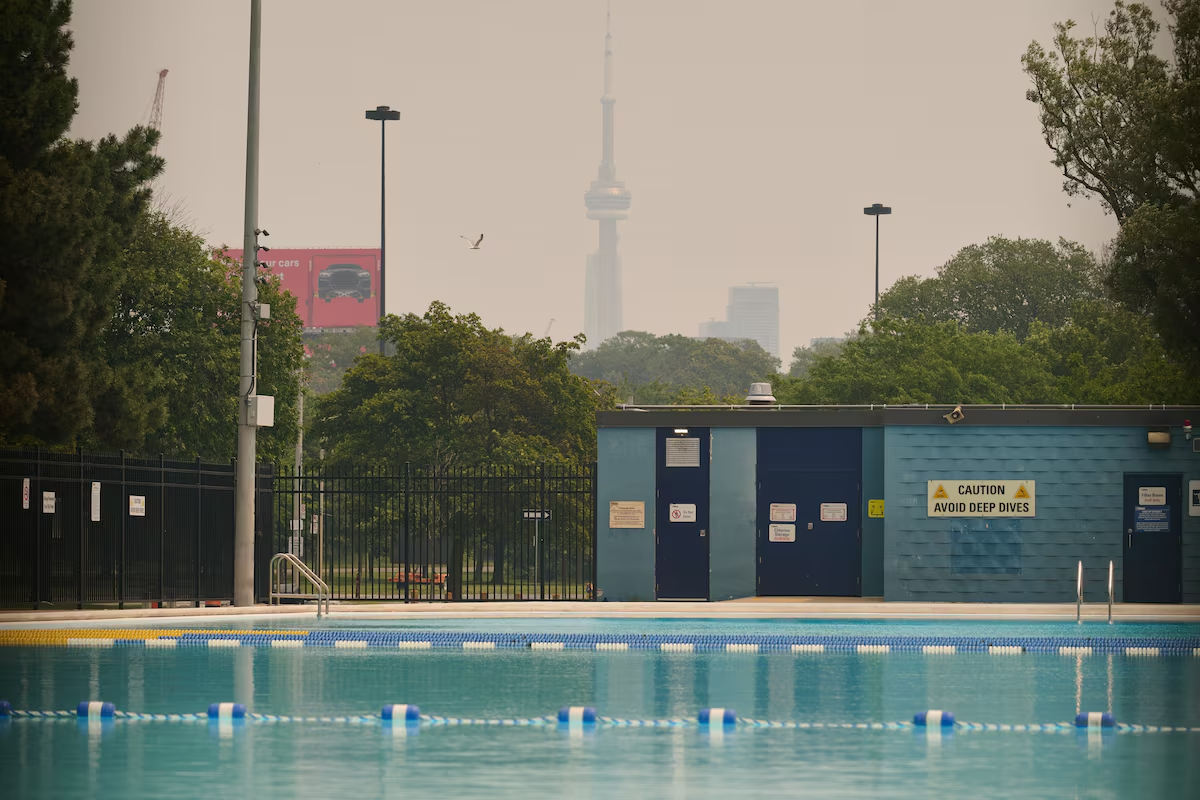

Open this photo in gallery:
Sunnyside Gus Ryder outdoor pool remains closed as wildfire smoke continues to roll across Toronto on Thursday.Sammy Kogan/The Globe and Mail
Ruth Tate’s son had been looking forward to soccer camp for weeks. Thursday was supposed to be his fourth day, but at 6 a.m., Ms. Tate received an e-mail saying it was cancelled because of poor air quality.
It was just the latest in a week of disruptions for the family – and for many others across Southwestern Ontario. From summer camps and pools, to parks and sports games, many of the usual summer activities have been postponed or cancelled at the last minute, because of extreme weather.
And parents, as a result, have been left scrambling.
“It’s not just the camps that have been cancelled. It’s pretty much all of the activities,” Ms. Tate said. For parents – and kids – she said, “they’re stuck without anything to do.”
After a heat wave descended across the Greater Toronto Area early this week, many recreational facilities and camps had already made accommodations. But midweek, after smoke from Northern Ontario wildfires settled around the GTA, this triggered a new wave of panic about hazardous air quality.
Since then, outdoor pools have shut down. Many summer camps (both city-run camps and private ones) that parents rely on for child care have moved indoors or been cancelled altogether. Recreational sports, too, have been cancelled.
How poor air quality can affect your health, and how to protect yourself
Many parents expressed support for the communities directly affected by the wildfires, and overall agreement with the decisions to keep children indoors and safe. But they expressed frustration at how those decisions have been made or communicated. In some cases, decisions have been sent abruptly, or at the very last minute – as with Ms. Tate, who received midday e-mails twice this week abruptly informing her to pick up her son early.
Kids at one city-run camp in the west end of Toronto were sent in school buses early Wednesday morning on a field trip to the Toronto Zoo. The city announced that all outdoor field trips were cancelled that same morning, but only after the buses had already been dispatched.
Later that morning, Alexis Dawson received a text message from her 11-year-old daughter, from the zoo. “She said, ‘the air is yellow. It’s really bad.’”
Ms. Dawson, along with other parents, began calling the camp to complain. About an hour and a half after arriving, the trip was finally cancelled and the kids sent back to a community centre on the bus.
In a statement, Aydin Sarrafzadeh, the director of community recreation for the City of Toronto, said it has procedures in place for poor air quality, and that while at the zoo the kids were kept mostly indoors. “Keeping campers safe and healthy is at the centre of every decision made.”
Ontario wildfires trigger air quality warnings for Toronto, southern regions
But Alejandra Bravo, the city councillor for Ward 9, where the camp is located, said that she has asked the department of parks and recreation to improve its communication systems as a result of this incident, to ensure families have up-to-date information as soon as possible.
“As we continue to experience the realities of climate change, all recreational and child-care programs – both public and private – will have to evolve to provide protections from hazardous smoke and air quality,” she said.
Still, this new reality isn’t posing a challenge just for city-run camps.
At YMCA camps in Toronto, for instance, parents were notified that outdoor camps were moving indoors around 8:30 a.m. on Thursday morning – after some families had already made the decision not to attend.
The organization moved as quickly as it could to notify parents, said Brandon McClounie, the YMCA’s vice-president of camping and outdoor education. But there were myriad logistical challenges that had to be dealt with first, including securing alternate locations, and ensuring sufficient staffing.
For Erika Del Carmen Fuchs, it’s not just communication that needs to be addressed.
Her daughter is at a city-run swim camp in Toronto that was moved indoors on Thursday. But the room at the community centre it has been moved to does not have HEPA air filters. And Ms. Fuchs’s daughter has asthma, as well as other respiratory conditions.
So she kept her daughter at home on Thursday. Instead of swim camp, her daughter spent much of the day watching TV.
And while the self-employed Ms. Fuchs has the flexibility to juggle a child while working from home, she said that many other families don’t have that luxury.
“It’s equity. It’s accessibility,” she said. Given we’ve faced several summers now of poor air quality as a result of wildfires, she said she’d like HEPA filters to be standard at all community centres.
“I don’t just want my daughter to feel safe,” she said. “I want everyone to feel safe.”