
Open this photo in gallery:
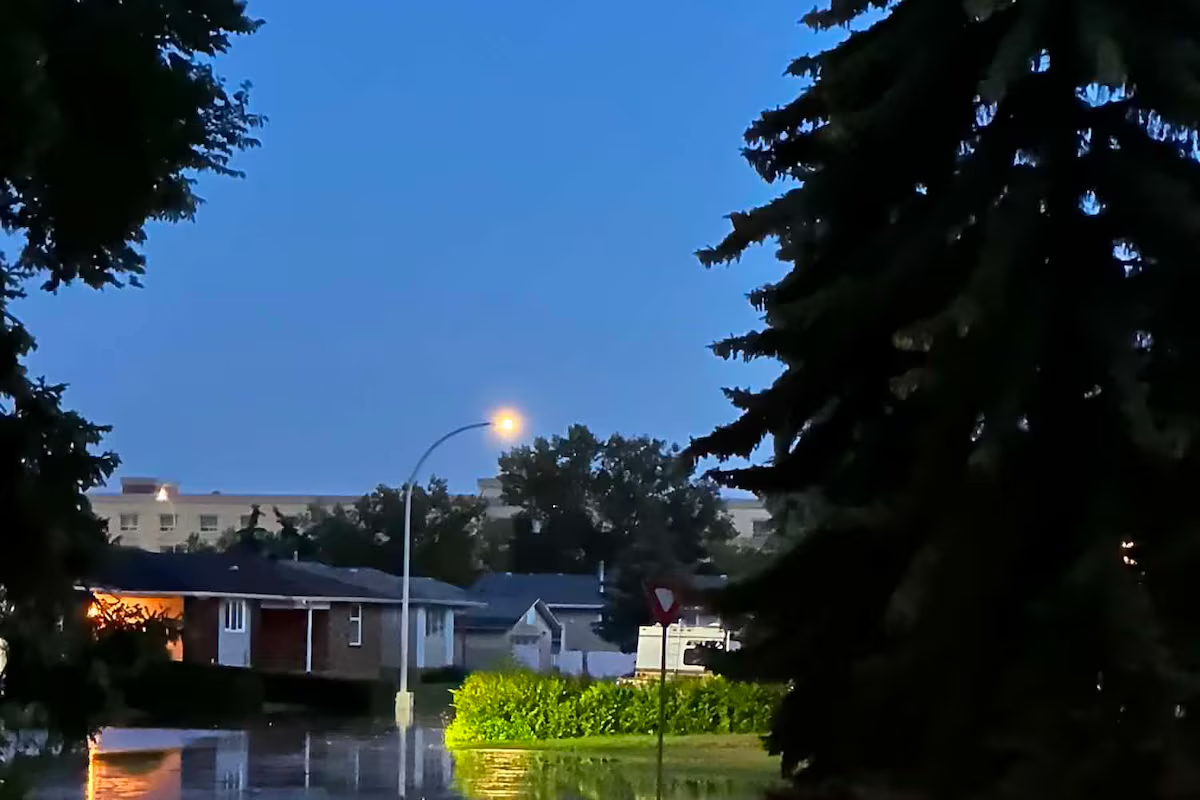
Streets are flooded in a neighbourhood after an early morning storm in Edmonton on Wednesday. A meteorologist with Environment Canada said Alberta’s capital city saw 264 millimetres of rain in June, smashing the record of 216 millimetres set in 1914.Ivan Romanchak/The Canadian Press
Summertime in Alberta usually consists of wildfire smoke, but this year has been different.
Several parts of the province have been hit by storms. Edmonton was hammered by record-breaking rain in June and is on its way to doing it again this month, says Environment Canada.
“Alberta was actually on a kind of a trend of getting drier each year until this year,” said Dan Fulton, a meteorologist with the agency.
“This year is kind of an outlier.”
He said Alberta’s capital city saw 264 millimetres of rain in June, smashing the record of 216 millimetres set in 1914.
Fulton said about 360 millimetres of rain has fallen in June and July so far, and the city is set to break a summer record of 417 millimetres from 1953.
Rivers in southern Alberta reach peak after days of heavy rain, but no major damage reported
About 25 tornadoes have also been recorded across the province this year. Alberta and Saskatchewan usually see 16 tornadoes combined each year, Fulton said.
“It’s almost like the American Midwest. They get crazy tornadoes and weather, and it’s as though that has shifted north into the Canadian Prairies this year.”
In the last few weeks, rain in Edmonton has flooded streets, downed power lines and damaged recreation facilities.
The city said several parts of the Yellowhead Trail freeway were closed for flooding after an early Wednesday storm.
Edmonton’s science centre also closed its doors, likely until November, after rain flooded the building last week.
“This is a planning estimate, not a confirmed reopening date, and we continue to explore opportunities for a safe partial reopening earlier in the fall,” Telus World of Science said on its website.
Angel Ryder said she bought rubber boots for the first time this year after she was driving on an Edmonton street that was flooded by a downpour.
She had to abandon her car.
The water was almost up to her knees, she said, and she was carrying her mother’s dog. “She was quite scared.”
Ryder said she’s used to breathing wildfire smoke this time of year, not walking through flood waters.
“We have some doozies of storms, but the flooding isn’t to the extent that it’s been this year,” she said. “It’s good for the trees; it’s definitely great for the forests, but it’s not so good for us. It’s causing havoc in the streets.”
Flooding prompts evacuations in Alberta’s Kananaskis Country provincial park
Ivan Romanchak said his Edmonton basement and dozens of homes on his street were flooded on Wednesday.
The back alley was like a shallow river.
“The water was all the way up to probably like your waistline,” he said.
Rob de Pruis, national director of the Insurance Bureau of Canada, said Albertans have submitted more claims for flooding and hail damage this year than for wildfires.
“What we’re seeing this year so far is there hasn’t been a lot of wildfire activity that’s impacted communities,” he said.
“There have been thousands of insurance claims that have been presented in Alberta because of severe weather, from water damage like flooding to hail damage to wind damage as well.”
An early June storm has resulted in about $80 million worth of claims from Edmonton, he said. Estimates for other weather events are still coming in.
“Flood seems to be the most severe weather event that we are experiencing this year so far.”