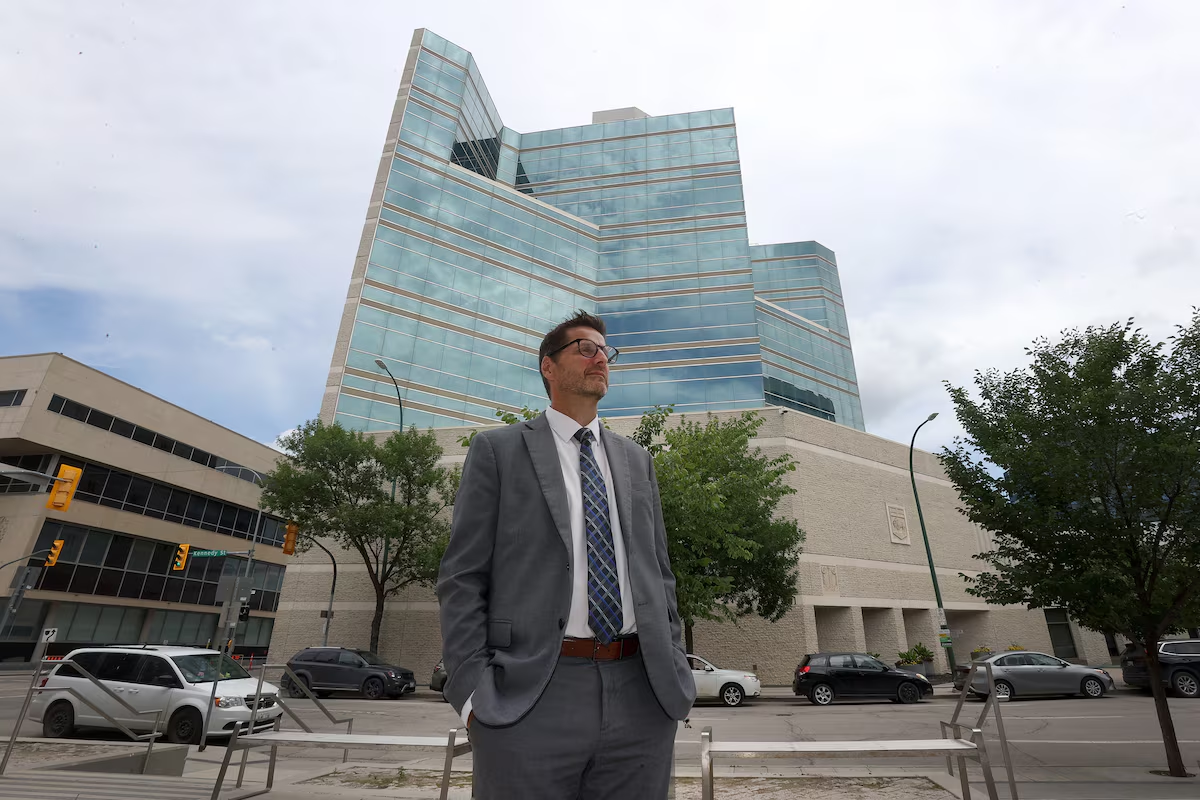

Open this photo in gallery:
The Law Courts building in Winnipeg. Members of the bench and the bar blame underfunded provincial justice systems and more complicated procedures for the lengthening delays.JOHN WOODS/The Canadian Press
Sexual-assault cases are taking longer to wind their way through the courts, despite the Supreme Court of Canada’s strict timelines to prevent criminal cases from being thrown out, a new federal report has found.
The June report, published by the justice department, showed the median length of time to conclude sexual-assault cases increased by 38 per cent since the Supreme Court’s landmark R. v. Jordan decision in 2016, rising to 453 days from 328 days in 2023-24, according to the most recent Statistic Canada data available.
The Jordan ruling requires provincial court cases to be heard within 18 months and cases in superior courts to be heard within 30. Any longer and an accused’s right to a speedy trial is violated, the court concluded.
While the median sexual-assault case timelines don’t violate the Jordan deadlines, the rising trend is indicative of the strain Canadian courts are facing. Some 10,000 criminal trial cases a year are thrown out for exceeding the deadlines, including hundreds of alleged sexual assaults, according to Statistics Canada data from 2023-24.
Members of the bench and the bar blame underfunded provincial justice systems and more complicated procedures for the lengthening delays. As delays increase, complainants and defendants waiting for decisions are further traumatized, they say.
Manitoba’s provincial court Chief Judge Ryan Rolston said he sees the “ripple effect” from lengthy sexual-assault cases firsthand in the courtroom.
“When you’re dealing with the victim side of things, they’re waiting for things to happen, and as time passes, things become more cloudy in terms of their recollections of events, particularly when those events are traumatic,” he said in an interview with The Globe and Mail.
For defendants, trial delays force people kept in custody to stay behind bars longer, without the rehabilitative supports that come with a jail or federal penitentiary sentence, Chief Judge Rolston said.
Chief Judge Rolston said there aren’t enough judges to keep up with the cases. There are about 10 per cent fewer judges today, relative to Canada’s population, than there were two decades ago, and cases are more complicated.
“In the old days, where we were scheduling one-day trials, maybe a few two-day trials. Now we’re scheduling week-long trials with motions, and it creates scheduling havoc,” he said.
Ontario’s top court has too few judges compared with other provinces, Chief Justice says
Lesley Pasquino, president of the Ontario Crown Attorneys’ Association, said Criminal Code changes in 2018 introduced more complexities for sexual-assault cases. For example, there are now more pretrial motions for evidence on a complainant’s prior sexual history or personal communications.
While those changes are necessary for fair trials, the amount of Crown attorneys, court staff and physical infrastructure hasn’t matched the increased workload, she said.
“It takes time, and the criminal justice system was already under great strain,” Ms. Pasquino said.
Open this photo in gallery:
Chief Judge Ryan Rolston at the Manitoba Law Courts in Winnipeg, with the Manitoba Remand Centre in the background, on Thursday.Shannon VanRaes/The Globe and Mail
Ms. Pasquino said Jordan timelines were a call to action for federal and provincial governments to inject more money into the court system, but not enough funding has addressed the problem, despite increasingly complicated cases, she said.
The June federal report, written by the justice department’s Research and Statistics Division, also found Ontario, Alberta and the Northwest Territories had the highest percentage of all cases that were withdrawn or stayed because they were likely to exceed the Jordan deadlines.
In Ontario in 2023-24, almost half the cases brought to court – 48 per cent – had to to be withdrawn or stayed because of deadline pressure. That amounted to 6,402 proceedings, an eight-percentage-point increase from 2016-17, the report said.
Ms. Pasquino said the number of courthouses hasn’t expanded with Ontario’s population, triggering delays because there aren’t enough courtrooms for cases or technology within the buildings is outdated. Ontario has 146 courthouses and 827 courtrooms.
To compensate with the increased workload, she said Crown attorney’s stack cases, which is when an individual manages multiple trials in a day within one courtroom, a practice she calls “appalling.”
“For criminal prosecutors, the situation’s not sustainable for them, the workload is crushing, the responsibility is immense and the frustration for these highly skilled, highly trained lawyers … is just devastating,” Ms. Pasquino said.
Editorial Board: Ottawa can’t throw up its hands in the fight for timely justice
Kwame Bonsu, a spokesperson for the federal justice department, said changes to the Criminal Code that received royal assent in June included measures to streamline pretrial evidence hearings for sexual-assault cases. Bills passed in 2019 and 2023 were also aimed at trimming case delays.
“The Government of Canada recognizes that stays of proceedings for unreasonable delay can undermine public confidence in the administration of justice and can be devastating for victims of crime,” Mr. Bonsu said.
But he said the changes are only effective if provincial and territorial government support the implementation.
Julia Facca, a spokesperson for Ontario Attorney-General Doug Downey, said the provincial government will have spent more than $500-million by 2027-28 to improve the court system by allocating funding for 52 new judges, hiring nearly 700 Crown attorneys and modernizing courtroom technology.
“Our government is taking historic action to strengthen Ontario’s justice system to keep our communities safe by increasing court capacity, appointing more judges, and delivering modern technology,” she said in an e-mail statement.
Supreme Court clarifies details on strict Jordan time limits on criminal trials
In Manitoba, Justice Minister Matt Wiebe said the provincial government has hired 40 attorneys since it was elected in 2023. Those hires have contributed to a decrease in sexual-assault case timelines in 2023, he said.
The median timelines for those cases fell by 14 per cent, dropping to 399 days in 2023-24 from 466 days in 2022-23.
“We are continuing to resource the justice system, but there’s more work to do, and that’s the work that we’re committed to,” he said in an interview.
Frank Addario, a veteran criminal lawyer who acted for the Criminal Lawyers’ Association when it intervened in the Jordan case, called the lengthening case times “unconscionable.”
Despite the promised federal measures, he said provincial and federal governments need to be held accountable for the longer case timelines.
“It’s not judges who are at fault, it’s not defence counsel who are at fault, it’s the one party in the triumvirate with access to the resources to create the conditions for speedier trials that’s at fault, and that’s government,” Mr. Addario said.