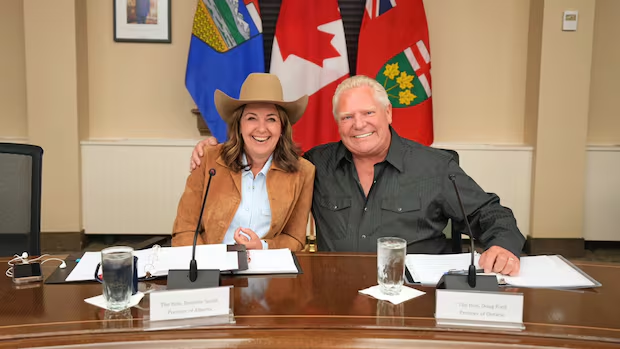
A recent proposal to build a new pipeline from Alberta to Ontario is drawing both support and criticism.
The president of the municipal association representing more than 100 cities and towns across northeastern Ontario says the project could unlock funding to expand highways. But an oil industry expert says the project faces major economic hurdles, and the Anishinabek Nation says it was “blindsided” by the announcement.
Dave Plourde, mayor of Kapuskasing and president of the Federation of Northern Ontario Municipalities (FONOM), said the proposal aligns with years of calls for more infrastructure investment in the region.
“I find it exciting. Obviously FONOM has been lobbying hard for development of northern Ontario’s highway system,” Plourde said.
“The fact that the provinces and the federal government are looking at developing an energy corridor is right in line with the following, which would be a transportation corridor. You can’t have one without the other.”
Earlier this week, the premiers of Alberta and Ontario announced a route for the potential 3,300-kilometre pipeline. It would begin at Hardisty, Alta., crossing Saskatchewan, Manitoba and northern Ontario before heading south to Sarnia.
Plourde said he believes the new project would be built along the existing TransCanada natural gas pipeline that crosses northern Ontario.
“There’ll be a lot of debate around the corridor as it is. But I think it’s really exciting times for northern Ontario and certainly Canada as a whole,” Plourde said.
Historical pipeline projects
The proposed pipeline has been positioned as a move to bolster Canada’s energy security, since Alberta oil currently travels to Ontario through the United States and the state of Michigan has previously threatened to shut down that route.
There is no estimated price tag or construction timeline, and it is unclear who would ultimately pay for the pipeline.
Ontario Premier Doug Ford has said the province could potentially own the pipeline and cover construction costs if necessary.
Sean Kheraj, a history professor at Toronto Metropolitan University who studies Canada’s pipeline history, said governments have historically stepped in when major energy projects were viewed as serving a broader public interest.
“Whenever government has become involved in using public funds to build energy infrastructure like an oil pipeline or a gas pipeline, it is usually when the economics or finances of building that pipeline are not likely to be profitable,” Kheraj said.
“Therefore the nationalist interest or the provincial interest takes over. And so we as taxpayers subsidize that.”
He pointed to pipeline expansions in the 1970s, when he said the federal government wanted to extend the reach of Alberta’s oil to Montreal refineries, since those refineries were supplied primarily by oil from overseas.
He said the federal government subsidized the extension of what is now the Enbridge oil pipeline system from Sarnia to Montreal up until the 1990s.
“The politics were different. At that point, the Canadian government was no longer willing to subsidize that pipeline, and so it returned fully to private control and the direction of the pipeline was reversed by the company because it was more profitable to import oil through that pipeline,” Kheraj said.
“If a new pipeline is built from Alberta to Ontario, connecting Alberta’s oil resources to the refineries in Sarnia, and that’s built today, because of the current economic and political climate, 20, 30, 40 years from now that environment could look really different.”
‘Pipeline would be a duplicate’
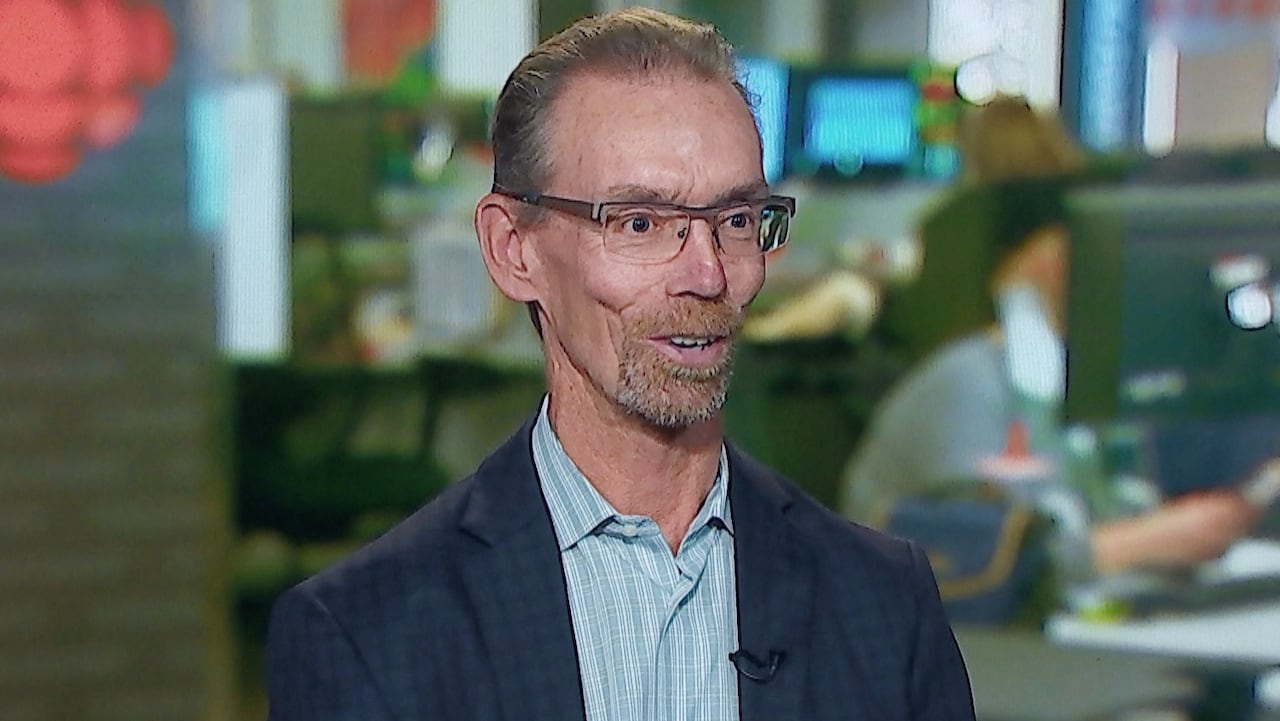 Richard Masson, shown while on air in a CBC studio, is the former CEO of the Alberta Petroleum Marketing Commission. (Dave Rae/CBC)
The proposal has also drawn criticism from Richard Masson, former CEO of the Alberta Petroleum Marketing Commission, who questioned whether the pipeline is needed.
Masson said Alberta already supplies Ontario refineries through existing pipeline infrastructure, including the Enbridge system, and argued the proposed pipeline would “duplicate” existing infrastructure.
“From an Alberta point of view, we already provide all the feedstock those refineries need,” Masson said.
Masson said if the concern is a possible disruption to pipelines that cross through the United States, governments should look at shorter-term solutions.
“If your concern is the U.S. is not a reliable partner anymore, then you better get on it and deal with it through rail because building a pipeline that could take 10-plus years isn’t the answer to that question,” he said.
He also questioned who would finance a project of this size, suggesting the cost could reach tens of billions of dollars.
“It will be very expensive, it’ll be duplicative, and I don’t think it meets any market need, which is why there are no companies who are, you know, supporting it,” Masson said.
‘Threat to our land, water and future generations’
 Linda Debassige is the grand council chief of the Anishnabek Nation (Submitted by Michael Heintzman)
The proposal is also facing opposition from the Anishinabek Nation, which said it was not consulted before the announcement.
In a statement released Wednesday, Anishinabek Nation Grand Council Chief Linda Debassige expressed “deep concern and disappointment” over the proposed Northern Shield Energy Corridor.
“This project represents a significant threat to our land, water and future generations,” she said.
“It is alarming that this announcement has blindsided First Nations, as no meaningful discussions or consultations took place before its public reveal.”
The Manitoba government has refused to sign on to the project because Indigenous groups were not involved from the start.
In a statement to CBC News earlier this week, Premier Wab Kinew said Manitoba will pursue large-scale projects that begin with Indigenous partnership rather than consultation after the fact.
Debassige said the practice of governments making unilateral decisions affecting Treaty territories must end and called greater respect for First Nations as treaty partners.
“We re-emphasize that major infrastructure projects that cross First Nations’ traditional territory must include meaningful engagement, consent, and respect for all First Nations along the project corridors.”