
Listen to this article
Estimated 2 minutes
The audio version of this article is generated by AI-based technology. Mispronunciations can occur. We are working with our partners to continually review and improve the results.
The hantavirus outbreak linked to a cruise ship is over, the World Health Organization declared on Thursday, after the last identified contact of an exposed person completed quarantine and tested negative for the virus.
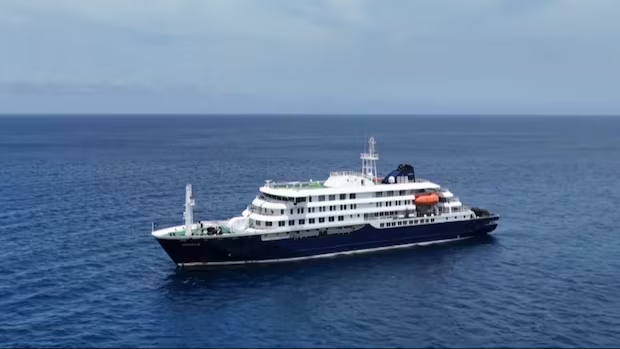
The outbreak, which infected 13 people and killed three, involved the Andes virus, a rare hantavirus strain that typically circulates in Argentina and Chile. The cruise ship, MV Hondius, set off from Argentina on April 1.
Four Canadians were among those on board the luxury cruise ship. They all completed self-isolation periods upon returning to the country on May 10. One of them, a traveller from Yukon, subsequently tested positive for the virus but recovered fully.
Disease with no cure
The outbreak had caused concern earlier in May given that the deadly disease has no cure. Cases are rare and typically not contagious between humans — it’s usually spread after touching objects, eating food or inhaling particles contaminated with rodent droppings or urine.
There have been 168 hantavirus cases in Canada since surveillance began in 1994.
However, the Andes strain that spread on the ship is the only type of hantavirus that spreads between humans. Even with this strain, transmission is relatively rare, requiring close, prolonged contact with an infected person.