
Listen to this article
Estimated 5 minutes
The audio version of this article is generated by AI-based technology. Mispronunciations can occur. We are working with our partners to continually review and improve the results.
Manitoba’s premier is condemning other provincial governments using the notwithstanding clause to target minorities, calling a Quebec law now upheld by Canada’s top court an act of “legislative racism.”
Wab Kinew says Bill 21 was “designed to discriminate” against Muslims primarily, but also Sikhs and other religious minorities.
The law — which bans some public-sector workers from wearing religious symbols at work — survived a Supreme Court challenge Friday, with justices saying the Quebec government properly invoked the clause overriding certain Charter protections when it passed the law in 2019.
Kinew said Canadians who believe in equality must speak up against those using the clause to erode minority rights.
“The Canada that I want to live in should have an RCMP officer free to wear a turban, should have a school teacher, if she chooses to wear a hijab … be able to do so,” Kinew said in an unrelated news conference Friday.
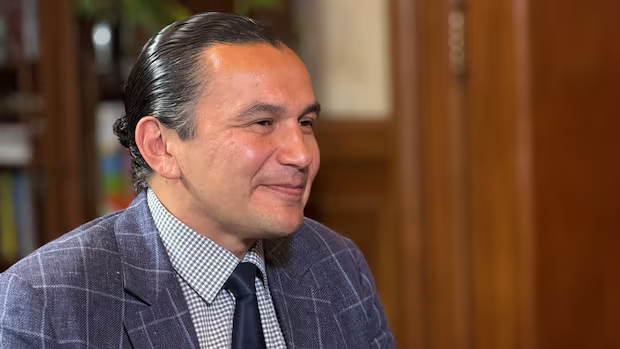
“A Hutterite woman should be able to wear a head covering. You should be able to wear a cross.… And yes, your premier should be able to have long hair.”
WATCH | Kinew says upheld law designed to discriminate against minorities:
Bill 21 is ‘legislative racism’ Premier Kinew says
Manitoba Premier Wab Kinew says Quebec’s secularism law, which was largely upheld by the Supreme Court on Friday, was ‘designed to discriminate’ against religious minorities.
The notwithstanding clause — Section 33 of the Charter — allows governments to adopt laws even if courts determine them to be unconstitutional. It lasts for up to five years at a time, but can be renewed.
Friday’s ruling found Quebec’s pre-emptive use of the clause was valid. Most of the law was upheld, with the court only striking down a prohibition on members of the province’s legislature from wearing face coverings.
The court did say judges can declare laws protected by the clause to have violated the Charter even if the law is upheld.
The justices said the declaration would be “in no way moot,” arguing it could be useful for voters and legislators when making decisions.
Manitoba and B.C., both interveners in the Quebec case, had argued in favour of that limited declaration.
Kinew said in an interview on CBC’s Power & Politics voters must fight against governments that would “hide behind the notwithstanding clause to do some very ugly things in our country.”
“If politicians manage to pull one over on the public and get elected using these divisive techniques, then at least civil society will have a tool that we can use,” he said.
They can “go back out there and say … ‘Let’s vote for better.'”
‘If you discriminate, I don’t like you’
Besides Quebec, he also called out Manitoba’s neighbours to the west for using the notwithstanding clause to target 2SLGBTQ+ people.
In Alberta, the Danielle Smith government invoked the clause to shield three laws targeting trans people, introducing regulations on pronouns and name use in schools and bans on transgender girls in female sports and gender-affirming care for people under 16.
Saskatchewan Premier Scott Moe used it in 2023, to pass a law also policing names and pronouns and restricting sexual health education.
WATCH | Kinew accuses politicians of hiding behind notwithstanding clause:
‘If you discriminate, I don’t like you’: Kinew says Bill 21 targets minorities
Manitoba Premier Wab Kinew joins Power & Politics after calling Quebec secularism bill 21 ‘legislated discrimination.’ The Supreme Court of Canada upheld the law’s use of the notwithstanding clause on Friday, prompting Kinew to say other provincial politicians have hid behind the notwithstanding clause to discriminate against 2SLGBTQ+ people, religious groups and other minorities.
When asked whether it’s time for those governments to be voted out, Kinew said, “I don’t think there’s any subtlety in my words.
“If you discriminate, I don’t like you. And if you feel the need to divide Canadians in order to get elected, you’re probably not worthy of holding public office again,” he said.
The premier added politicians who pursue those kinds of laws are those “who are in trouble.”

Saskatchewan Premier Scott Moe and Alberta Premier Danielle Smith have both used the notwithstanding clause to pass laws targeting trans people. (Heywood Yu, Darren Calabrese/The Canadian Press)
“You only start campaigning on a Bill 21-type of policy if you can’t compete on health care,” he said. “You only target the LGBT community if you can’t compete on the cost of living.”
‘Small comfort’: Muslim council
But the National Council of Canadian Muslims, another intervener against Quebec, said declaratory judgments are only “a small comfort.”
WATCH | Council calls on feds to overturn Bill 21 through disallowance:
National Council of Canadian Muslims calls on feds to overturn Bill 21 through disallowance
CEO of the National Council of Canadian Muslims Stephen Brown tells Power & Politics that the Supreme Court’s decision to uphold Quebec’s secularism law is ‘a heartbreaker’ that impedes the rights of Muslim women and other minorities. He says the federal government should consider using its power of disallowance to strike down the provincial law.
“At the end of the day, this is not going to bring back the jobs of thousands of Quebec women, especially Muslim women,” council CEO Stephen Brown told Power & Politics.
“It’s a very difficult day for Canadian democracy and it’s a dark, dark day for thousands and thousands of Canadian citizens and Quebecers.”
Brown said Canadians could be fighting for generations for basic rights if matters are left to “public opinion or wedge politics.”
Alberta, Saskatchewan and Ontario had all intervened in support of Quebec. Quebec Premier Paul St-Pierre Plamondon called the court’s decision a victory for secularism in the province.
Prime Minister Mark Carney said his government was studying the ruling.