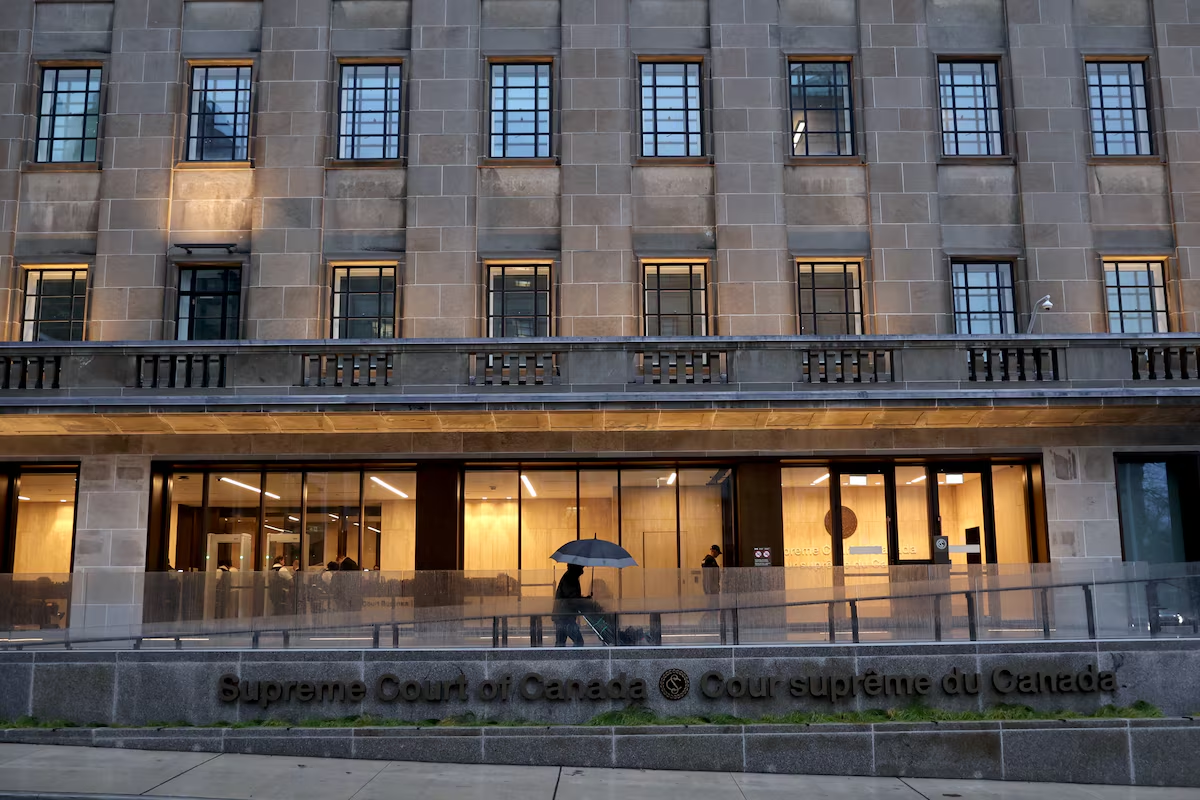

Open this photo in gallery:
People arrive prior to the announcement of decisions on Bill 21 at the Supreme Court of Canada in Ottawa on Friday.Keito Newman/The Globe and Mail
11/27/26 09:23
The history of the notwithstanding clause
– David Ebner
Open this photo in gallery:
The so-called Gang of Eight, sitting for breakfast in 1981, were instrumental in getting the notwithstanding clause we have today.PETER BREGG/The Canadian Press
In November 1981, five weeks after the Supreme Court ruled that the federal government, by convention, had to garner substantial support among the provinces to patriate the Constitution from Britain, a final federal-provincial meeting in Ottawa began to disintegrate on the third day. “Can you give us more time?” whispered justice minister Jean Chrétien to Pierre Trudeau.
Later, in a small kitchen at the old conference centre near Parliament Hill, Chrétien and counterparts from NDP Saskatchewan and Progressive Conservative Ontario struck a deal. The Charter would include a notwithstanding clause that could override numerous rights.
This unlocked the 1982 patriation of the Constitution and the enactment of the Charter in the Constitution. Since Confederation in 1867, Canada’s founding document had resided at Westminster in London as the British North America Act.
For much of the past 44 years, political leaders rarely deployed the notwithstanding clause. Quebec’s Bill 21 in 2019 stands as a demarcation. Alberta used it in four laws a year ago, one to end a teachers strike and three to restrict the choices of transgender youth. The federal government, Conservative or Liberal, has never used the clause.
11/27/26 09:09
Two questions at the heart of the Bill 21 case
– David Ebner
Open this photo in gallery:
The emblem of the Supreme Court of Canada is seen in its temporary courtroom located in the West Memorial Building in Ottawa.Justin Tang/The Canadian Press
At the heart of the Bill 21 case are two questions, both revolving around the notwithstanding clause and the Charter promises it can override, such as freedom of religion in Section 2 and equality rights in Section 15.
The first question is whether there should be new limits on political use of the clause, as the federal Liberal government and some appellants and intervenors proposed. None of the provinces, from conservative to NDP, supported this argument.
The Supreme Court has only once issued a significant ruling on the clause, in the 1988 Ford case. The precedent endorsed governments’ mostly unfettered right to use the notwithstanding override power as they like, in a case about French-language commercial signage in Quebec.
This is the second big question is around judicial declarations.
Ottawa, along with numerous appellants and intervenors, support the idea of judicial declarations. This would allow superior trial court judges to declare that a law insulated by the notwithstanding clause violates the Charter, even as the law is allowed to continue to operate.
An endorsement of judicial declarations from the Supreme Court would make it easier for citizens to take on governments that use the notwithstanding clause.
Read more about the stakes behind Friday’s ruling here.
11/27/26 08:55
Quebec Premier on the pending Bill 21 decision
– Maura Forrest
Open this photo in gallery:
Mayor of Montreal Soraya Martinez Ferrada watches as Quebec Premier Paul St-Pierre Plamondon signs the Livre d’or municipal guest book on Monday.Christopher Katsarov/The Canadian Press
Hi, I’m Maura Forrest, and I cover Quebec politics from Montreal. As we wait for the Supreme Court ruling on Bill 21 this morning, here’s a recap of what Quebec Premier Paul St-Pierre Plamondon had to say about the pending decision on Thursday.
St-Pierre Plamondon said the case is about “preserving the choices of Quebec’s democracy” and the province’s ability to make decisions that “differ from the rest of Canada.”
A decision by the Supreme Court to limit the power of legislatures to “make their own democratic decisions will trigger, of course, a very strong reaction among all provinces,” he added.
The Quebec Premier said if the Supreme Court issues a ruling with the effect of “centralizing power even more,” it will prompt “very heated” discussions at an upcoming meeting of Canada’s premiers in Toronto.
Read more about what the pending ruling means for Quebec.
11/27/26 08:47
A basic outline of the Bill 21 case
– David Ebner
Open this photo in gallery:
People gather outside the Supreme Court as it hears appeals on Quebec’s secularism law, also known as Bill 21, March 23.Sean Kilpatrick/The Canadian Press
Quebec’s secularism law, Bill 21, prohibits many public sector workers, including teachers and police, from wearing religious symbols, such as a hijab or a cross, on the job.
Quebec shielded the law from being struck down by the courts with Section 33 of the Charter, the notwithstanding clause. But an array of groups and affected citizens – including female Muslim, Sikh and Catholic teachers – launched court challenges. Critics of Bill 21 view the law as squarely aimed at minority women in a province with long and deep Catholic roots.
In April 2021, the Quebec Superior Court upheld Bill 21 after a 33-day trial. Justice Marc-André Blanchard observed that the law forced “a cruel consequence that dehumanizes the people targeted” but could not be struck down for Charter violations because it was protected by the notwithstanding clause.
The Quebec Court of Appeal, for the same reason, upheld the law in February 2024.
Nine months later, the Supreme Court agreed to hear six appeals, to be decided Friday. In March the court held four days of hearings, among the longest in its history. It included a record 38 outside intervenor groups.
11/27/26 08:41
A fateful day for Bill 21
– David Ebner
Open this photo in gallery:
Chief Justice Richard Wagner listens to remarks during a ceremony marking the opening of the judicial year of the Supreme Court of Canada in Ottawa, on Oct. 5.Justin Tang/The Canadian Press
Hi – David Ebner here, The Globe’s justice reporter since late 2024 (and at The Globe for the past quarter century in a variety of roles from business and the editorial board to sports features).
I’ve immersed myself in the Bill 21 case at the Supreme Court over the past two years, and was in Ottawa in March when the case was heard over four days in the old courtroom.
On Friday morning, I am in the lockup ahead of the decision – the court, like the federal government on budgets, is giving journalists and lawyers time to understand the judgment ahead of its official release at 9:45 a.m. Ottawa time. Among the stories about the case I’ve written that I think can add some depth to Canadians’ understanding of everything going is my profile of Chief Justice Richard Wagner from July.
11/27/26 08:30
The situation and the stakes
– David Ebner
Judges of the country’s top court will answer essential questions about how Canada operates as a federation in their landmark ruling on six appeals of Bill 21.
The judgment revolves around the limits of the Charter of Rights and Freedoms and governments’ ability to use the notwithstanding clause, the powerful tool that legislators can invoke to override many of the protections promised to Canadians in the Charter.
The situation:
- In 2019, Quebec enacted Bill 21, a law to promote secularism. It prohibits public sector workers, including teachers, from wearing religious symbols such as a hijab on the job.
- Quebec shielded the law from court challenges with the Charter’s notwithstanding clause. That allows governments to override many Charter rights.
- Challengers to Bill 21 insist it violates freedom of religion and the right to equality but the law was twice upheld in the lower courts in Quebec because of the notwithstanding clause.
The stakes:
- At the heart of the case is the balance between government powers and Canadians’ rights.
- Quebec insists the top court take a hands-off approach and respect the generally unfettered power of elected governments to use the notwithstanding clause.
- Challengers want the law struck down and the top court to impose new limits on the clause. Minority rights are under attack, they say, such as those of Muslim women who wear a hijab and can’t be teachers in Quebec.
Read more about the stakes in Friday’s landmark Supreme Court ruling.
11/27/26 08:30
Watch: Recapping the SCC hearing in March
– David Ebner
Back in late March, The Globe’s justice reporter, David Ebner, attended the four-day Supreme Court hearing. At the time, he shared his thoughts on the landmark case, its potential precedent-setting magnitude and the major implications for the Charter of Rights and Freedoms.
Watch his recap of the hearing below.
11/27/26 08:30
Supreme Court to issue landmark ruling on Quebec’s Bill 21
– David Ebner
Open this photo in gallery:
People attend a demonstration to protest against the Quebec government’s Bill 21 in Montreal in 2019. The law prohibits many public-sector workers from wearing religious symbols on the job.Graham Hughes/The Canadian Press
The Supreme Court of Canada will deliver its landmark ruling in the Quebec secularism case on Friday.
The country’s top court said the ruling will be issued at 9:45 a.m. ET.
The hotly political case is rooted in foundational questions about Canada’s Constitution and the limits of the Charter of Rights and Freedoms. Seven judges of the top court heard the appeal over four days in March, one of the longest hearings in the history of the Supreme Court.
The decision is the biggest in the court’s recent history and one of the most important Charter rulings ever. The Supreme Court’s judgment is in part a reckoning with the political compromises of the early 1980s that helped achieve the patriation of the Constitution from Britain in 1982 and the inclusion of the Charter in the Constitution.
At issue in the Quebec secularism case at the Supreme Court is the province’s Bill 21. Passed in 2019, the law prohibits many public-sector workers in the province, including teachers and police officers, from wearing religious symbols (such as a hijab or a cross) on the job. The provincial government shielded Bill 21 from court challenges with Section 33 of the Charter, the notwithstanding clause, which allows legislatures to override many of the rights in the Charter.
Quebec’s goal is secularism but some people believe Bill 21 violates freedom of religion and is a state attack on minorities.
The notwithstanding clause requires renewal every five years and Quebec did so in 2024. Bill 21 was also twice upheld by the lower courts in Quebec, in 2021 and 2024, both times because of the notwithstanding clause.
Read the full story here.