
Listen to this article
Estimated 5 minutes
The audio version of this article is generated by AI-based technology. Mispronunciations can occur. We are working with our partners to continually review and improve the results.
An unprecedented federal hearing for an independent power producer’s application to export all its electricity from a small B.C. community to the U.S. for 30 years wrapped up on Friday, after arguments from the company and local intervenors opposed to the deal.
Powell River Energy Inc. (PREI), a subsidiary of Brookfield Renewable Partners, has applied to the Canada Energy Regulator (CER) for the export licence. Energy from its two dams was used to power the local mill, until the latter shut down in 2021.
Local Conservative MP Aaron Gunn said he found it hard to believe the CER is even considering granting the licence.
“This is especially egregious because this is happening at a time when the United States has implemented targeted and malicious tariffs to purposely cripple our critical industries,” Gunn told CBC News at the hearing.
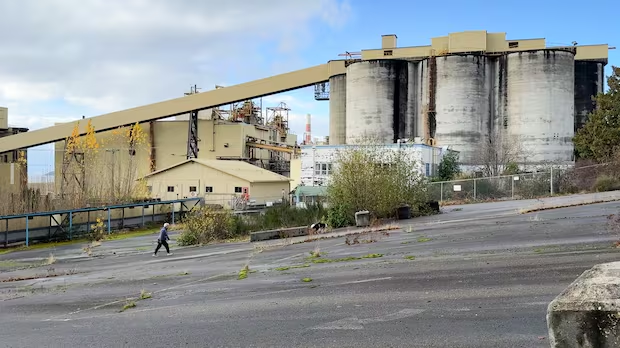
The old mill site in Powell River has been taken over by the local Tla’amin First Nation and the Cranberry Business Group.
They say they need the additional power from PREI to secure the industrial tenants they’re trying to attract, and bring back the jobs that were lost when the mill shut down.
The CER says this is the first time it has ever held a hearing for an electricity export application, and it received more than 2,500 written submissions against the application when it was first submitted.
WATCH | Hundreds oppose Powell River power producer’s proposal to export electricity:
Hundreds oppose Powell River power producer’s proposal to export electricity
Intervenors included the City of Powell River, advocacy group Energy Democracy for B.C. and the regional district. They argued that energy produced in the city should benefit locals.
At the hearing, PREI said the 30-year contract is needed for it to secure financing to update its facilities, which generate about $10 million in taxes and other revenue for the region.
Fair market access
During PREI’s final arguments on Thursday, a legal representative said the company has met the CER’s obligations of fair market access.
PREI lawyer Scott Birse said only B.C. Hydro was interested in buying power, but after two years of unfruitful negotiations, PREI negotiated a contract with a U.S. company instead.
“B.C. Hydro did not offer a price and terms and conditions that were competitive,” Birse said during the hearing.

The Cranberry Business Group and the Tla’amin First Nation are hoping to develop the former mill site in Powell River, but both say they need power to do so. (Submitted by Cranberry Business Group)
The company’s negotiations with B.C. Hydro and details of the deal it secured to export its licence to the U.S. are not being made public.
Birse said the CER’s rules do not include that domestic buyers be given right of first refusal, but simply that the company negotiate in good faith.
Lack of transparency: B.C. Hydro
On Friday, B.C. Hydro responded to the company’s claims in its final argument.
The Crown corporation said it took issue with PREI’s claim that it provided B.C. Hydro with fair market access.
“I’m talking about a record that is full of misleading, inconsistent admissions that have been filed at the start of this proceeding,” said lawyer Michelle Casey.
“There’s a pattern of behaviour of evasiveness and a lack of transparency.”
Casey said PREI didn’t negotiate in good faith with B.C. Hydro, and it didn’t make the same offer.

The mill in Powell River shut down in 2021. The company that used to supply it with electricity, PREI, has been exporting its electricity to the U.S. ever since. (Maryse Zeidler/CBC)
Former B.C. energy minister Adrian Dix has repeatedly said that the province needs to produce more energy to meet a projected 50 per cent spike in electricity demand by 2050.
But PREI argued that shouldn’t be considered as part of its licence application.
Treaty rights under consideration
Another consideration for the export licence is whether it could create any potential adverse effects on the rights of the local Tla’amin Nation, which reacquired part of the old mill site in 2025.
In its final arguments, PREI said it continues to maintain a relationship with the Tla’amin First Nation and there wouldn’t be any adverse effects for the nation.

Hegus (Chief) John Hackett, right, and Tla’amin executive councillor Dillon Johnson, left, are seen at tiskwat. The nation says tiskwat is part of its historic village. (Tla’amin Nation)
PREI also emphasized that it’s not aware of what the Tla’amin’s power needs are at the site, given that the nation has yet to confirm any plans there.
“Planning for a potential load is difficult in the abstract,” the company’s lawyer said. “The power generated by the facilities needs a home now.”
The company added that B.C. Hydro could supply the site with the power the nation needs, and the export licence wouldn’t affect that.
Nation disagrees
In its final argument’s, the nation disagreed that the deal wouldn’t adversely affect its members and territory.
“For over 100 years the nation has watched their lands and resources being exploited by third parties,” said the nation’s lawyer Jennifer Griffith.
The nation argued the licence would affect its Aboriginal title rights and limit its economic interests.

Powell River is a city of about 15,000 people on B.C.’s upper Sunshine Coast. (Maryse Zeidler/CBC)
Griffith said B.C. Hydro would need to substantially upgrade its systems to supply industrial-level power to the site.
The lawyer also questioned PREI’s assertion that the power facilities would remain unchanged, arguing that operating decisions would shift from PREI to the U.S. power buyer, and this could affect the nation’s lands and fish habitat.
The CER says it usually makes a decision on an export licence within 12 weeks of a hearing.