
Open this photo in gallery:
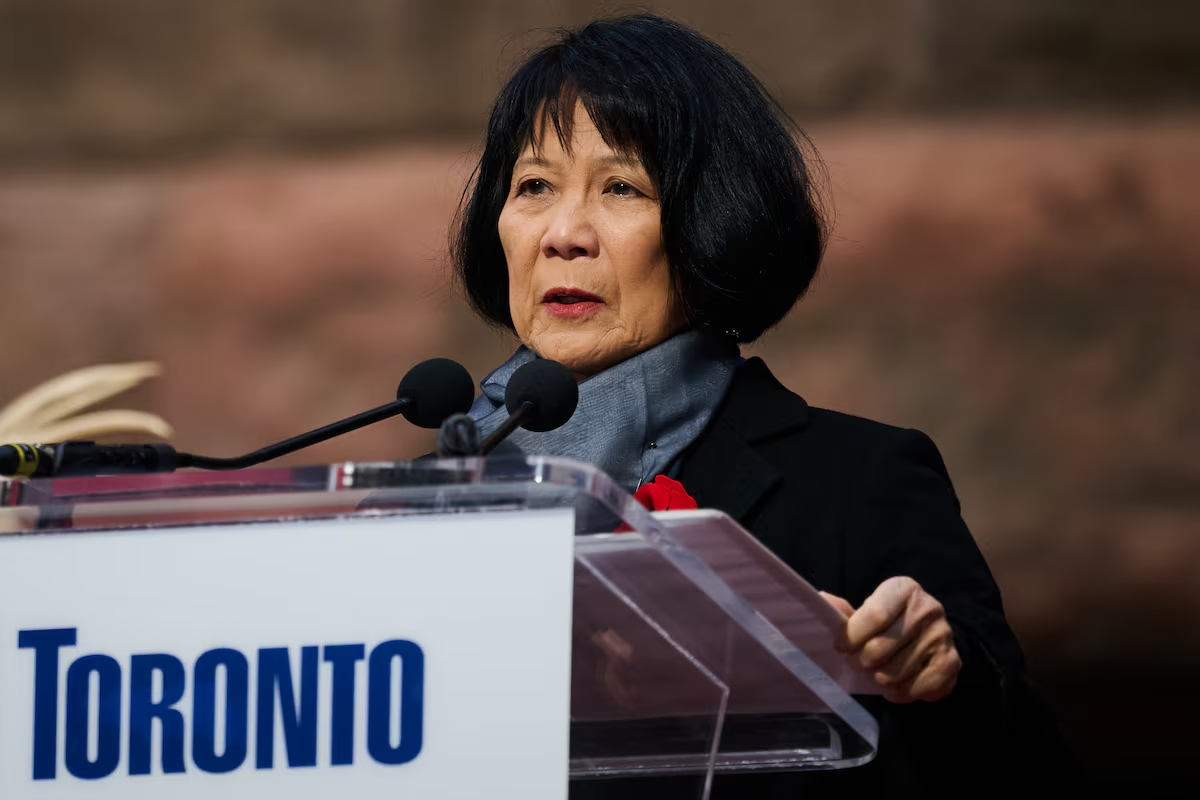
Toronto Mayor Olivia Chow speaks during Remembrance Day ceremonies by the memorial cenotaph outside Old City Hall in Toronto on Nov. 11.Sammy Kogan/The Canadian Press
Olivia Chow laid out her vision for a second term as Toronto’s mayor, underlining her campaign promises to tackle affordability issues while also pointing to the city’s fiscal challenges.
Chow’s speech on Wednesday afternoon punctuated the usual fanfare and formalities of the first meeting of Toronto’s new council. She presided over a council with a boosted progressive bloc and without one of her chief rivals, Brad Bradford, whom she defeated in last month’s election.
Her speech alluded to pledges to build more affordable homes, crack down on bad-faith evictions, expand school nutrition programs and cap transit fares at 10 rides a week.
She connected her own upbringing to the city’s promise as a place where families could afford to “build a better life.” Toronto is a city, she said, where an immigrant child from Hong Kong raised by a hotel maid in a St. James Town apartment could rise through the political ranks and be twice elected mayor.
“I have never forgotten what Toronto gave my family. And I have spent my life trying to make sure other families have the same opportunities,” she said.
Chow also referred to the “enormous fiscal challenge” facing Toronto and other cities across Ontario. The city is facing an estimated $1.1-billion hole in the upcoming budget.
Opinion: What kind of Toronto does Chow want to build?
The remarks come after Premier Doug Ford earlier this month shot down the idea of renewing the so-called “new deal” he struck with Chow in the early days of her first term. That three-year deal saw Ontario provide $1.2-billion in operating dollars for transit and shelter costs, while taking on the long-term maintenance costs of the Gardiner Expressway and Don Valley Parkway.
Toronto cannot keep going back to Queen’s Park year after year asking for another agreement, “another Band-Aid solution,” Chow said.
“We need a structured financial solution that is fair, predictable and grows with the economy.”
A new speaker was elected by council for the first time in 16 years, after longtime rules enforcer Frances Nunziata was unseated last month, ending her more than four decades in city politics. Ausma Malik, a close ally of Chow and a deputy mayor during the last term, was elevated to the position.
Last month’s election set the table for a shakeup in Chow’s leadership team, with the retirement of housing chair Gord Perks and the defeat of transit chair Jamaal Myers. The mayor will have seven new councillors to consider for high-profile committee roles, including former Liberal MPs Nate Erskine-Smith and Shaun Chen. Those selections won’t be revealed until Thursday.
Affordable housing is at the top of Chow’s first agenda. When council reconvenes Thursday, she will look to advance a rental housing incentive program dating back to her first term.
The program offers financial breaks to purpose-built rental housing developers who dedicate at least 20 per cent of a project to affordable housing. Those affordable units are exempt from city property taxes and fees, on top of a provincially mandated development charge exemption. For the other market-value rental units, the city offers a 15 per cent property-tax reduction and an indefinite deferral on remaining development charges.
The city has conditionally picked 19 projects for the latest funding round, representing 9,667 homes, including 2,059 affordable units. The city says those incentives add up to about $500 million, made possible by a $1.5-billion federal-provincial deal to offset a reduction in development charges citywide.