
Open this photo in gallery:
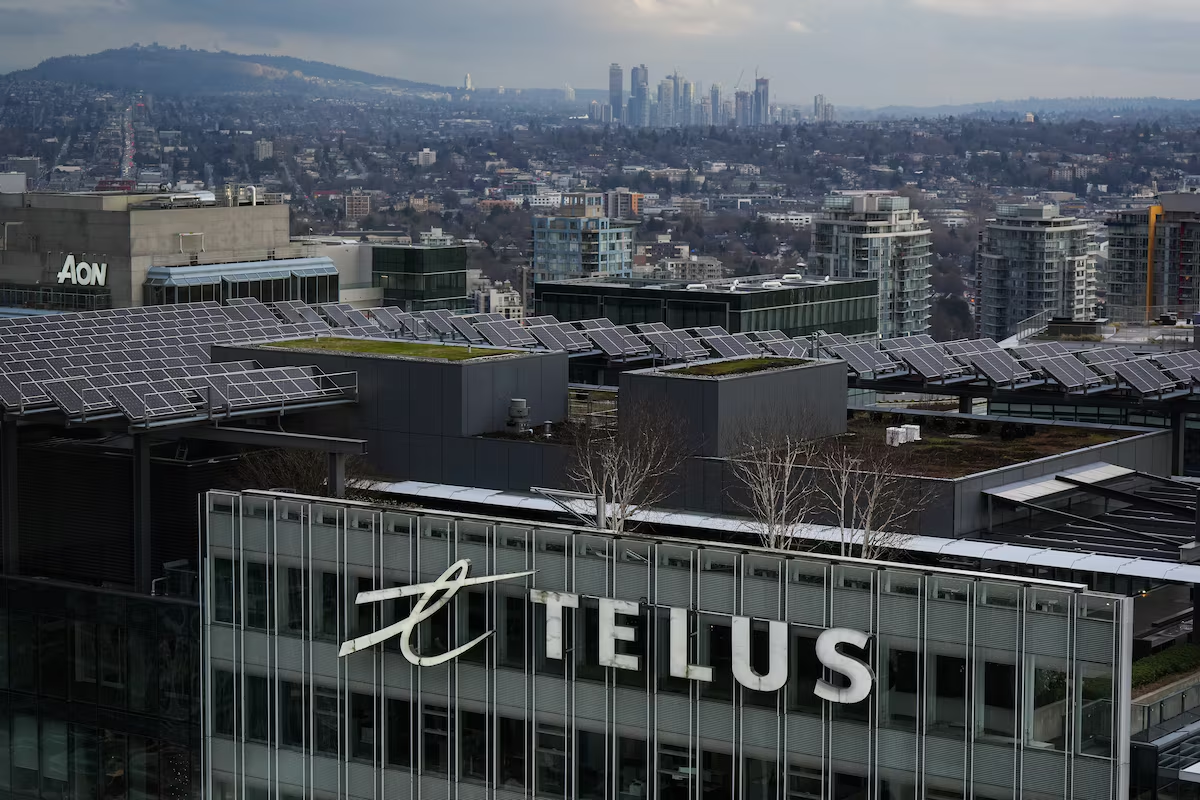
Telus Corp. headquarters is seen in downtown Vancouver. Telus had said it would equip the two data centres with some 63,000 computer chips from Nvidia Corp. over time and draw up to 163 megawatts of electricity.DARRYL DYCK/The Canadian Press
Telus Corp. T-T is ending its participation in two planned artificial intelligence data centres in Vancouver, the company said Sunday, after heavy local opposition and recent shifts in its AI investment strategy.
Telus said in May that it would co-develop two data centres with Vancouver-headquartered real estate developer Westbank Corp., citing growing demand among Canadian businesses and government for computing power.
With Telus no longer taking part, Westbank has said that it will continue developing the data centres with a new, yet-unannounced partner.
The two companies had planned to build one new data centre in Vancouver’s downtown core and convert an existing office building outside the city centre for AI use. Telus had also signed a memorandum of understanding with the federal government to support its data-centre initiatives, though the terms of the agreement have not been finalized.
Telus had said it would equip the two data centres with some 63,000 computer chips from Nvidia Corp. NVDA-Q over time and draw up to 163 megawatts of electricity. The converted facility in Vancouver’s Mount Pleasant neighbourhood was expected to open at the end of 2026, while the new build downtown was to come online in 2029.
Opinion: Data centres are on the rise – and they’re hyperscaling Canadians’ anger, too
However, Telus “has decided not to proceed” with those projects, said spokesperson Richard Gilhooley in an e-mail Sunday. Telus did not provide an explanation for the decision.
A source familiar with the matter said a lack of local support had caused Telus to reconsider. The level of opposition in Vancouver would have made it challenging to proceed, though the company remains open to opportunities at these sites in the future, the source said.
The Globe and Mail is not identifying the source because they are not authorized to talk publicly about the matter.
During the summer, hundreds of people gathered for protests in the city, calling for the projects to be cancelled because of concerns about environmental, community and housing impacts.
One of the two Vancouver locations remains subject to rezoning. Meanwhile, a motion from a city councillor, due to be considered in November, could impose stricter requirements on data-centre owners, including independent environmental assessments and possible fees.
Mr. Gilhooley said the company would continue expanding its facility in Kamloops, B.C., and is evaluating new partnerships and locations to expand its sovereign compute capabilities.
“These new sites will scale our capacity to meet the growing demand we are seeing at our existing facilities, which leverage clean, renewable energy and industry-leading power efficiency,” he said.
Telus’s data-centre push was one of the last initiatives taken under Darren Entwistle, who retired as chief executive officer in June after 26 years at the company. In May, he and federal AI Minister Evan Solomon announced the data-centre expansion and said Telus and Ottawa had signed a memorandum of understanding to develop the projects.
Opinion: The left and the right are united on their fear and loathing of data centres
The federal government touted Telus as a key part of its efforts to make the country less reliant on U.S. cloud-computing providers.
A spokesperson for Mr. Solomon’s office referred questions about the project to Telus and said the MOU is a framework for exploring more compute capacity. The spokesperson added that the government remains focused on building domestic computing infrastructure for Canadian companies, researchers and the public sector.
Mr. Entwistle’s plan for some of the company’s data-centre projects entailed purchasing the specialized and costly chips required for compute, a strategy that some analysts said came with heavy costs and the added risk that the chips could become outdated and need replacing.
Since then, new chief executive officer Victor Dodig has altered the company’s course, moving to sell off assets that had been acquired in previous years and cutting the dividend. AI data centres have become more central to the Telus plan under Mr. Dodig, but with a shift toward leveraging the company’s existing fibre networks.
Telus could help other data-centre developers by providing connectivity through its fibre network and is assessing a new initiative in data-centre shells with secured power, he told analysts during the company’s latest quarterly earnings call. A data-centre shell is the outer building without the interior compute components.
Westbank did not respond to The Globe’s request for comment Sunday. It previously confirmed Telus’s departure to the Daily Hive and said it was proceeding with a new partnership.
AI data centres have been a major source of turbulence for stock markets in recent months, driven by unease over high debt levels associated with the AI buildout and concerns that a Democratic midterm sweep in the U.S. could stall data-centre construction.
How Danielle Smith’s risky bet on data centres could backfire
Last week, Nvidia suffered a massive sell-off when co-founder and CEO Jensen Huang resigned after allegations of two affairs with employees and another with a woman who is allegedly a Chinese intelligence asset.
In the latest federal budget, the government said it is targeting 500 megawatts of new processing capacity domestically and will use backstop and offtake agreements to stimulate demand. That means the government could commit to buying capacity at these facilities or underwrite debt to fund them.
Some government and industry officials contend that Canada is an ideal place to situate data centres, in part owing to its cool climate and renewable energy capacity.
So far, major data-centre announcements have come from U.S. tech companies. Meta Platforms Inc. is constructing a $13-billion data-centre campus in Alberta, while Anthropic will lease space in one to be built in Nova Scotia. Anthropic is also in talks to lease space at another facility in Alberta, The Globe has reported.
To address public concerns about data centres, the federal government in September launched a voluntary framework around development. Signatories, which include Telus and BCE Inc. BCE-T, pledged to be transparent about the impacts of their projects, not shift electricity costs on to Canadians and create benefits for communities.