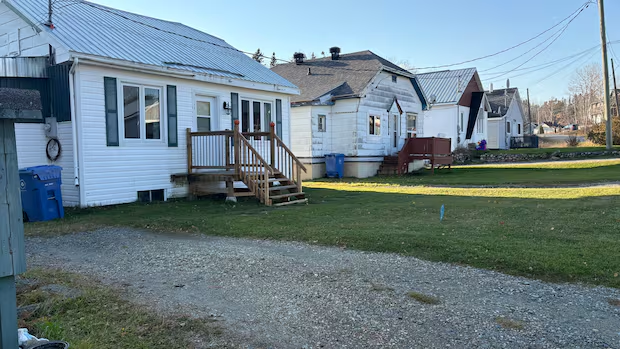
Residents of a small northeastern town are in shock and concerned about their properties after a mining company’s chief executive officer revealed he was considering building an open-pit gold mine in the community.
Caitlin McAllister moved to Virginiatown with her mother, Pat Stephens, in January for its affordable housing costs and the promise of a quieter lifestyle.
They sold their home in Grey County in southwestern Ontario, and purchased a house and an adjacent property in Virginiatown, which has about 500 residents, for $50,000.
“We bought the property both so that my mom could retire and so that I could fund my education because we got a significant price difference between the house that we sold and the one that we bought,” said McAllister, who is studying to become a veterinarian.
McAllister said they have also invested another $20,000 in repairs and upgrades to the property.
They’ve enjoyed their time in the community east of Kirkland Lake and the freedom the low cost of housing has afforded them, she said.
“This was one of the most affordable places in the province that we looked at to live.”

Residents packed a community centre in Virginiatown over concern about a proposed open pit mine that could force them to relocate. (Jimmy Chabot/Radio-Canada)
But on Sept. 29, a presentation from the mining executive upended their expectations for their future in Virginiatown.
Residents voice concerns at public meeting
Cadillac Mines CEO Rick Howes told investors that the company was considering an open-pit gold mine that would occupy most of the town.
“It’s about 250 homes, 500 people. The town has been on a downhill slide since the mine shut down in 1996, so there aren’t many services left in town for the people that live there,” he said at the meeting for shareholders.
“There’s not a lot of opposition as we talk to the community about moving the town.”
Now named Cadillac Mines, the company purchased the former Kerr-Addison gold mine in Virginiatown in 2015. The site was actively mined for decades, starting in the late 1930s. It closed in 1996.
At a public meeting on Oct. 28, concerned residents said they felt as though they had more questions than answers about the possible mine.
“I want to be sure that I’m going to be compensated for my moving expenses, for my costs of my home, for the cost of all the repairs I’ve made to my home,” Stephens told CBC News after the meeting with a Cadillac Mines representative.
“And I would like to guarantee that I will wind up with what I have now, which is a mortgage-free property.”

Pat Stephens says she moved to Virginiatown to retire in a more affordable home, but is now unsure about her future there. (Jimmy Chabot/Radio-Canada)
Stephens later said that a $300,000 payout would be reasonable if she has to move to a community where the cost of housing is higher.
“I do feel frustrated and quite worried.”
These were obviously comments that were not meant to hurt or to insult anybody. They were, I think, distasteful, and we’re regretting them.Leon Leblanc, Cadillac Mines president-COO
“Cadillac Mines has made them the only possible buyers for any of the houses in Virginiatown,” said Steve Mallack.
At the Oct. 28 meeting. Cadillac Mines president and chief operating officer Leon Leblanc apologized for the CEO’s earlier comments about a potential gold mine at the centre of the community.
“These were obviously comments that were not meant to hurt or to insult anybody,” Leblanc said. “They were, I think, distasteful, and we’re regretting them.”
Leblanc said the company expects to have more certainty about its plans for a mine by mid-2027.
Quebec’s lengthy mining displacement dispute
In 2008, a similar situation occurred in Malartic, Que.
Osisko Mining paid to physically move more than 200 homes and businesses away from a property that became an open-pit gold mine in the town.
Malartic resident Ken Massé refused to sell his property. After a years-long legal battle, a provincial tribunal ruled in the company’s favour and his property was expropriated.

Ken Massé’s house was the only thing standing in the way of an open-pit gold mine in Malartic. Que. In 2010, a provincial tribunal ruled to expropriate his property. (The Canadian Press)
Shane Rayman, a Toronto-based lawyer who specializes in expropriation, said it’s rare for governments to step in and expropriate a property on behalf of a corporation.
“Sometimes the government will use these extraordinary powers to expropriate land to complete a land assembly that is necessary for what should be a very important economic interest,” he said.
Rayman noted there was a prominent case in 2005 when Oxford County expropriated land so Toyota could build its assembly plant in Woodstock, Ont.
Brent Doberstein, a professor at the University of Waterloo who specializes in climate adaptation and displacement, said that in a mining-related displacement, the company should be transparent with the people affected.
“There’s no one single best practice, and I think through negotiation and discussion with the community and homeowners themselves, there could be a tailored process where each person decides what is the best approach.”
Doberstein said it’s especially important that the most vulnerable people in a community don’t end up worse off after a move, and that the company involved works to avoid disrupting people’s means of earning a living.
“Wherever they end up moving to, they should be receiving an equivalent quality of life,” Doberstein said.
“So I think rather than focusing on housing values and dollar figures, you should be focusing on quality of life and quality of housing.”