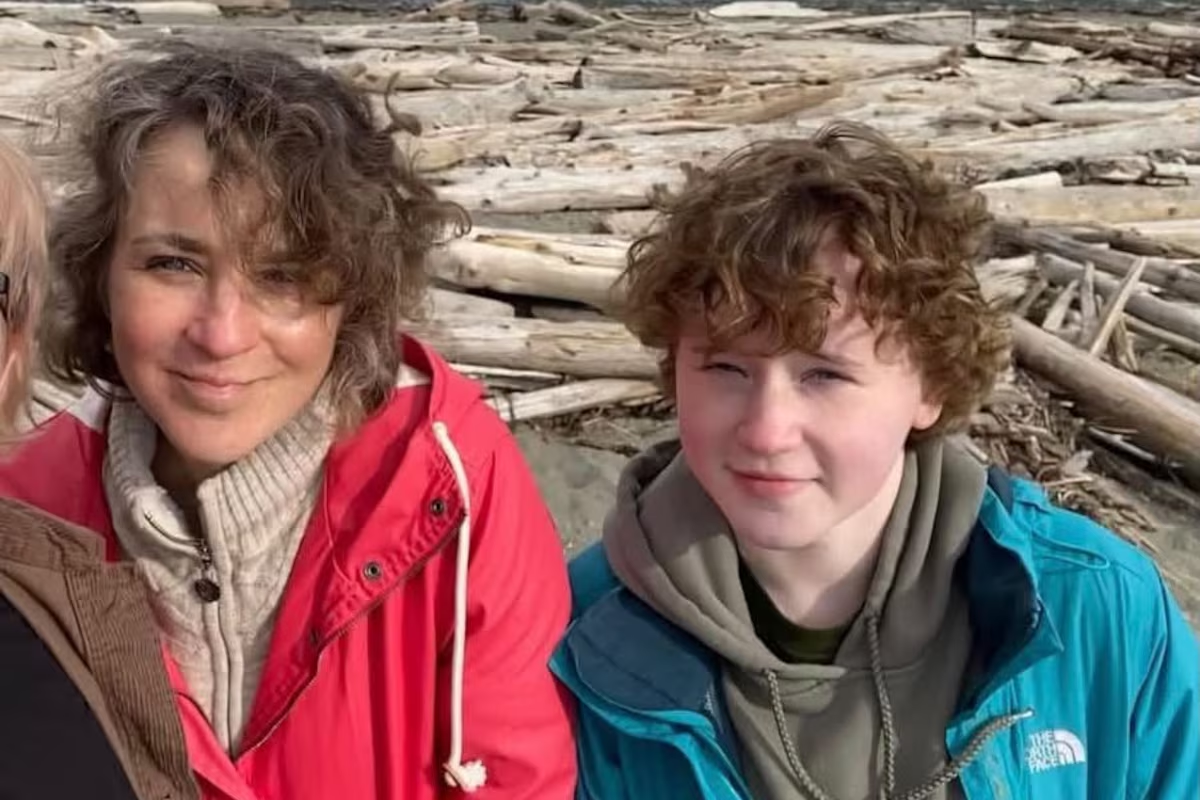

Open this photo in gallery:
Jennifer Balcarras and her 19-year-old daughter, Selah Reed, were found dead earlier this week in the Snooka West Trail area of Bella Coola, B.C.Courtesy of family
B.C. conservation officers investigating a suspected grizzly bear attack that killed a mother and daughter on the province’s central coast say they are working to determine whether it was the same animal that mauled a group of schoolchildren and teachers last year.
Inspector Jeff Tyre with the province’s Conservation Officer Service said Wednesday that it is still early in the investigation and that the bear population is large in the Bella Coola Valley, where both attacks took place.
“We do have the DNA from the last attack site and we will be working to collect DNA; that would be the only linkage we could put toward that,” Insp. Tyre told reporters. “It’s too early to draw any conclusions.”
Residents have been on edge since Jennifer Balcarras, 48, and her 19-year-old daughter, Selah Reed, were found dead earlier this week in the Snooka West Trail area of the unincorporated community, with evidence suggesting a bear was responsible. Ms. Balcarras was located on Monday and Ms. Reed was found a day later about 150 metres away. The pair were minutes away from their home.
Mother, daughter found dead in suspected grizzly bear attack in B.C.
Family members reported the pair as missing on Sunday.
The Nuxalk Nation, whose traditional territories are in and around Bella Coola, has issued a recommended 8 p.m. curfew and is operating a shuttle service for 12 hours daily as safety measures. Conservation officers and RCMP will conduct night patrols.
A local school hosted a healing drumming circle on Wednesday afternoon.
Insp. Tyre said it’s not yet known whether more than one bear was involved in the attack, and that the Conservation Officer Service has received reports of grizzly bear sightings in the area.
The service brought bear-capture equipment into the region late Monday afternoon and continued installing the devices on Tuesday, Insp. Tyre said.
“We understand a fatal grizzly bear attack can generate many questions and concerns in the communities and beyond,” he said. “I can assure you, a thorough investigation is being conducted to try and find answers as to what may have led to the attack.”
On Nov. 20, 2025, a grizzly bear attacked a large group of elementary-school students and teachers on a trail south of Highway 20 in Bella Coola. Eleven people were injured, including four – a teacher and three students – who were airlifted to hospital in Vancouver.
The teachers had used bear spray and bear bangers in an effort to fend off the grizzly, which was believed to be with her two cubs.
After the attack, authorities captured and tagged eight bears, but the offending animal was never found. At that time, there had been no other record of such an attack in the area.
Terry Webber, chief administrative officer for Nuxalk Nation, estimated the two attack sites to be three or four kilometres apart.
To the Nuxalk people, the grizzly bear is a respected creature, an emblem of physical and spiritual strength. “We’ve occupied these lands for thousands of years, and there always has been a co-existence of grizzly bears and Nuxalk people,” Mr. Webber said Wednesday.
The two recent attacks, however, have raised questions about the changing dynamics of human-grizzly contact in the Bella Coola Valley.
The grizzly bear population in the region has increased in part because the province banned grizzly hunting at the end of 2017. First Nations have still been permitted to harvest the bears pursuant to treaty rights or Aboriginal rights for food, social or ceremonial purposes.
Ms. Balcarras was an art therapist who had recently moved to Bella Coola from Bella Bella, about 110 kilometres west. She had four grown children and one grandson. Ms. Reed, Ms. Balcarras’s youngest, had worked as an educational assistant, loved ballet and doted on her cat, Suga.
Matthew Balcarras, Ms. Balcarras’s brother, told The Globe and Mail that she had lived for years in remote communities in southeast Alaska and was no stranger to the wilderness. He believed the two had intended to go for a short walk when the attack occurred and may not have had bear deterrents on them.
“She was comfortable with wild animals, firearms, hunting,” Mr. Balcarras said Tuesday. “She was a brave, outdoorsy person.”