
Listen to this article
Estimated 4 minutes
The audio version of this article is generated by AI-based technology. Mispronunciations can occur. We are working with our partners to continually review and improve the results.
Universities will be compelled to stay neutral and allow freedom of expression if the Alberta Legislature passes a new bill introduced by the United Conservative government on Tuesday.
Bill 38, the Advanced Education Statutes Amendment Act, 2026, proposes changes to the Post-secondary Learning Act.
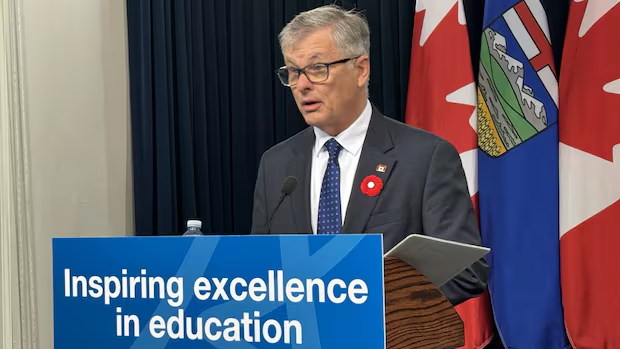
Myles McDougall, Alberta’s minister of advanced education, said while institutions have to remain neutral, the same requirement will not apply to individuals within the institution.
“The underlying political reasons why things are happening and the position as to who’s right or wrong, et cetera, that is not the role of the institution to take,” McDougall said during a news conference at the Alberta legislature.
“But certainly the people within the post-secondary system — students, faculty [and] administrators — are free to express their opinions.”
This bill follows a high-profile case where the University of Lethbridge cancelled an on-campus lecture by former Mount Royal University professor Frances Widdowson in 2023.
Widdowson is known for expressing controversial views. In 2020, she made headlines for suggesting residential schools provided educational benefits to First Nations children.
In September, a Court of King’s Bench justice ruled that the university was wrong to cancel Widdowson’s lecture.
Bill 38 also aims to cap tuition fee increases at two per cent in 2027-28 for Canadian students attending post-secondary institutions in Alberta. McDougall would not say what will happen in subsequent years.
The bill also establishes minimum standards for student codes of conduct, which will be specified in future regulations.
McDougall announced that Alberta will no longer include parental income when assessing eligibility for student loans.
He said this would free up about $118 million in additional loans within the existing student loan disbursement budget.
Expert panel
In 2025, an expert panel chaired by economist Jack Mintz, made 11 recommendations for the province’s universities, colleges and polytechnics.
The panel recommended the government mandate all public post-secondary institutions to be neutral and maintain freedom of expression. The panel also recommended Alberta update its funding model for post-secondary schools that would take into account enrolment, performance and base funding.
In an interview with CBC’s Radio Active on Tuesday, Mintz said while conducting consultation with post-secondary institutions for the report, he found they were warming up to the idea of neutrality and freedom of expression.
“Institutions themselves should be neutral and try to encourage discussion,” he said.
“That’s really what education is all about. It’s the opportunity [for] people to exchange ideas, to debate and to argue without getting into hostile situations.”
LISTEN | Jack Mintz on new post-secondary bill:
Radio Active6:35Jack Mintz discusses new post-secondary school changes
The Alberta government introduced a bill today that would allow the province to limit how much tution can cost at post secondaries, plus prevent the schools from taking a public stance on any political, social or ideological issues. Jack Mintz was previously on a panel that looked at the future of Alberta’s post-secondary funding and is a longtime economist and fellow at the University of Calgary.
MLA David Eggen, the NDP critic for advanced education, said that McDougall appears to have cherry-picked a couple of aspects of the Mintz report without dealing with funding.
Eggen said many students are having difficulty affording tuition and increases in the cost of living. He said Bill 38 doesn’t help them with that.
“Instead, it’s looking for some diversions around culture wars, around code of conduct for students and institutional neutrality — things that mean very little when our advanced education system is already under serious stress from a lack of funding from this government,” said Eggen.
The uncertainty of what happens with tuition after the 2027-28 academic year is raising concerns for the Alberta Students’ Executive Council (ASEC).
ASEC chair Rylee Mae, a student at the University of Lethbridge, said she has heard from students across the province who highlighted predictability, stability and affordability as the central issues when it comes to tuition.
She said even if tuition fee increases are capped, tuition can still remain unaffordable for students.
“A tuition ceiling still needs safeguards on how quickly tuition can rise, so students need to be able to plan for the cost of completing their education,” Mae said.