Several First Nations in B.C. are challenging the federal government in court and seeking to overturn its decision to designate the Pacific Link pipeline project as a project of national interest.
The Pacific Link pipeline, which is planned to transport one million barrels of Canadian crude oil per day, from Bruderheim, Alta., to a deepwater port near Delta, B.C., was designated as a project of national interest in October under the Building Canada Act.
That means the federal government has moved from considering whether it should be built to how it will be built by fast-tracking and consolidating the approval process, including environmental assessments.
The nations say listing the pipeline project in such a way “effectively acts as an approval,” and that Canada’s duties to consult and accommodate the nations must be met before a project is listed.
Among the First Nations that have filed judicial reviews in federal court is the St’át’imc Nation.
The St’át’imc Chiefs Council (SCC), representing 11 communities of St’át’imc Nation, said Monday morning that Canada has breached its duty to consult First Nations by listing the project.
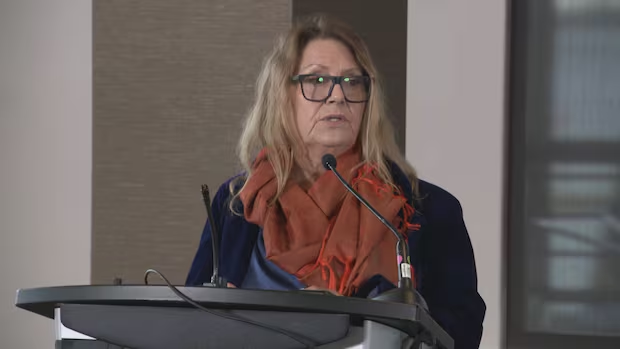
Kúkwpi7 Bonnie Adolph, chief of Sekw’el’was, a St’át’imc community, said she was proud to represent St’át’imc in the court case.
The nation says the proposed pipeline would carry crude oil across hundreds of rivers and streams, including the Fraser River — a river of great importance to the St’át’imc that Adolph has spent her life fishing on.
“An oil spill from the proposed Pacific Link pipeline and tankers project, whether in to the Fraser or into its tributaries, the Fraser estuary or the Salish Sea could be devastating,” she said.
“Our community, culture, and our language, and our inherent St’át’imc rights are tied to the health of the Fraser watershed.”
Adolph said her community wrote to the federal government’s Major Projects Office and asked to be consulted about listing the Pacific Link pipeline project.
The Crown refused to include them in consultations, Adolph said, because their territory isn’t directly on the proposed pipeline route.
Adolph said this “narrow, geographic approach” fails to account for interconnected and cumulative environmental risks to inherent St’át’imc title and rights.
She said the nation was told it could send comments like any member of the public, but not as a First Nation whom the Crown has a duty to consult.
“This is not lawful. This is not constitutional. This is not consistent with the UN Declaration of the Rights of Indigenous People,” Adolph said.
The nation says Canada gave an inadequate consultation timeline, during a busy summer when First Nations were occupied with harvesting and cultural activities. They say many nations were also facing wildfires.
They also say there was inadequate information provided, including uncertainties about the proposed pipeline route so its impacts could not be assessed.
WATCH | Indigenous communities raise concerns around Pacific Link pipeline:
Indigenous communities raise environmental concerns about Pacific Link pipeline
Other First Nations in B.C. that have applied for judicial reviews include Boston Bar First Nation, Cheam First Nation, Lower Nicola Indian Band, Kwantlen First Nation, kʷikʷəƛəm (Kwikwetlem) First Nation, Skeetchestn Indian Band and Tsartlip First Nation, and Cold Lake First Nations in Alberta filed a similar application for judicial review in October.
Adam Olsen, the Tsartlip First Nation’s chief negotiator, told CBC’s All Points West that the process for consultation with First Nations under the Building Canada Act was “very challenging.”
“The Major Projects Office was very clear with us — once a project is listed [as in the national interest], it’s not about if the project is going to go forward, but how,” he said.
“And that becomes very challenging when the Crown has a duty to consult with us and act in an honourable way.”

Adam Olsen, the chief negotiator for the Tsartlip First Nation, said the new consultation processes under the Building Canada Act were challenging. (Michael McArthur/CBC)
CBC News has reached out to the federal government for a response.
Pacific Link said in an emailed statement that it respects the right of Indigenous communities to raise concerns.
“Indigenous participation is central to the project, including exploring opportunities for meaningful equity ownership and economic participation,” said the pipeline proponent.
Union of B.C. Indian Chiefs Grand Chief Stewart Phillip said at a news conference that the law is on side of First Nations.
“My fundamental, basic message to the corporations is: buyers beware when you invest in British Columbia. Because we’re not standing down. We’re not stepping back.”

B.C. premier-designate Lorne Doerkson said that it would be inappropriate to comment on a matter before the courts. (Nav Rahi/CBC)
In a statement, B.C. Premier-designate Lorne Doerkson said it would be inappropriate to comment on a matter before the courts.
“This is a project that matters to British Columbia’s economy and to the thousands of people who will build and operate it, and I want to see it done right, with the highest standards for protecting our coast,” he said.