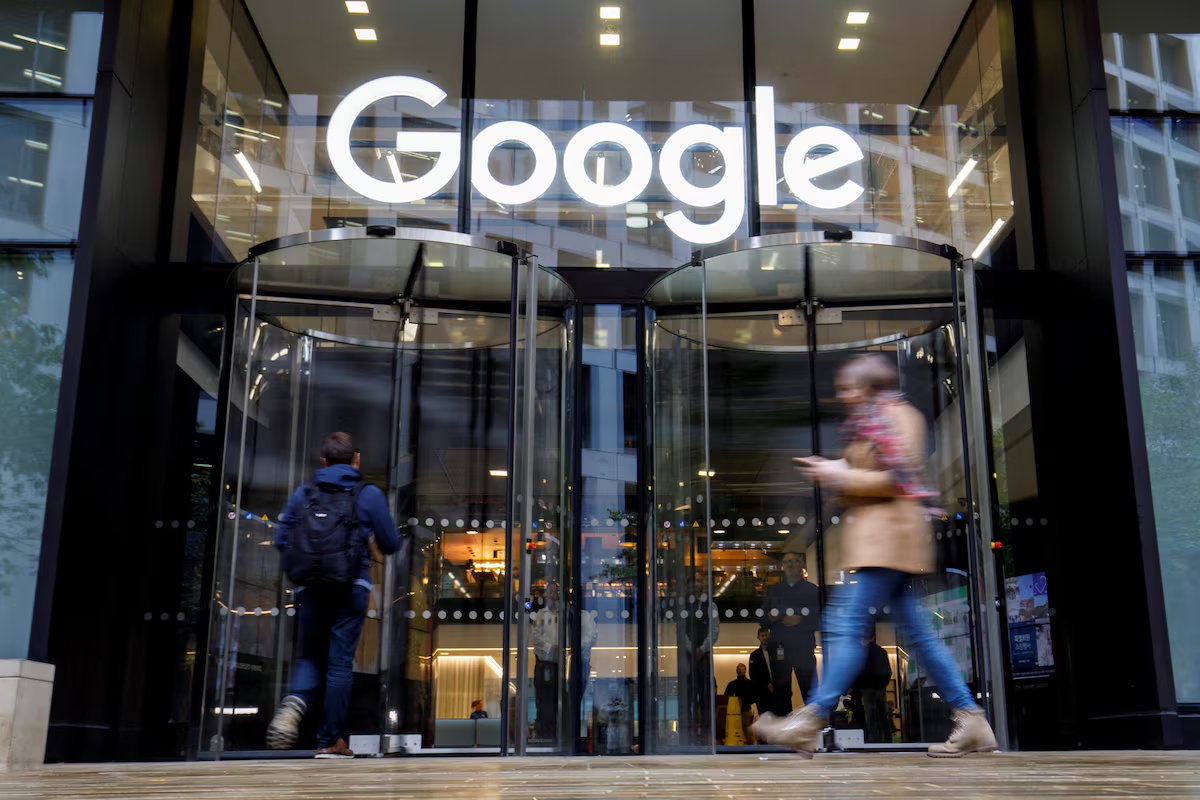

Open this photo in gallery:
People walk past Google’s U.K. headquarters in London in November, 2018.TOLGA AKMEN/AFP/Getty Images
Welcome to The Globe and Mail’s business and investing news quiz. Join us each week to test your knowledge of the stories making headlines. Our business reporters come up with the questions, and you can show us what you know.
This week: The Bank of Canada raised its benchmark interest rate, three law firms in the Toronto area were put into receivership and Bombardier is teaming up with Britain’s BAE Systems. Take our quiz and find out what happened in business.
1What did Royal Bank of Canada say no to this week?
a. Cryptocurrency accounts
b. Personal AI agents
c. Prediction markets
d. A pay increase for senior executives
b. Developers tout the ability of artificial intelligence agents to help busy consumers compare offers and find better deals. Banks aren’t so sure. They worry that these semi-autonomous AI snoops are security risks. This week, RBC decided to block third-party personal AI agents from directly accessing the bank’s digital properties, including online banking. Bank of Montreal and Toronto-Dominion Bank have also banned third-party agents.
2The prospectus for Anthropic’s initial public offering finally dropped this week. Let us summarize it for you: Artificial intelligence may wipe out humanity, but look at the potential profits! All joking aside, even if everything works out perfectly, there is still the not-so-small matter of governance. Who will effectively control all major decisions at the AI giant?
a. A small group of hedge funds and institutional shareholders
b. Seven founders
c. A public benefit board dedicated to “the rational good of humanity”
d. Elon Musk and Peter Thiel
b. Anthropic’s seven founders will hold voting power amounting to 50.1 per cent of the total. That gives them the ability to decide the outcome of any matter submitted to a shareholder vote. As a result, common shareholders will have little sway over such decisions. Feel any better about AI risk now? No, we didn’t think so.
3To no one’s surprise, the Bank of Canada raised its benchmark interest rate this week. It was the first hike in:
a. Six months
b. One year
c. Two years
d. Three years
d. The Bank of Canada raised its benchmark interest rate for the first time in three years, boosting it to 2.5 per cent, up from 2.25 per cent. The bank also revised its inflation and economic growth forecasts higher, and said it sees the annual rate of inflation remaining above 3 per cent through much of next year.
4The U.S. Federal Reserve also announced a rate decision this week. It…
a. Raised rates
b. Cut rates
c. Held rates steady
d. Deferred its decision
c. It’s been five years since U.S. inflation was at or below its 2 per cent target rate, but the U.S. central bank doesn’t seem overly concerned. In a 10-2 decision, the Federal Reserve said this week that it would maintain its benchmark interest rate within the current 3.75-per-cent to 4.00-per-cent range.
5Why were three law firms in the Toronto area put into receivership this week?
a. They were alleged to have laundered money
b. They were alleged to have funded drug transactions
c. They were alleged to have mishandled funds in real estate transactions
d. They were alleged to have mishandled funds intended for charities
c. The three law firms were put into receivership after being accused of mishandling millions in client funds during real estate transactions. Ontario Superior Court Justice Sean Dunphy warned the transactions could be just “the tip of an iceberg.” He said the mishandling of legal trust accounts during real estate transactions has occurred “with distressing regularity.” So why aren’t more lawyers going to jail? Excellent question.
6Umios Corp. offered more than $800-million in cash to buy High Liner Foods, the century-old Nova Scotia-based fish producer. Where is Umios based?
a. Japan
b. South Korea
c. The United States
d. Britain
a. Umios is based in Japan. It has a very limited North American presence, comprising pollock processing operations in Alaska and a production facility just outside of Seattle for making surimi, a paste made from fish protein.
7Fintech darling Wealthsimple continues to be the hottest show in Canadian financial services, raising $425-million in its latest financing round. Who was the lead investor in the recent financing?
a. Canada Pension Plan Investment Board
b. A New York-based hedge fund
c. A Canadian life insurance company
d. A Singaporean wealth fund
d. Singaporean sovereign wealth fund GIC led the financing round. Wealthsimple will use the money to continue building out its banking and investing services as it attempts to rival Canada’s largest financial institutions.
8Why is Canada’s Bombardier teaming up with Britain’s BAE Systems?
a. To work on fighter jets
b. To develop combat drones
c. To build helicopters
d. To research satellite technology
9Buzzword alert: What is the “hackening”?
a. A worldwide cabal of cybercriminals
b. A potential AI-powered assault on the internet
c. A plan to freeze Canada’s financial payments system
d. A project to deter online theft
b. Mix hacking and happening and you get hackening. It refers to the possibility that increasingly powerful artificial intelligence will lead to a wave of chaos over the next couple of years. The fear is that increasingly powerful AI tools will expose vulnerabilities in security software and allow malicious actors to break into computer systems operated by governments and banks.
10Google’s parent Alphabet saw its share price dive this week. What caused the plunge?
a. A shakeup in the executive suite
b. A big court verdict against the company
c. Competition from OpenAI
d. Concern over how much it is spending on AI
d. Alphabet is burning through cash as it pours resources into artificial intelligence. This week, the tech giant reported negative free cash flow of US$9.07-billion for its most recent three-month period. The results reflect the huge costs of the AI build out, but it’s not exactly clear what management is supposed to do. Investors are concerned both by the risk of the company overspending on AI and the danger of it falling behind rivals by not spending enough.
11Ouch. Allied Properties Real Estate Investment Trust, the big office landlord, has had a rough year and this week:
a. Replaced senior management
b. Sold off a flagship property
c. Cut its cash distribution
d. Closed down an office tower
c. Allied slashed its cash distribution by 90 per cent, its second payout cut in the past 12 months. The Toronto-based business says it is putting a priority on paying down debt.
12Which tech company just completed the biggest financing ever by a Canadian firm?
a. Cohere
b. D-Wave Systems
c. Wealthsimple
d. 1Password
a. Cohere, a Toronto-based AI company, has secured most of a planned $7-billion financing in a deal that would value the firm at $35.7-billion. In an unusual move, Ottawa is putting $1.6-billion into the deal and taking an equity stake in the company – a direct investment of unprecedented size in a technology firm. It is part of the federal government’s strategy to build out Canada’s AI capabilities.
How well did you do?
Answer all of the questions to see your result
This wasn’t your week, but that’s okay! We’ll be back next Friday with another business and investing quiz, subscribe to our weekday Business Brief newsletter to prepare.