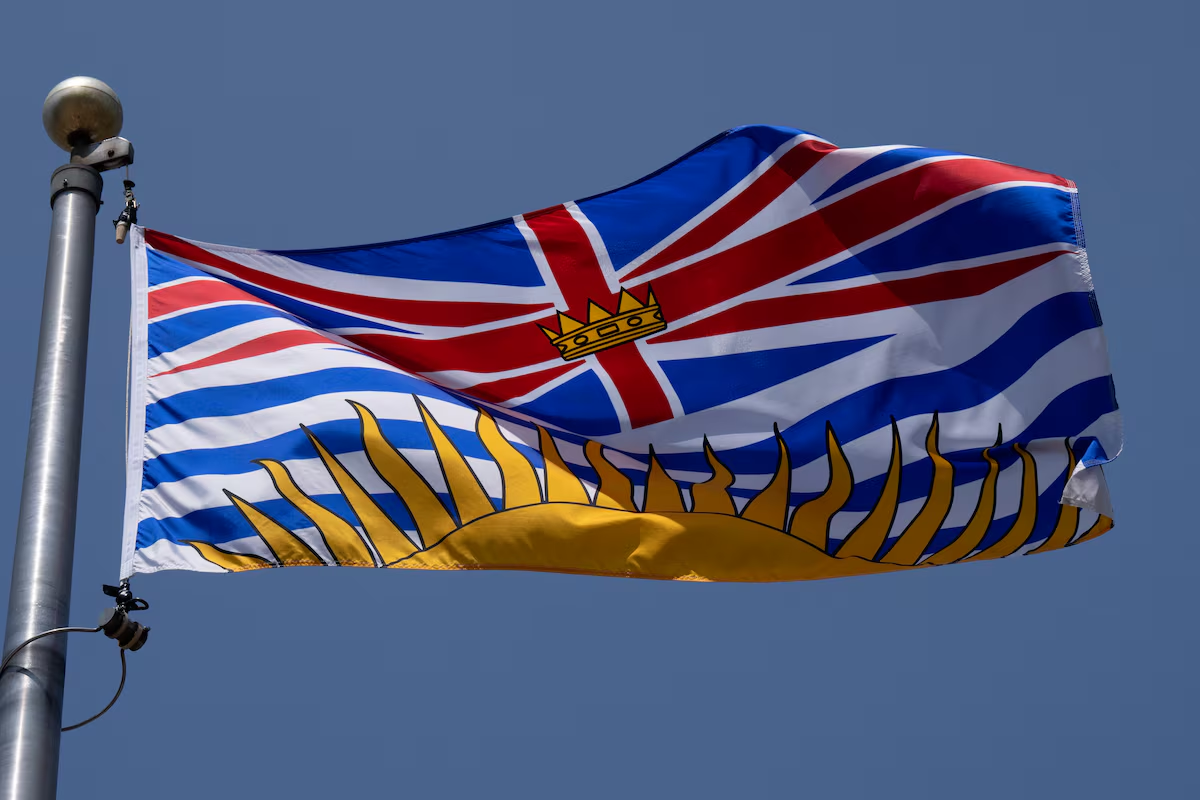

Open this photo in gallery:
British Columbia’s provincial election is on Oct. 24.Adrian Wyld/The Canadian Press
On Oct. 22, reporters Mike Hager and Ian Bailey and columnist Gary Mason answered reader questions about British Columbia’s coming provincial election.
On Sept. 22, Premier David Eby called a snap provincial election, citing the “existential” threat of U.S. President Donald Trump. The NDP Leader’s decision followed months of disarray within the B.C. Conservatives, whose leader resigned just days before the election was called. Voters return to the polls barely two years since the last provincial election.
Readers asked about Mr. Eby’s chances at winning, Conservative leadership and in which ridings the Greens are expected to do well. Here are some highlights from the Q&A.
All eyes on election day
Is calling an election when the opposition party doesn’t have a permanent leader unprecedented? Could the Lt. Governor have said no to dissolving the legislature?
Mike Hager: Scholars have told us that, though it could be seen as craven, calling the snap election two days after Kerry-Lynne Findlay was turfed as the Opposition leader and replaced on an interim basis by Lorne Doerkson is constitutional. Lt.-Gov. Wendy Lisogar-Cocchia would be loathe to weigh in on the ethics of this snap election call, as doing so would open up a whole whack of other scenarios where she would have to jump in to override future calls for an election.
Gary Mason: From everything I’ve read there is only one other situation that is similar. In 1969 in Manitoba, the Progressive Conservative government called an election while the NDP was in the midst of a leadership race which was eventually won by Ed Schreyer, who was only 33 at the time. The NDP ended up winning the election in part because voters were angry by the government’s cheap tactic.
Open this photo in gallery:
B.C. NDP Leader David Eby greets health care workers and supporters in Vancouver on Thursday.DARRYL DYCK/The Canadian Press
What has Eby accomplished during his time in office?
Ian Bailey: Andrea Woo and I took a look at Mr. Eby’s record here. The outcome of the election will be crucial to determining whether Mr. Eby’s political story is over or if he gets another chapter.
How could this election impact politics at the national level, major projects, etc.?
Hager: There appears to be very little daylight between the two main parties and their support for projects of “national interest.” However, Lorne Doerkson has said the Conservatives’ No. 1 priority if they form government is to repeal the province’s 2019 Indigenous reconciliation law, which could introduce a large amount of uncertainty in B.C. and lead to more opposition to such projects.
B.C. has needs for more money for health and education, but has a growing deficit and debt. How have the parties said they’ll deal with it?
Mason: You’re zeroing in on what I consider the biggest question of the election: How does the next government balance needs in health and education with the province’s deteriorating fiscal situation? Simply put, the province can’t continue to run the kind of gargantuan and irresponsible deficits that they have been under the NDP. If the Conservatives get in, we will see if they have the courage to put the brakes on spending or continue down the same path as the NDP. But that path is completely unsustainable.
What are the chances this backfires for the NDP? Could the NDP suffer bleeding popular support to the B.C. Greens or CentreBC?
Hager: Yes, the New Democrats could certainly lose ground to the Greens in some crucial ridings. But the opposite scenario may be true as well, whereby Green supporters hold their noses and vote orange in an attempt to thwart the Conservatives from forming government. CentreBC is not thought to be a big factor in many ridings, but their star candidate, former Green Party leader Andrew Weaver, might present a challenge to the NDP in his hometown of Oak Bay.
Open this photo in gallery:
B.C. Green Party Leader Emily Lowan in Vancouver on Oct. 14.DARRYL DYCK/The Canadian Press
Is a wealth tax under federal or provincial control? How can Green Party Leader Emily Lowan publicly promise this, without federal support?
Hager: Ms. Lowan announced that her party would introduce a one-time tax of 5 per cent on net wealth above $50-million, 10 per cent above $100-million and 20 per cent above $1-billion. This would raise an estimated $22.2-billion after accounting for administrative costs and behavioural responses, the party said. There are real questions about how this would work.
I called up economist Jared Walker, and he said the Greens admit they would probably face a Constitutional challenge on this tax. But, they could try it by getting Statistics Canada and CRA filings on the province’s wealthiest families, monitoring them to see if they’re moving any assets out of the province, and then hit them with this prohibitive levy. It would require a sizable investment in B.C.’s enforcement ability, but Mr. Walker said that would bear fruit in other areas like cracking down on people and businesses “bending the rules” with other taxes.
Which ridings do the Greens have a shot at and who would come in second place in those ridings?
Hager: They have a real shot to keep the two they won in the last election: West Vancouver-Sea to Sky, which they won by just 676 votes over the Conservative candidate, and Green Party Leader Emily Lowan’s riding of Saanich North and the Islands, where they beat runner-up New Democrat candidate in last time.
Looking past the polls
Is Eby’s goose cooked? Even if the best case scenario plays out for him, how does the NDP continue on with him?
Mason: Well, I’d certainly say he’s in a pot of boiling water and it’s getting hotter by the day. Look, people are not in a great mood out there. And they really feel Mr. Eby used a disingenuous excuse – Donald Trump’s tariff’s – to justify the election. No one is buying it. And the fact that it was called and overlapped with municipal elections across the province made people even more upset. And that’s before we even begin examining the NDP’s record under Mr. Eby, which, if we’re being honest, isn’t much to brag about.
What are the implications of Doerkson being an “interim leader”? Does that mean if the BC Conservatives win the election someone else in the party may become premier?
Bailey: No. That would be something to see if after the challenges of leading the party in a campaign, Mr. Doerkson handed the prize over to someone else. My understanding is that if the Conservatives win power on Saturday, the Doerkson era of B.C. politics begins and he goes on as the premier of the province.
Open this photo in gallery:
B.C. Conservative Leader Lorne Doerkson earlier this month.Jimmy Jeong/The Globe and Mail
The B.C. Conservative party portrays themselves as party that includes candidates with widely varying beliefs. If they come to hold a majority government, what are your predictions on the longevity of the party?
Hager: Elenore Sturko was a prominent MLA for the Conservatives before defecting and now leading the upstart CentreBC. She maintains the fringe elements have unmoored the pegs of this big tent and a handful of outspoken incumbent Conservatives hold bigoted and xenophobic views.
The past year has seen a lot of recrimination and backstabbing in the party over ideological purity tests as to who is a “true” conservative. Insiders say Mr. Doerkson was chosen as leader because everyone agreed he was the least likely to sewer them. He has already turfed a couple of young candidates in no-chance ridings once their hateful viewpoints surfaced, but has stood by at least one candidate repeatedly accused of homophobia in a swing riding they desperately need.
He told us during our recent editorial board meeting that he acknowledges a “robust” debate on “culture war” issues within his caucus but will ensure a Conservative government respects everyone. With so many incumbents set to once again hold sway within the party, we can expect the unexpected!
Mason: Power does remarkable things to political parties. It can bring them together because nothing beats being in government, especially after a long spell on the Opposition benches. There are far more opportunities to reward people in your caucus when you’re in government, too. At the same time, it can sometimes lead to disgruntlement among those who feel they are continually being looked over for important positions like cabinet. But this is a predicament the Conservatives will gladly take on, I suspect. We honestly don’t know what that caucus will be like, and the driving forces within it, until they get into government if the party does.
Bailey: 1981 saw the release of the book “Discipline of power: The Conservative interlude and the Liberal restoration” by former Globe columnist Jeffrey Simpson about the challenges the Progressive Conservatives had after winning the 1979 election. Great book. Worth reading. And relevant to this B.C. moment.
Holding power may impose discipline on a B.C. Conservative government and maintaining that discipline will be a challenge for a Premier Doerkson and his inner circle. One of the most interesting things to watch, if the Conservatives win, will be whether they are able to go forward without visible conflicts due to divisions in the party.
What happened to the BC Liberals? What about Kevin Falcon? Will he be running at all?
Mason: I honestly don’t see any future for the BC Liberals, at least not at the moment. I haven’t heard much about Kevin Falcon since he walked away from BC United before the last election. Been keeping a low profile. His sister-in-law, Caroline Elliott, is the one in his family making all the news as a Conservative leadership runner-up and now a candidate for the party. If the Conservatives win, look for her to get a high-profile cabinet position.
This Q&A has been edited and condensed.