
Open this photo in gallery:
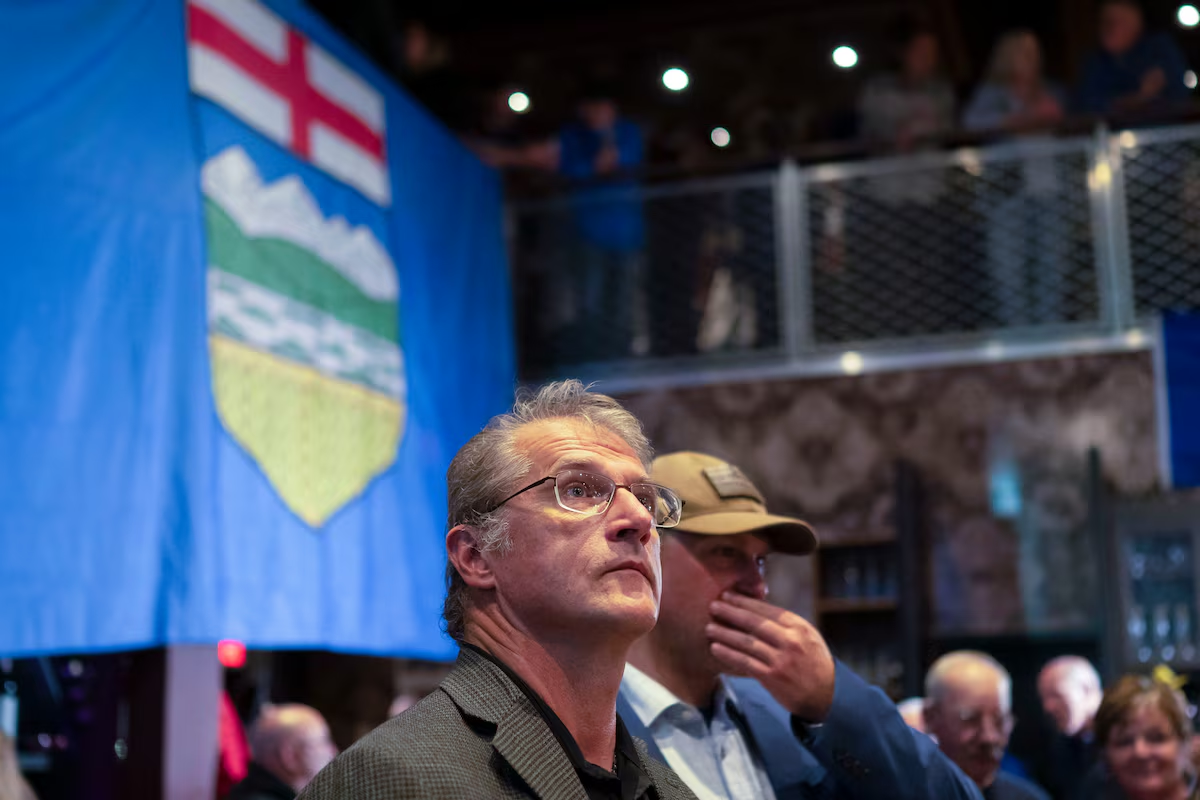
Alberta Prosperity Project supporters watch the release of the referendum results in Edmonton on Monday night. The political fallout from the process now takes centre stage.John Ulan/The Canadian Press
Albertans have voted against separating from Canada in a historic referendum, according to preliminary results released in the early hours of Tuesday morning.
The results, however, will likely do little to silence separatist sentiment across the province and could further escalate questions about whether Alberta Premier Danielle Smith can maintain control of her party – and the province.
The political fallout will now take centre stage as Alberta’s United Conservative Party, Opposition New Democratic Party, federalists and separatists decide how to leverage this pivotal moment in the province’s history.
Here are five key takeaways following Monday’s vote.
High turnout and delayed results
Elections Alberta tallied the results of the separation question first. At 7 a.m. MT (9 a.m. ET) on Tuesday, with 79 per cent of voting locations reporting, the agency said more than 1.37 million Albertans supported staying in Canada, or 76 per cent, while more than 438,000 elected to launch the legal process to hold a second referendum on secession, or 24 per cent.
Follow our live coverage of the referendum aftermath
Early results indicate voters in Calgary and Edmonton threw their weight behind Confederation at a rate outpacing their rural counterparts. The more the spread widens, the more difficult it will be for the Premier to keep the peace within the United Conservative Party.
There were roughly 3.15 million eligible voters in Alberta, and residents came out in droves. Nearly 1.36 million Albertans cast an advance vote or special ballot before referendum day, exceeding the turnout for the 2023 provincial election. Just over 43 per cent of eligible electors voted in advance, compared with 27.5 per cent in 2023.
The ballots are being hand counted because the province no longer allows electronic tabulators. Polls closed later than planned Monday after delays in opening at multiple voting locations.
Open this photo in gallery:
Supporters of the Forever Canadian group celebrate the referendum results in Edmonton on Monday night.Todd Korol/Reuters
Separatists here to stay
The outcome of Monday’s vote didn’t matter: Separatists have been clear that their work is far from over.
Mitch Sylvestre, leader of the Alberta Prosperity Project, one of the province’s most prominent separatist organizations, said his first option in trying to advance his agenda was the referendum. Now, he’s looking at other options.
“You have to get involved in government. That’s the different way,” he said, though he added he believes an independence party would have slim chances of winning a general election.
Mr. Sylvestre said he would meet with “independence leaders” for breakfast on Tuesday to decide next steps.
His partner at the Alberta Prosperity Project, Jeff Rath, was more defiant in defeat, taking aim at the Premier.
“The next phase for us moving forward is an institutional phase where we move forward to take control back of our party, which is the United Conservative Party of Alberta,” Mr. Rath said.
Lawyer Keith Wilson, who co-founded the pro-independence Let Alberta Decide, said Monday night that the results show many people want change. “At least a quarter of Albertans feel that Alberta needs to be treated better, that Alberta can do better.”
Premier’s future under review
Federalists will be pleased that Albertans have voted to stay in Canada but the outcome is unlikely to position Ms. Smith as an ally to the movement.
The Premier has a contentious relationship with the pro-Canada crowd, who have accused her of pandering to separatists and voiced dissatisfaction with her muddled messaging on Alberta’s place within Canada.
While Ms. Smith has said repeatedly that she wants Alberta to be part of a “united Canada,” she has been relentless in her push to squeeze Ottawa for additional powers for the province. It has also not gone unnoticed by many federalists that there is significant overlap between the people who pushed her into power and the separatists.
Former Alberta deputy premier Thomas Lukaszuk, the head organizer of Forever Canadian, the largest federalist group, said he isn’t confident that Ms. Smith won’t hold another referendum in the future.
Ms. Smith is now left with the difficult task of maintaining control of her party while broadly appealing to Albertans. Already, some separatists are rallying UCP members to oust her at next month’s annual party gathering.
Gary Mason: Alberta’s separatist movement is built on false and unearned authority
Tegan Hill: Alberta remains, and so does its frustration on equalization and energy policy
Alberta NDP could gain ground
The Alberta NDP, which has positioned itself as staunchly pro-Canada, has capitalized on widespread opposition to the referendum, gaining political momentum in recent months after a long period of stagnation.
A sign that the separatism debate was weighing down the UCP’s popularity came in September when NDP candidate Kyle Campbell won a by-election in the reliable conservative riding of Calgary-Shaw.
Ms. Smith blamed the stunning upset on a vote split between two conservative parties and low voter turnout. But political strategists argued the referendum turned the by-election into a protest vote against separation.
Recent polling also suggests that the divide between the UCP and NDP has narrowed, with the two parties locked in a virtual tie.
NDP Leader Naheed Nenshi said the referendum has hit a nerve with voters. His job now, he said, is to make sure Albertans hold on to that feeling until the next provincial election.
“My challenge is really to help Albertans remember what happened, remember how frustrated they were today but also remember that they deserve better,” Mr. Nenshi said on Monday night.
Still, it’s a full year before a scheduled provincial election, giving the UCP significant runway to calm any lingering tensions from the referendum.
Relationship with Ottawa remains complicated
Ms. Smith’s relationship with Prime Minister Mark Carney has warmed over the past year, particularly over his approach to energy and pipelines. On Friday, the pair stood side by side in Red Deer to rally support for Alberta to remain in Canada.
But the complicated – and often tense – relationship between the province and Ottawa is a tale as old as Alberta.
The two leaders still have areas of disagreement, including on the other nine questions included in the referendum. While Ms. Smith urged voters to say yes to proposals on topics including immigration, health care and constitutional reform that would wrest power away from Ottawa, Mr. Carney wanted voters to reject them.
Votes on the other nine questions were still being tallied early Tuesday. The full count is expected to take two days to complete.
Ms. Smith has said that the new mandate from the other ballot questions would be used as leverage to increase provincial autonomy, shaping the federal-provincial relationship in the days and months to come.
With files from Matthew Scace and Temur Durrani in Edmonton and Emma Graney and Carrie Tait in Calgary