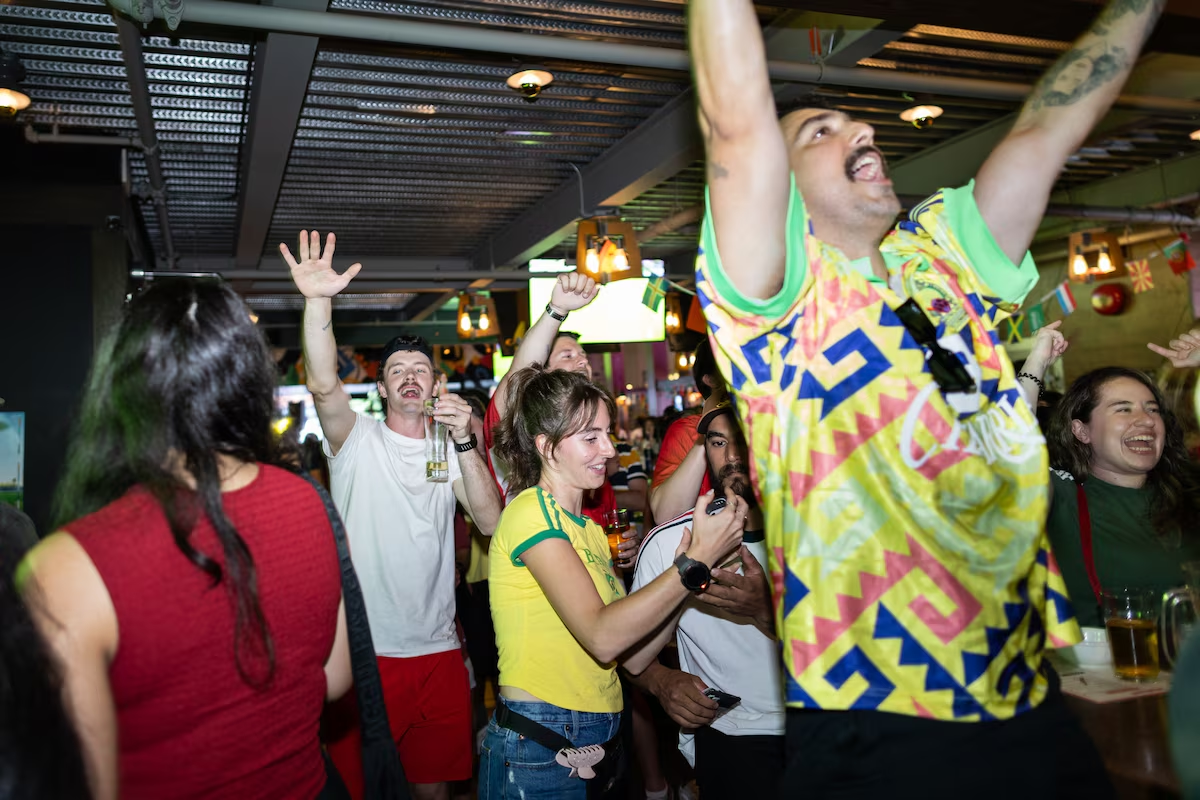

Bars and restaurants in downtown Vancouver spent months preparing for an influx of visitors but were still blindsided by the sheer volume.
Granville Street – transformed into a pedestrian zone with expanded patios, vendors and live entertainment – became the unofficial gathering place for World Cup revellers. The five-block stretch drew such overwhelming crowds that operators scrambled to add staff, called in favours to restock fast-depleted beer kegs and worked marathon shifts.
The Globe and Mail spoke with managers whose best laid plans were trampled beneath a crush of smoke bombs and face paint. We also shadowed Ms. Banks for 12 chaotic hours at her busy sports bar, tracking her heart rate and step count throughout.
Like Ms. Banks, staff are exhausted and frazzled – and say they would do it all again.
The B.C. government estimates that 350,000 people will visit the Vancouver region throughout the tournament. BC Place is hosting seven matches, and these days are exceptionally busy for Granville Street businesses.
Tyler Broers, the general manager of the Irish pub Dublin Calling, spent a year preparing, hiring about 15 additional staff members. His pub was the meeting place for Australia supporters as their Socceroos faced off against Turkey in the city’s first match, an arrangement made seven months in advance.
On game day, the three-storey pub packed in nearly 800 green-and-gold-clad Aussies, with hundreds more spilling onto the street. Patrons made off with patio umbrellas, beer ran dangerously low and a wall of police officers stepped in to remove drunken supporters from patio pillars that were at risk of collapsing.
“We had pretty much all of Australia here ready to drink us dry,” Mr. Broers said.
After a mad dash to secure 20 more kegs, he hired another server to start just hours later. In the following days, he hired nearly 20 more employees.
The Downtown Vancouver Business Improvement Association said members are reporting record sales and it is preparing a report on the tournament’s economic impact. While those figures are not yet available, other metrics offer an idea of the unprecedented demand.
Dublin Calling typically orders between 20 and 50 kegs a week, with 15 backups stored onsite, said Mr. Broers, the general manager. During the tournament, it’s running through 75 kegs every three days. Not wanting to risk another urgent beer run, the pub ordered an extra 450 kegs as backup, Mr. Broers said. That’s enough for everyone at a sold-out Canucks game at Rogers Arena to have almost four 16-ounce beers.
Ty Jensen, operations manager at This is Blueprint, an entertainment and hospitality network that includes Good Co., said the sports bar typically orders about 40 kegs of beer a week. In the first week of the World Cup, it ordered 200.
The bar also ordered 10 times as much toilet paper and increased garbage pickup from weekly to daily, hiring a junk removal company to empty garbage bins that are full within hours of opening.
Meanwhile, the BC Liquor Distribution Branch reported about $25.4-million in sales to restaurants, bars and pubs from June 1 to 17, a 10-per-cent increase from the same period last year.
Mr. Jensen said Good Co. was fortunately able to redeploy employees from other venues to double staffing levels at the sports bar. Hours are long but staff are leaning into the moment, he said. He himself maintains a supply of baby food pouches to “crush” when too busy for a proper meal.
“Imagine you’re a huge soccer fan and you’re going to some other country to watch it,” he said. “It’s a special moment. I think everyone’s embraced it.”
Jeremy Fischer, the general manager at the pub Speakeasy, describes the World Cup crush as “absolutely crazy.” His bar spent four months stocking up on glassware, lumber for its expanded patio and other supplies, but underestimated the crowd chaos.
“We were prepared, like with materials,” he said, as staff bustled around him. “We weren’t prepared for the absolute gong show of it all.”
The pub ran out of beer on the first match day. When its distributor failed to deliver the next day, his boss went to a local brewery to “beg for whatever kegs they could give him,” Mr. Fischer said.
Meanwhile, he said staff have all stepped up, working anywhere from 12 to 17 hours a day, while he and the owner have put in 20-hour shifts. The World Cup far eclipses the surge of the 2010 Winter Olympics, Mr. Fischer said. He’s not complaining.
“Honestly, it’s been one of the most eye-opening, most breathtaking experiences of my life, because something like this is once-in-a-lifetime in North America, you know?” he said.
The Globe at the 2026 World Cup
Fans across the country celebrate Canada’s monumental win against South Africa
Could an Italian-Canadian kid from East Vancouver be the next president of FIFA?
Opinion: Time running short for Alphonso Davies to leave his mark on Canada’s World Cup