
Interested in more careers-related content? Check out our new weekly Work Life newsletter. Sent every Monday afternoon.
What differentiates the best teams from the average ones?
Consultant Ron Friedman decided to find out, asking a battery of questions in a survey of professionals across various industries, including two on the quality of their teams: “How effective is your team at achieving its goals?” and “Compared to other teams in your industry, how would you rate your team’s performance?” Those who answered 10 out of 10 on both questions were considered to be on a high-performing team and compared to the rest.
“What we uncovered often shocked us. Many of the practices we assumed would matter most – the ones you see celebrated in management books and LinkedIn posts – barely moved the needle. And the factors most critical to success? They were often hiding in plain sight,” he writes in Superteams.
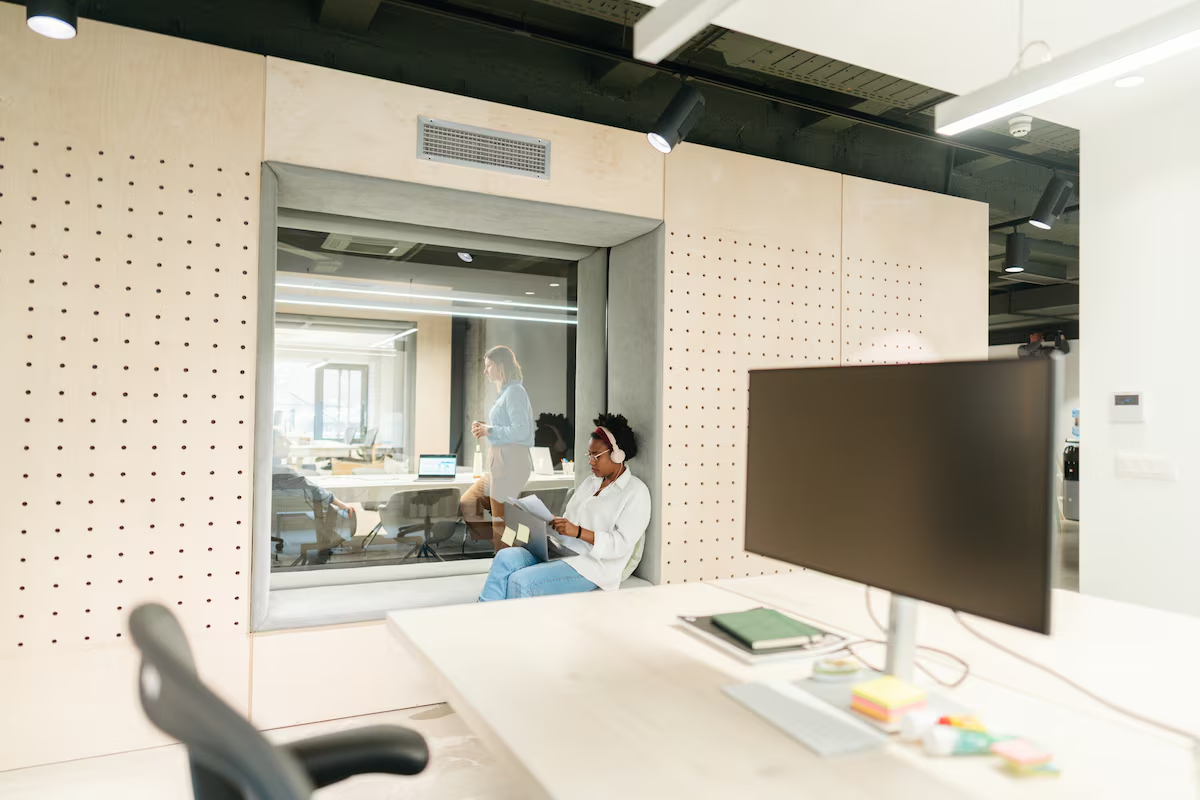
For example, perks. Collaborative spaces for group work, skylights, ping pong tables, an office gym, break rooms or a lounge for employees to hang out and various amenities supposed to bring people together and make them feel happy didn’t matter. Just one perk they tested showed a clear, statistical link to high-performance teams: A quiet workplace for focused work.
It’s about the work. Or, more specifically, the ability to focus on work amid the necessity to collaborate and attend meetings. “Many of us crave uninterrupted time at work – a chance to focus, to think deeply and make real progress. In recent years, workplace distractions have skyrocketed, fracturing our focus and making it harder to get things done,” he says.
Supposedly, the workplace is where the best teamwork happens, which is why companies and governments are ordering employees to return from their pandemic-induced home offices. But high-performance teams were just as likely to be found working remotely as they were in the sacred office. Something less obvious – hiding in plain sight, as he puts it – seems to drive the issue.
He points here to Abba and Fleetwood Mac. Those musical collaborators did not create their magical tunes by working in the same room at the same time – constant togetherness. They switched between private, individual work to develop ideas and coming together as a group to bring those ideas to life. U.S. musical composers Richard Rodgers and Oscar Hammerstein lived in different states, sharing ideas by phone and mail, meeting only when necessary.
“Superteams don’t achieve better results by being together all the time. They get more done by striking the right balance between individual work and purposeful collaboration,” he says.
Such “collaborative focus,” the term he gives it, boils down to three specific practices:
- Designating time for focused work, where people can do tasks without being expected to respond to messages or jump into meetings. Top teams are more likely to schedule “meeting-free days” to allow teammates long, uninterrupted stretches to complete their work. He notes that other research found going too far in banning meetings can hurt productivity but the best formula seems to be two days set aside for meetings and three kept for distraction-free, intensive work. He advises calling those “enhanced productivity days” rather than “no-meetings days.”
- Superteams make constant communication unnecessary through three practices. First, they create documented procedures that spell out how critical key tasks should be done, bringing clarity and alignment to the group. Second, they establish a task management system for updates, allowing people to check a dashboard like Asana or Basecamp to determine who is doing what and what’s left to do rather than wasting time in meetings for such sharing. Third, and Mr. Friedman notes most overlooked, is to set clear expectations for how to use communication tools. They clarify which communication channels of the many available in the modern world that team will use and when, so important messages get through and the less-sensitive ones are held at bay while people focus on immediate tasks.
- They empower people to protect their time. “Leaders of Superteams were significantly more likely to encourage their teams to work on one task at a time, let teammates know when they need uninterrupted time, and cancel recurring meetings that no longer add value,” Mr. Friedman writes.
His questionnaire asked: On a typical workday, how long are you able to work on assignments that require your uninterrupted attention without being interrupted by a colleague or client? On average teams, it was 77 minutes. On superteams it was 106 minutes, or 38 per cent longer. They also reported fewer colleague interruptions throughout the day and rated their offices as less distracting.
“Simply put, on Superteams, people don’t have to choose between focusing or collaborating. They get to do both, which is why they are successful,” he says.
The best teams also keep meetings to a minimum, sending updates using video capture or email instead. They make meetings small, limiting invitations to those who need to be there. They appoint somebody to watch when the conversation begins to drift during discussion and bring it back. They devote meetings to decision-making, framing discussion topics as questions for emphasis.
It’s about focused collaboration – getting things done, together and apart.
Cannonballs
- Toronto-based consultant Alan Kearns, founder of CareerJoy, notes that outgoing Apple CEO Tim Cook, talking about successor John Ternus, applauded the future CEO’s engineering brilliance and abilities as a deep thinker but then highlighted his remarkable character, saying there was no one on the planet he trusted more to lead Apple into the future. Mr. Kearns sums up: “The most valuable company in the world, run for a quarter century by two of the most analytical minds in business, and the handoff comes down to character.”
- Six in 10 senior executives said in a recent survey they don’t plan to change roles anytime soon – a five-fold spike from just a year ago. “We may be seeing the end of the ‘one last big move’ mindset for a lot of late-career leaders,” says Korn Ferry consultant Roger Philby. In the past, late-career leaders may have thought about taking on one more role – one more career chapter – but the pace of change has seemingly altered that calculation.
- What if your primary role every day was to put other people in a position to succeed, asks consultant Mike Shipulski? What would you start doing? What would you stop doing?
Harvey Schachter is a Kingston-based writer specializing in management issues. He, along with Sheelagh Whittaker, former CEO of both EDS Canada and Cancom, are the authors of When Harvey Didn’t Meet Sheelagh: Emails on Leadership.