
Open this photo in gallery:
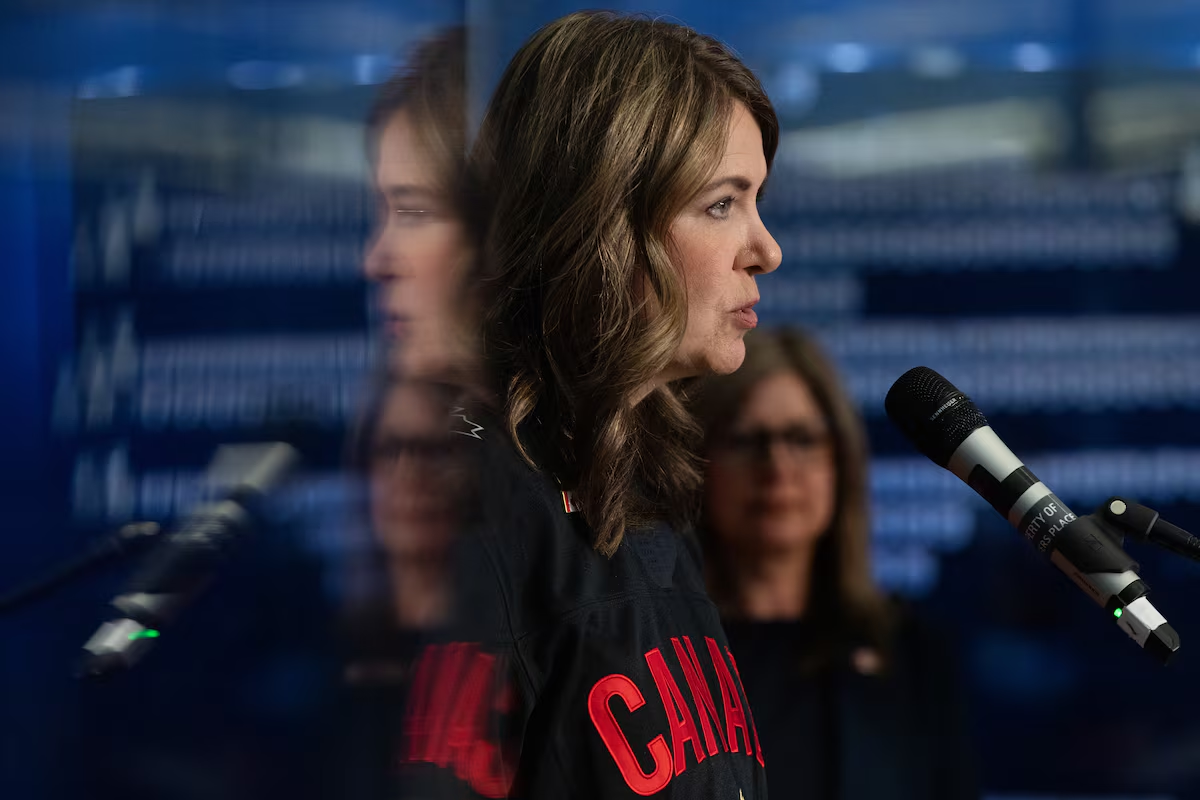
Premier Danielle Smith, shown in Edmonton in March, has advocated for Albertans to vote against holding a separation referendum.JASON FRANSON/The Canadian Press
Mitch Sylvestre didn’t see it coming.
Premier Danielle Smith, in a television address in May, promised to put the question of Alberta separation to a provincial vote. But first, she declared herself a federalist.
Up until then, Mr. Sylvestre believed the leader of Canada’s most prosperous province would stay neutral on whether Alberta should divorce itself from the rest of the country. Before secession was even on the ballot, Mr. Sylvestre had asked Ms. Smith about her plans for the aftermath.
“I have said to her multiple, multiple times: ‘Premier, will you lead the new country if we win this referendum?’” Mr. Sylvestre recounted over breakfast at a Smitty’s restaurant this summer.
“She said: ‘I don’t want to David Cameron myself by committing.’”
Tyler Dawson: Canada is strong, but it will be forever altered by Alberta’s separation referendum
Alberta’s referendum on Monday includes 10 questions, but the one drawing comparisons to Brexit asks voters if they want to remain in Canada or start the process to hold a binding referendum on separation. In Britain, Mr. Cameron resigned a prime minister in July, 2016, after voters opted to leave the European Union, rejecting his remain campaign.
“She told me that three times,” Mr. Sylvestre said. “She doesn’t want to have to take a side and then resign.”
Prior to the announcement, Ms. Smith had taken significant steps to ease the separatists’ path, including changing provincial legislation. So Mr. Sylvestre, a United Conservative Party constituency president who was once Ms. Smith’s most reliable hype man, is stumped.
Open this photo in gallery:
Mitch Sylvestre speaks during a Sept. 14 town hall in Sylvan Lake, Alta.LEAH HENNEL/The Globe and Mail
Alberta’s most prominent separatist just can’t figure out why the Premier would risk her job by siding with the federalists.
“It’s like running back into a burning house to get pictures,” Mr. Sylvestre said.
Like Mr. Cameron’s Brexit, Ms. Smith’s referendum is a gamble. But for her, it could be a Catch-22.
If voters opt to stay in Canada, as Ms. Smith has advocated and as polls predict, the result would likely inflame the now-powerful separatist bloc within her party already calling for her removal. If the secessionists win, there would likely be immediate calls for her resignation, given her opposition to them.
The same conservative activists who were angry at government restrictions during the COVID-19 pandemic and worked to depose her predecessor Jason Kenney elevated her as the UCP’s leader.
Now, the faithful who helped her become Premier are trying to unseat her.
Two years ago, Ms. Smith was at the height of her power.
Roughly 6,000 party members gathered in Red Deer at the UCP’s annual general meeting to vote on dozens of policy proposals, none of which referenced Alberta independence.
And in her first leadership review, Ms. Smith won support from 91 per cent of the 4,633 members who voted.
“Our party is more united than it has ever been,” she told the crowd in November, 2024.
Talk of Alberta secession ignited four months later, kicking off a delicate dance to maintain party unity.
The first notable public murmurs came from Jeff Rath, a lawyer allied with Mr. Sylvestre and other conservative activists. He said he and other activists were planning a trip to Washington to seek U.S. statehood.
Open this photo in gallery:
Jeff Rath in Edmonton on May 4 as separatists submit signatures to Elections Alberta in support of a referendum. A judge struck down their petition the following week, but the Premier announced that a referendum question about separation would go ahead on Oct. 19.JASON FRANSON/The Canadian Press
His comments gained little traction in the mainstream in Alberta, let alone the rest of the country.
However, Ms. Smith amplified separatist sentiments a couple of weeks later, in the days between Mark Carney being sworn in as Prime Minister and calling a snap election.
“I provided a specific list of demands the next Prime Minister, regardless of who that is, must address within the first six months of their term to avoid an unprecedented national unity crisis,” she warned, referring to Ottawa’s energy regulations, in a government press release after she met Mr. Carney on March 20, 2025.
The day after Mr. Carney won the federal election last April, Ms. Smith announced a change that would give the secessionist movement a boost. She would lower the number of petition signatures required to force the legislature to consider putting proposed constitutional questions to a province-wide vote.
The changes kicked in July 4, 2025. That morning, Mr. Sylvestre, Mr. Rath and Dennis Modry applied to Elections Alberta to launch a citizen-led petition demanding the government call a referendum asking whether Alberta should become a “Sovereign Country and cease to be a province in Canada.”
Alberta’s chief electoral officer asked the court to determine whether the Alberta Prosperity Project’s proposed question contravened the Canadian Charter of Rights and Freedoms or treaty rights, putting a pause on signature collection.
Carney urges Albertans to vote against separating from Canada
With the separatist effort on hold, Ms. Smith signed a deal for a proposed pipeline with Mr. Carney last November. She held that agreement up as proof Canada could work.
A few days later, Ms. Smith was met with resistance at her party’s annual general meeting in Edmonton.
UCP members booed when she mentioned the deal with Ottawa and again when she said she supported a sovereign Alberta within a united Canada. Mr. Rath, on the other hand, received a standing ovation from the packed crowd when he asked who supported independence.
Days later, Ms. Smith’s government again made legislative changes to clear the way for the separatists.
On Dec. 4, 2025, her government tabled amendments that would end the petition court case and, separately, permit citizen-led referendum questions regardless of their constitutionality.
“The legal consequence of discontinuing this proceeding prior to a decision would be to silence the Court,” Justice Colin Feasby wrote the next day, in a document explaining his decision to rule the Alberta Prosperity Project’s proposed question offside. “Legislating an end to litigation is extraordinary.”
Shortly after that, Mr. Sylvestre and Mr. Rath filed fresh paperwork with Elections Alberta in pursuit of a secession vote.
Open this photo in gallery:
Mr. Sylvestre holds a box of signatures ahead of submitting them to Elections Alberta.JASON FRANSON/The Canadian Press
On May 4, Mr. Sylvestre delivered 300,000 signatures to the legislature. The following week, a judge struck down the petition, concluding First Nations must be consulted first.
But on May 21, flanked by the flags of Canada and Alberta, Ms. Smith said her government would put a question about separation on the Oct. 19 referendum ballot.
The Premier has stayed on the side of federalism in the lead-up to the vote.
“Our government, party, and caucus support Alberta remaining in Canada,” Ryan Fournier, a spokesman for the Premier, said in a statement. He said the province has “welcomed the change in direction” from the federal government on energy resource development.
Mr. Fournier reiterated Ms. Smith’s position that she advanced the secession question to reflect the will of Albertans who signed Mr. Sylvestre’s separatist petition and those who put their name on a pro-Canada petition.
He did not address questions about challenges to Ms. Smith’s leadership or Mr. Sylvestre’s account of their conversations.
Open this photo in gallery:
Ms. Smith speaks at the Canada Strong and Free conference in Calgary on Friday, days before the referendum.Ahmed Zakot/Reuters
The Premier’s predecessor, Mr. Kenney, who engineered the creation of the UCP through a merger of the Wildrose Party and the Progressive Conservatives in 2017, has spent much of the past year advocating for Alberta to remain in Canada.
He now says the UCP must sweep out the separatists.
“If there are folks who want to advocate for separatism, they have every right as citizens to do so in separatist parties,” he told reporters Friday. “The UCP needs to lay down the law.”
Such housecleaning would be difficult.
Party president Rob Smith said in the spring that he believed most UCP members would vote to leave Canada, and that the party would not take a position on the referendum.
This week, he said there would be no purity test for party members.
“No one will be ‘banned’ or disqualified from membership,” Mr. Smith wrote on social media this week. “Under no circumstances will that happen. No way. Never.”
Opinion: The cost of a mass exodus from Alberta if it goes independent
With Ms. Smith in the federalist camp, the conservative activists who supported her rise are now openly campaigning against her.
“I AM THANKFUL THAT @ABDanielleSmith won’t be premier very much longer,” Mr. Rath said on X in response to the Premier’s Thanksgiving message.
At town halls and online seminars, Mr. Sylvestre and his supporters are urging like-minded citizens to buy UCP memberships so they can force a leadership review and install a leader friendlier to their cause.
Thousands of UCP members are expected to attend the party’s annual meeting in Calgary at the end of next month. Ms. Smith’s leadership is not on the agenda, but talk of her future will dominate the weekend.
“I’m not that smart, but it seems to me if she would have stayed neutral, she would have stayed Premier, no matter what, forever,” Mr. Sylvestre said.
With reports from Matthew Scace