
Open this photo in gallery:
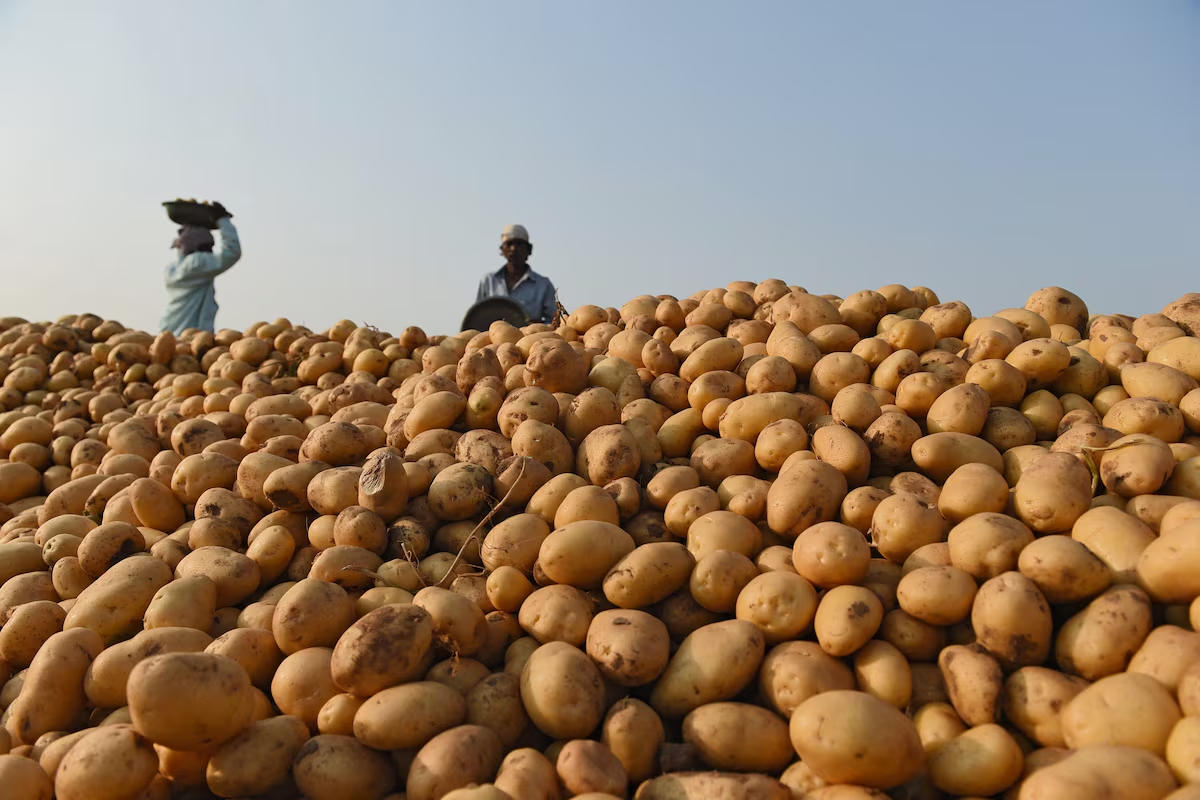
Indian farmers harvest potatoes in a field in rural India. McCain Foods’ acquisition of Falcon Group will help its business grow in the country.SAM PANTHAKY/AFP/Getty Images
French fry giant McCain Foods is taking inspiration from a thaw in Canada’s relationship with India by acquiring a 450-employee potato-processing business from one of the country’s family-controlled conglomerates, Falcon Group.
On Monday, as federal Minister of International Trade Maninder Sidhu kicked off a trade mission in India, Toronto-based McCain announced it agreed to acquire Falcon Agrifriz Foods’ potato operations in Gujarat, a state in northwestern India.
McCain is buying a business that includes a potato-processing facility opened last year after a $155-million investment, and a supply network of more than 1,000 farms. McCain and Falcon did not disclose the financial terms of the transaction.
McCain began operating in India in 1998 and currently has 1,800 employees in the country, drawing on 2,500 potato farmers.
“India is a priority growth market for McCain and one where we have invested for nearly three decades,” Max Koeune, chief executive of McCain, said in an e-mail. “Our acquisition of Falcon Agrifriz is the latest step in that journey and reflects our confidence in the market’s long-term growth potential.”
McCain heiress turns up pressure for IPO with plans for family meeting
McCain is expanding its operations in the world’s most populous country after Prime Minister Mark Carney led a trade mission in February aimed at resetting the economic relationship between Canada and India.
In 2023, the two governments clashed, with both expelling diplomats, after former prime minister Justin Trudeau accused Indian government agents of backing the fatal shooting of Sikh leader Hardeep Singh Nijjar in British Columbia.
“As economic ties between Canada and India continue to evolve, we see an opportunity to strengthen commercial relationships, support agricultural innovation and contribute to the growth of India’s food processing sector,” said Mr. Koeune.
McCain also plans to build a potato-processing plant in the state of Madhya Pradesh, in central India, and completed a $135-million expansion of its facilities in Gujarat earlier this year.
In India, McCain produces cheese and vegetable products in addition to fries.
Like McCain, Falcon Agrifriz sells fries under its own brands – which include Just Crave, Bon Vegato and Just Fries – and supplies restaurants. The company also produces white-label potato products for retail chains and exports to customers in the Middle East, Southeast Asia and Australia.
Falcon Agrifriz is part of a sprawling business empire controlled by the second generation of the Patnaik family. The company’s roots are in seafood, including frozen shrimp exports. Falcon Group also owns real estate, animal food, tech and steel-fabrication companies.
India’s growing middle class now consists of roughly 400 million people and McCain is scaling up in the country to better serve both the domestic and export markets. Mr. Koeune said the relationship works both ways, with the Canadian company bringing menu concepts from India to the domestic market.
McCain Foods heir sues French fry maker after failing to sell her $1-billion-plus stake
McCain has India-inspired brands under its “Flavours of the World” product line that include Masala Fries and Chili Garlic Potato Bites.
Harrison and Wallace McCain, sons of a potato farmer, launched the frozen fry producer in 1956 with a single plant in Florenceville, N.B. McCain now operates in 160 countries, with $16-billion in annual sales and more than 20,000 employees. The company has 49 production facilities globally, almost all of which are located in rural communities.
In 2016, the Indian government liberalized economic regulations to allow foreign companies to own 100 per cent of food producers. The move has brought increased investment from both global companies such as McCain, the world’s largest frozen-fry producer, and asset managers.
Over the past year, private-equity investors have targeted Indian food producers. In 2025, Singapore-based Temasek Holdings led a consortium that acquired a stake in snack-food company Haldiram Snacks Food that valued the company at US$10-billion. In January, New York-based General Atlantic bought a minority holding in another snack maker, family-owned Balaji Wafers.