
Open this photo in gallery:
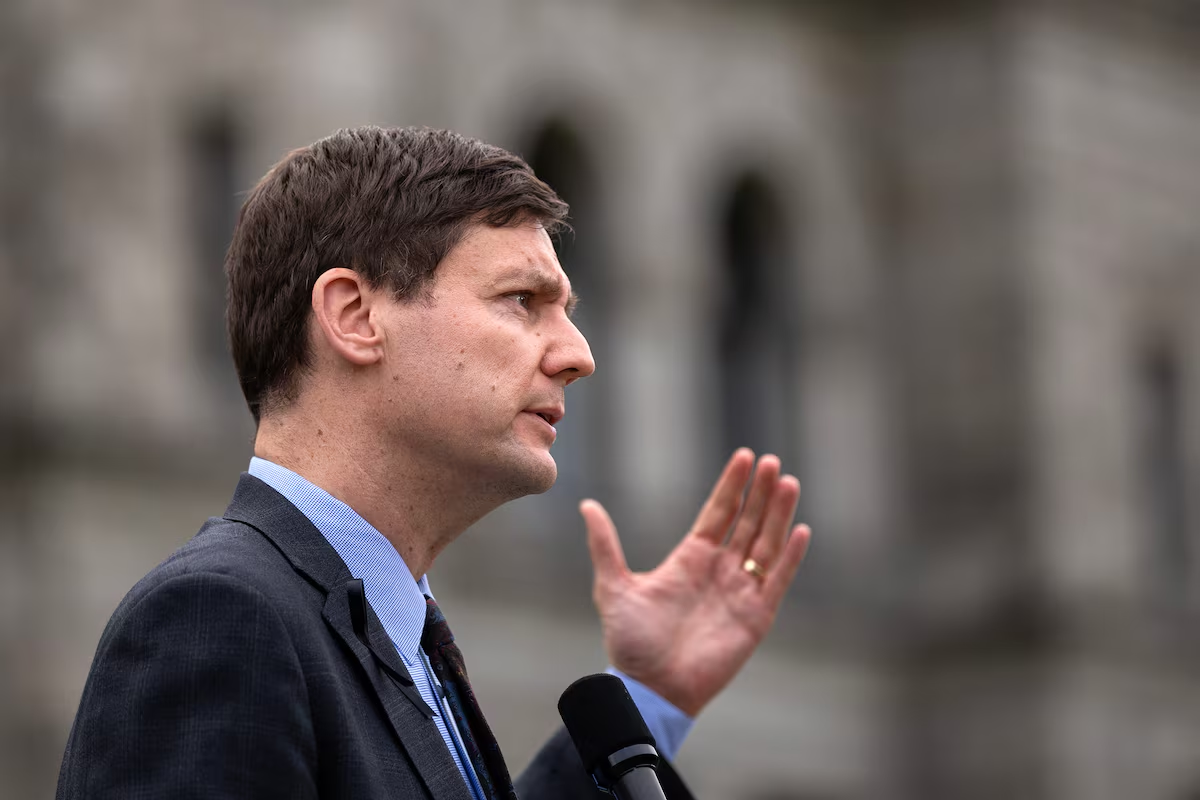
Premier David Eby speaks during a press conference at the legislature in Victoria, B.C., on Thursday, Feb. 12.CHAD HIPOLITO/The Canadian Press
British Columbia Premier David Eby says his first-ever trade trip to China will focus on pitching the province’s forestry products and energy sector around LNG development, and that he approaches the mission with both excitement and caution.
Eby spoke to reporters Saturday at Vancouver International Airport before jetting off for the trip, which will see him visit Beijing, Shanghai and Guangzhou.
Eby said China is the province’s second-largest trading partner, and the trip aims at expanding relationships beyond the United States with the goal of doubling international trade over the coming decade.
“British Columbians have asked the government very clearly to do the work to diversify our trade relationships around the world,” he said. “The U.S. has been historically a very good trading partner for us, but we’ve been too dependent on the United States.”
Canada on track for increased low-tariff Chinese EV imports, Joly says
Eby said Prime Minister Mark Carney has “opened the door again” as he builds ties with China, and B.C. needs a seat at the table to pursue economic opportunities in tourism, agriculture and forestry.
He said U.S. tariffs are really hurting the province’s forestry sector. A lot of jobs in B.C. are also dependent on the relationship with China, he said, and he hopes to see Chinese tariffs currently impacting the province lifted, including on the seafood sector.
Eby said he’s received briefings from both the RCMP and the Canadian Security Intelligence Service to ensure “our team is fully aware of how to minimize risk and to maximize opportunities while visiting.”
He said the government didn’t release his full itinerary for the trip to avoid giving competitors in other provinces and countries a potential unfair advantage, as the mission seeks to drum up customers and deals for B.C. companies.
Eby said the “really big fish” he’s seeking to land on the trip will see him meeting with PetroChina to discuss the second phase of the massive LNG facility expansion in Kitimat, B.C., with an impending final investment decision on the project expected later this year.
How companies stopped panicking about tariffs and learned to tolerate Trump’s trade chaos
“It’s worth about $28 billion in terms of provincial revenue to pay for public services. And so meeting with them, identifying any final concerns as they reach final investment decision is another example of concrete things that we’re seeking to achieve here,” he said.
He said his trip, which was to run from June 27 to July 3, is being cut a little short at the request of the federal government in order to deal with the province’s memorandum of understanding around major projects with Ottawa.
“This is going to be an agreement between us and the federal government to make sure that B.C. gets our fair share on projects that are in the national interest, that we’re treated the same way as major projects in Quebec and Ontario and Alberta,” he said.
“Given the amount of money sent to Ottawa by British Columbians, it’s crucial for us to be treated in a fair way by Ottawa.”