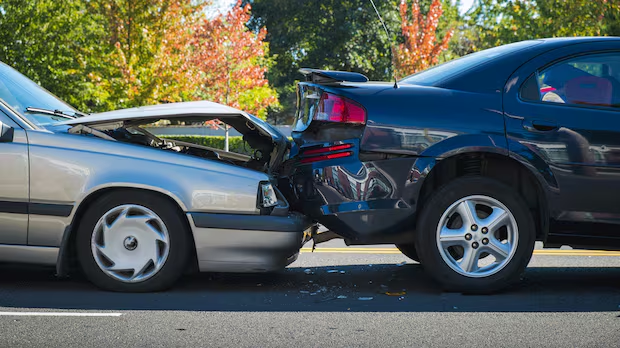
Auto insurance premiums could go down this summer — but at the cost of many people’s coverage.
As of Monday, Ontario is changing what is considered mandatory under accident benefits — coverage that is embedded within standard insurance policies. This will offer drivers more flexibility over what they’re paying for, though some experts say it leaves more drivers vulnerable, and may not have a large impact on overall premiums.
Lance Miller, insurance broker and CEO of Surex Insurance, says the average customer can save $100-200 annually on insurance by opting for the most basic coverage, but says the draw of lower premiums may not be worth the savings when disaster strikes.
“If you opt out of funeral expenses, maybe that is going to be a $30-50 charge annually,” said Miller. “But if there’s a funeral, those cost tens of thousands of dollars.”
The change comes after a 2022 report by the province’s auditor general, which found Ontarians were paying the highest auto insurance rates in the country.
As a result, Doug Ford’s 2022 election campaign featured a promise of changes that over time would provide consumers with more options when purchasing automobile insurance.
Previously, income replacement, lost educational expenses, death benefits, funeral expenses and more were automatically covered, but as of July they will become optional. The updated mandatory benefits will be stripped down to only include medical care, rehabilitation and attendant care benefits.
Miller said this means the onus now falls on consumers and their insurance brokers to understand which optional benefits they are giving up. “I think it’s going to require a shift in the consumer’s mind to not be focused directly on what’s the cheapest auto insurance,” he said.
“It’s going to be: ‘What really covers me and how do I find what I really need to cover myself at the best price?'”
For those with an existing auto-insurance policy, coverage stays the same — the July 1 change will only apply to new or updated policies. The province had directed insurance brokers to contact their customers and give them the option to adjust their policies.
LISTEN | How climate change is impacting insurance rates:
Morning North8:17How is climate change impacting insurance rates?
If you have home insurance, the rate for it is set by actuaries, who use math and statistical models to calculate that number. Houston Cheng with the Canadian Institute of Actuarires breaks it down.
Non-drivers will also be affected by the change
Dave Shellnut, known as The Biking Lawyer, says there’s a potential danger to uninsured victims of accidents with this change.
“Before July 1st, if you’re involved in a motor vehicle collision, no matter who you are, pedestrian, passenger, driver, e-biker, doesn’t matter, you’re entitled to the same no-fault benefits,” he said.
Now, only the driver, the driver’s spouse, and the driver’s dependents will be covered under any optional benefits plan. In cases where drivers lend their vehicle to someone who is not on their policy, that person will only be covered up to the mandatory minimum benefits outlined by the province — not by any optional insurance purchased.
Individuals injured in accidents will likewise not be able to claim any of the newly optional benefits that are associated with the driver’s policy, unless specifically stipulated.
If the non-driver has their own auto-insurance, or their own workplace or other private benefits plan, that will kick in on their behalf.
But Shellnut says he’s concerned about the many pedestrians and cyclists in Ontario who don’t have coverage. “Many people don’t drive in major cities across Ontario and we don’t have family members that do either,” he said.
“The ramifications of this, versus the paltry savings to taxpayers, is really distressing,” he said.
WATCH | More Toronto drivers are speeding after camera removals: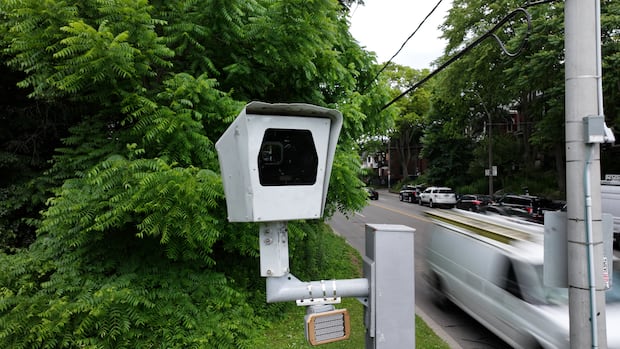
More Toronto drivers are speeding after camera removals, says city report
Toronto has seen a significant increase in the number of drivers speeding since the Ford government removed cameras late last year. CBC’s Naama Weingarten breaks down the numbers and the reaction.
In an emailed statement, Ontario Ministry of Finance spokesperson Sarah Chapin emphasized that pedestrians and cyclists are still entitled to the mandatory medical care, rehabilitation and attendant care benefits if they’re involved in an accident.
“Our government is providing drivers with greater choice and convenience when purchasing automobile insurance so they can choose the right policy that fits their needs,” she said.
‘Not the best way to get prices down’: insurance expert
Daniel Ivans, broker and insurance expert for rates.ca, says this isn’t the first time changes have been made to try to lower premiums.
“For a long time now, Ontarians have been saying they want more transparency and more understanding of what’s happening with their insurance rates,” he said.
In 2016, the then-provincial government under Liberal leader Kathleen Wynne lowered the maximum benefit limit for certain types of coverage in an effort to give drivers the option for lower premiums.
But Ivans says the premium rates have continued to rise. “Over the last 10 years, vehicle thefts and climate change have really pushed auto insurance to new heights,” he said.
Ivans wants consumers to know that dropping optional benefits may bring bills down in the short term, but there may be other ways to do that without opening yourself up to more risk down the road.
“It’s a freedom that we have, but usually reducing coverage is not the best way to get prices down,” he said.
Ivans suggests shopping around different insurance providers to find lower rates, before adjusting your policy.
“Often the best way to reduce premiums isn’t to cut coverage, it’s to shop,” he says.