
Open this photo in gallery:
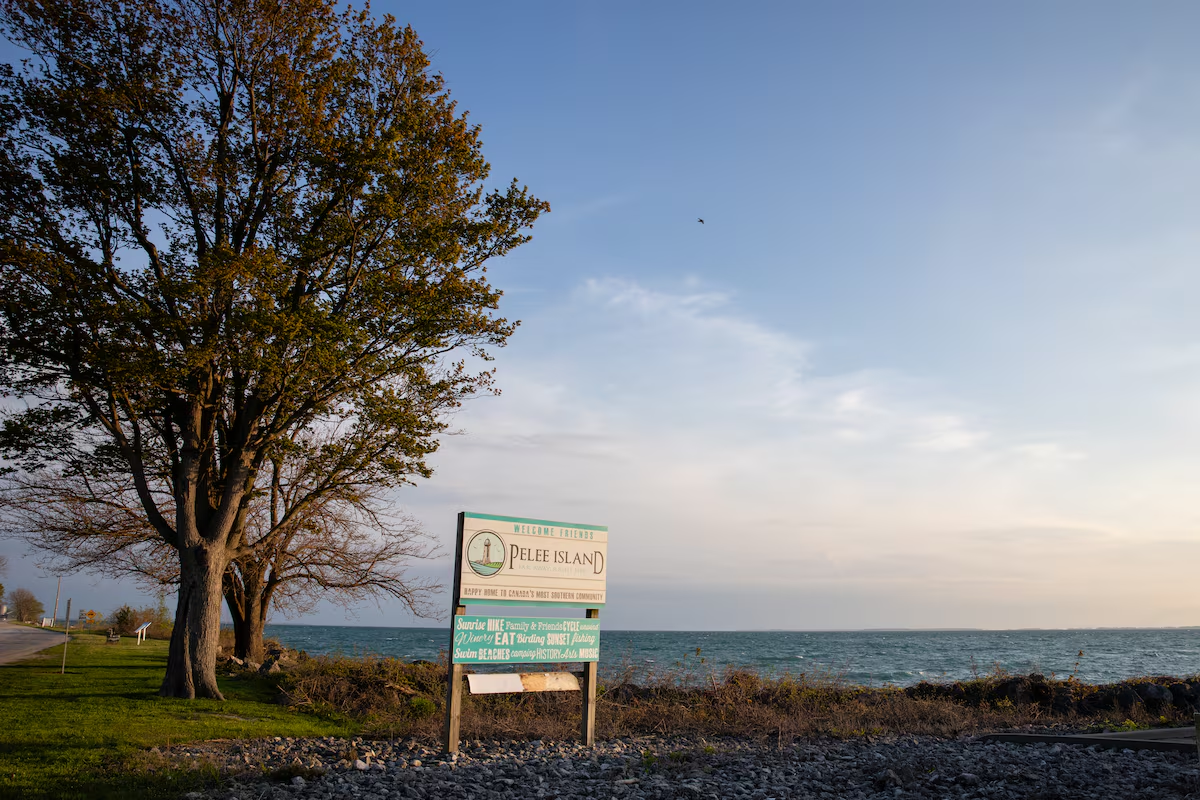
Chicago-based DRW NX Co. plans to erect a 182-metre-tall radio tower on Pelee Island as early as next spring.Melissa Tait/The Globe and Mail
Flanked by board members of the Pelee Island Bird Observatory, Margaret Atwood was unequivocal on Wednesday in her opposition to a 182-metre-tall radio tower that a U.S. company aims to build directly in the path of migrating songbirds.
“It’s a horrible idea,” said the celebrated author during an online press briefing organized by the observatory, which she co-founded more than 20 years ago. “Everywhere that I’ve travelled recently, people know about this and have said, ‘Can you stop it?’”
Stopping the tower’s construction on the 40-square-kilometre Lake Erie isle in Southwestern Ontario is precisely what the observatory’s board and its supporters say they have in mind.
The organization has called for a federal environmental assessment of the project for which it marshalled more than 27,000 letters of support ahead of a deadline for public comment last week.
Those objecting to the tower include residents, scientists and the Caldwell First Nation, which considers Pelee Island as part of its traditional territory. At the briefing, Chief Nikki van Oirschot said the First Nation had yet to be contacted by the municipality or the proponent of the project, Chicago-based DRW NX Co.
The company plans to erect a tower on Pelee Island as early as next spring. The tower’s purpose would be to facilitate line-of-site microwave transmission of stock trading data en route to financial communication hubs in New Jersey. This would provide DRW’s clients with an advantage – measured in milliseconds – over those who depend on information moving through fibre-optic cables.
Margaret Atwood among thousands raising alarm over U.S. company’s plan for radio tower on Pelee Island
The island’s township council quietly approved the tower last year, though many of the island’s residents say they only became aware of it recently.
Many details have not been disclosed, including the rent the township will receive for leasing public land for the project.
What is clear is that the proposed height of the tower would be immense – equivalent to the north building of Toronto’s TD Centre, which has 46 floors. Its design – including 16 support cables, or guy wires – would pose a hazard at altitudes that are common for migrating songbirds, which typically move at night. The presence of lights on the tower would be an additional problem because they can confuse birds and cause them to circle the structure.
“Estimates suggest that communication towers in Canada and the United States alone kill about 6.8 million birds per year,” said Dan Mennill, an ornithologist and professor at the University of Windsor who participated in the Wednesday briefing.
Dr. Mennill added that his own work suggests the concentration of migrating birds above Pelee Island is about three times that in neighbouring locations.
Alice Boyle, a researcher at the University of Western Ontario in London, Ont., who was not a participant in the briefing, said it would hard to overstate how important Pelee Island is as the neck of a geographic funnel that a large fraction of North America’s birds pass through on their way to and from Canada each year.
“I can’t believe that the interests of a few people with no benefit to Canada are taking precedence over such an important biological, cultural and economic thing,” she said.
In a statement, DRW’s chief marketing and communications officer, Caroline Vasquez, said the company shares “the community’s commitment to protecting migratory birds and the island’s environment.” She added that DRW would also voluntarily install “best-in-class bird collision mitigation technologies” on the tower.
However, an environment study commissioned by DRW did not consider the effect of bird collisions and site visits conducted for the study did not take place during spring or fall migration.
How Margaret Atwood and her family helped turn Pelee Island into a migratory bird research hub
Critics of the project have also noted that the location of the tower would affect critical habitat for some of the island’s rare and threatened reptiles, including the blue racer, a snake species that occurs nowhere else in Canada.
The bird observatory board has filed a freedom of information request to access details of the township’s dealings with DRW and this week sent additional follow-up questions on the matter. The group has also asked for the tower to be on the agenda when a newly elected township council holds its first public meeting next month.
“This is the wrong place for this tower. Our regulatory systems should have recognized that before this project reached this point, and we still have an opportunity to get it right,” said Deborah Egan, who chairs the observatory board.
A key question will be whether three new members of the five-person council will be less supportive of the project than their predecessors.
Rebecca Kandola, who heads the Pelee Island Property Owners Association, said that she is in the process of surveying owners to learn more about their views.
A high number don’t support the tower, she said, and did not learn about it until after the township’s letter of concurrence, the document which allows DRW to proceed.
She said that some owners are in favour of the tower because of the revenue it could generate. There are also worries that a tower could simply be placed on private land if the council reverses its decision.
Many residents have expressed their desire to see an islandwide policy for towers, something that the previous council voted down twice.
Meanwhile the federal government must decide by Jan. 19 if it will require its own assessment before the project can proceed.
During the Wednesday briefing, Ms. Atwood – who is also a property owner on the island – said that she and the observatory board would continue to advocate for a rethink of the DRW tower before construction begins.
“We will keep going and we will see what happens, and I hope that what happens will be the right thing,” she said.