
Open this photo in gallery:
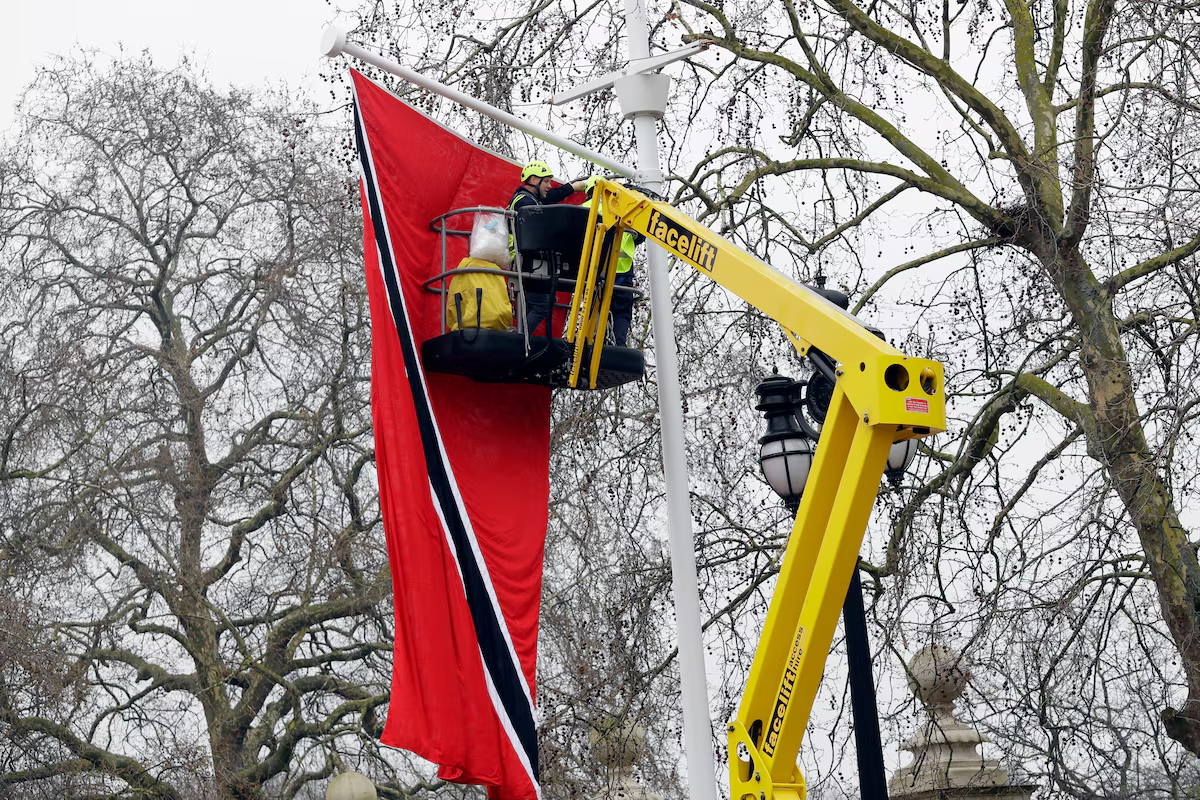
The national flag of Trinidad and Tobago, is set with the Flags of the Commonwealth countries being hung along The Mall in London. The Judicial Committee of the Privy Council remains the final court of appeal for Trinidad.Kirsty Wigglesworth/The Associated Press
For decades after Confederation, Canadian lawyers made their way to London to plead final appeals at the Judicial Committee of the Privy Council. Canada’s own Supreme Court wasn’t fully supreme until after the Second World War. The last Canadian case heard in the British capital happened in 1959.
In July, however, a Canadian made a rare appearance at the Judicial Committee, across from Parliament and beside Westminster Abbey.
Adam Goldenberg, a McCarthy Tétrault LLP partner who is fighting several high-profile LGBTQ rights cases in Canada, was among the lawyers seeking to overturn a long-standing “buggery” law in Trinidad and Tobago that criminalizes gay sex. The Judicial Committee remains the final court of appeal for Trinidad and some other Caribbean countries.
On Tuesday, the Judicial Committee delivered a historic victory for LGBTQ rights in Trinidad, a legal decision that could resonate more widely in legal challenges in places such as Guyana, Grenada and Jamaica that have similar discriminatory laws rooted in the colonial era.
Lord Philip James Sales declared the prohibition in Trinidad could not be reasonably justified “in a society that has a proper respect for the rights and freedoms of an individual.”
It is the culmination of a decade-long legal odyssey for Jason Jones, a 62-year-old who was born and raised in Port of Spain, Trinidad and Tobago’s capital. He came out when he was 16 but suffered harassment and discrimination in the country before moving to England in his 30s. He moved back for several years in the early 2010s and won an initial court victory in Trinidad in 2018 against the anti-gay law.
The country’s appeal court overturned that ruling in early 2025 – a defeat that propelled the quest to London.
It was then that Mr. Goldenberg’s phone rang. The 39-year-old is a commercial litigator at McCarthy but has long devoted free pro bono services to LGBTQ cases. Among them is UR Pride, currently at the Supreme Court of Canada, a Charter of Rights and Freedoms case defending transgender youth and challenging Saskatchewan’s 2023 pronouns and parental rights law.
Mr. Goldenberg grew up in Vancouver and came out when he was 14, in the early 2000s. “It was not as difficult as it is for many people,” he said in an interview.
He came of age when LGBTQ rights were on the march, often through the courts, led by the generational victory for marriage equality.
Mr. Goldenberg took the helm of a group of interveners on Mr. Jones’s appeal in London, representing close to 200 organizations in the Caribbean.
The criminalization of gay sex in Trinidad goes back to a 1925 law against “unnatural offences,” including the “abominable crime of buggery,” that threatened five years of imprisonment. In 1986, a quarter-century after independence, the country doubled down on the old law with new legislation, increasing the potential jail time to 10 years and eventually to 25. No consenting gay men had ever been prosecuted but the spectre of criminal sanction for simply living’s one life loomed.
During a daylong hearing on July 8 at the Privy Council, Mr. Goldenberg felt a “strangely familiar” atmosphere, given the shared legal history, though everyone was in business attire, rather than the robes worn in Canada’s Supreme Court, and there was no elevated bench. Interveners provide written arguments but aren’t offered time to speak, unless the lords present a question.
“I was ready to leap to my feet,” said Mr. Goldenberg, but he wasn’t called upon.
The Trinidad government argued the law is protected from constitutional challenges and also asserted it is constitutionally valid, because a parliamentary supermajority passed the 1986 legislation and it was at that time reasonably justifiable.
In their written arguments, Mr. Goldenberg and this team stated: “Criminalisation of whom a person loves – and with whom they may express that love through physical intimacy – does not merely limit a person’s ambit of actions: it denies them a core feature of their identity.”
On Tuesday, the Judicial Committee in its ruling noted the assistance of the interveners’ filing and thanked the lawyers for their pro bono work. “I know English members of our team were quite chuffed to see that shoutout,” Mr. Goldenberg said.
To Mr. Goldenberg, who called it disgraceful that some countries still criminalize LGBTQ people, one of the lessons of the experience was what Canada has achieved and where human rights remain at risk.
He pointed to the UR Pride Saskatchewan case and similar laws in Alberta that place restrictions on transgender youth, which is also involved in legal challenges. Conservative governments in both provinces shielded their laws with the Charter’s notwithstanding clause, which allows legislators to override numerous constitutional rights such as security of the person and equality.
“I’d much rather live in Canada than a place that criminalizes homosexuality, but we are far from perfect,” Mr. Goldenberg said.
In 1959, the last Canadian case at the Privy Council, a 25-year-old William Stevenson was among the lawyers on a civil appeal over a financial disagreement from the nascent days of Alberta’s oil industry. Mr. Stevenson served on the Supreme Court of Canada for several years in the early 1990s.
And while Mr. Goldenberg’s appearance in London is a rare one, there was another Canadian at the Privy Council recently. Al Meghji, head of tax litigation at Osler, Hoskin & Harcourt LLP, was there in 2024 for a case from Trinidad connected with Vancouver-based Methanex Corp.
In the LGBTQ victory for Trinidadians, the country’s government stood behind the discriminatory law, but the lead lawyer for appellant Mr. Jones was Anand Ramlogan, a former attorney-general of Trinidad and Tobago.
“Gay rights form part of the wider struggle for human rights,” Mr. Ramlogan’s law firm said in a statement. “Every person is entitled to the protection of the Constitution, regardless of their sexual orientation.”