
Open this photo in gallery:
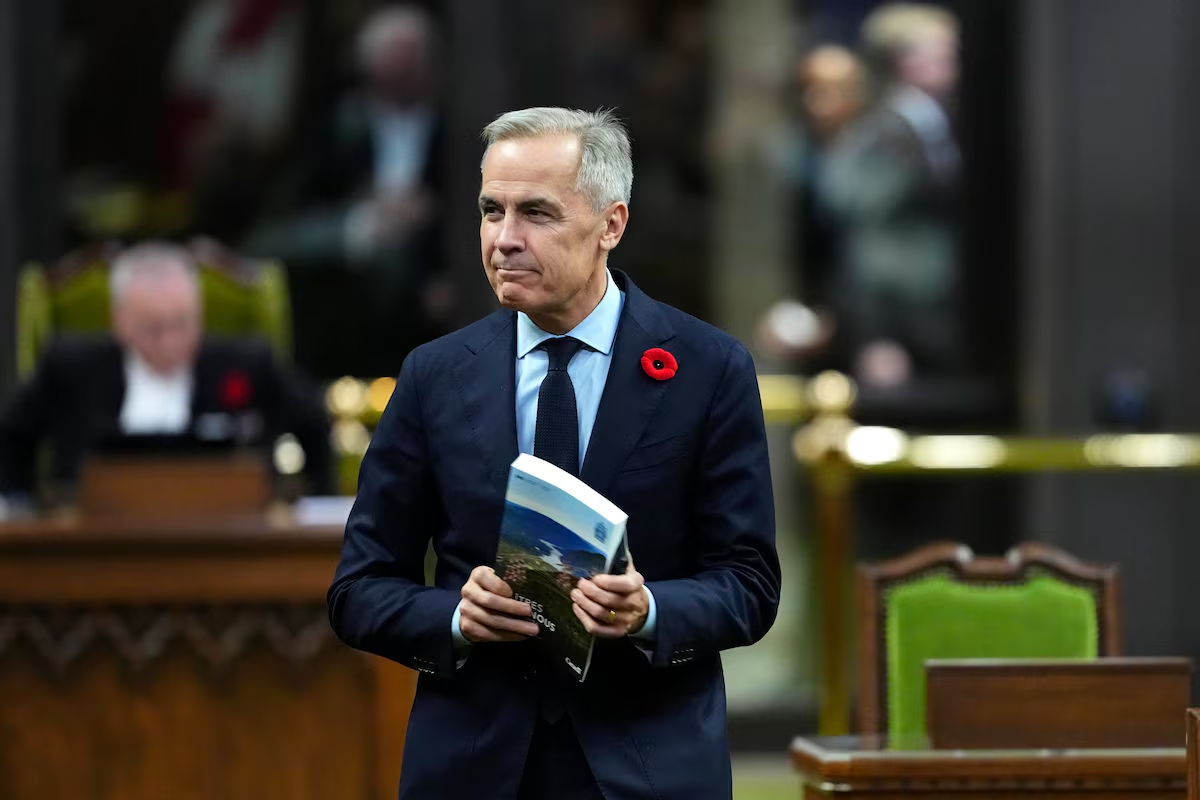
Prime Minister Mark Carney arrives in the House of Commons before the tabling of the federal budget on Thursday.Justin Tang/The Canadian Press
My fellow Canadians, I am pleased to present Tony Keller’s 2026-27 diet targets.
As promised, these involve a significant reduction in my daily caloric intake, compared to my previous Trudeau Diet. As promised, next year will see me maintain the lower caloric levels adopted this year.
I will limit myself to 2,800 calories a day in the coming year, and in years to come. This demonstrates my firm commitment to regaining control of and rebuilding confidence in the Tony Keller diet process.
I will pause here to accept your recognition and applause. Thank you. Thank you.
Now that I no longer have your attention, I hope that you will not notice that the fine print on my diet includes a selection of desserts, and that these aren’t counted in my 2,800 calories. As everyone knows, desserts are not an integral part of meals. Their calories don’t count. So, I won’t count them.
Also not counted is my afternoon snack program. Like dessert, snacks are a one-time dietary supplement, which I intend to continue until at least 2028. They aren’t counted in my absolutely firm and entirely transparent 2,800 calorie limit.
If I were to count these extras, I’d be consuming more calories than under the Trudeau Diet. That’s in fact what I plan to do. I just don’t want to acknowledge it.
In conclusion: Mission accomplished.
The above fictional tale sums up the immigration fictions in last week’s federal budget.
“Since assuming office 20 months ago,” says the budget, “we have taken back control of immigration.”
That’s true in some respects, and the figures appear to bear it out.
For example, the number of new permanent residents will be 380,000 a year for the next three years. That’s well above the levels from the 1990s to the mid-2010s, when immigration averaged around a quarter-million people a year, but it’s a drop from the peak in 2024, when the Trudeau government minted 484,000 new permanent residents.
However, the budget also mentions, in a brief aside, that 200,000 temporary residents will become permanent in 2027. It turns out – though it’s not explained in the budget – that these 200,000 are not included in the count of permanent residents.
Why not? There’s no logic to it. None beyond political expediency.
According to government figures, 58 per cent of permanent residents minted this year were temporary residents already in Canada. That will continue next year, and should account for most of the 380,000 quota.
Opinion: Mark Carney cranks up immigration again, while pretending not to
But another 200,000 new permanent residents minted from temporary status will be over and above the official tally of permanent residents.
It adds up to 580,000 new permanent residents in 2027, not 380,000. That’s a higher permanent immigration rate than in any year of the Trudeau government.
But wait, there’s more. The Carney government did the same thing last year. It introduced two “time-limited” programs to give permanent residency to 148,000 temporary residents – and didn’t count them in the permanent resident quota.
According to government’s plans and projections, 66,000 of the 148,000 spots will be filled in 2026. That leaves 82,000 in 2027.
Add it up, and the Carney government’s real permanent resident target in 2027 is not the budget’s 380,000. Nor is it 580,000. It’s 662,000.
The Trudeau government lost control of the immigration system by encouraging an explosion in the size of the temporary immigration streams – temporary workers, students and former students on work visas. This country’s number of temporary visas had previously been relatively small, and arrivals roughly matched exits. But under the Trudeau government, the numbers skyrocketed. Recruiters pitched desperate people in the developing world on the idea that if they paid $10,000 or so in tuition to No-Name College, they’d be buying Canadian citizenship.
Today, there are 2.8 million non-permanent residents in Canada, a number that has barely fallen since the peak of two years ago.
Budget 2026 highlights, from housing to business tax relief
Most of these people arrived on temporary permits with clear conditions: On the expiry of your visa, you go home. But most were also told that tuition to No-Name College, or work in a low-wage field, could buy your way around those conditions. That created incentives to obtain temporary status, and to do anything to remain.
The Carney government is trying to reduce the huge temporary resident population – as it has promised to do – by making it ever easier for non-permanent residents to become Canadians.
There’s a logic to this. But lowering the bar will create new incentives for those on temporary visas or with expired status. That will foster yet more unintended consequences.
And to meet its promise of lowering and stabilizing permanent immigration – a government pledge that polls suggest is popular – Team Carney is resorting to fudging its immigration books. Fibbing.
I’m sorry to have to use this word: Lying.
Our immigration system has become extremely complex and opaque. The Carney government just made it more non-transparent.
For a government committed to restoring confidence in the integrity of the immigration system – and confidence in the integrity of government itself – it’s a move in the wrong direction. They will regret it. We all will.