
Listen to this article
Estimated 4 minutes
The audio version of this article is generated by AI-based technology. Mispronunciations can occur. We are working with our partners to continually review and improve the results.
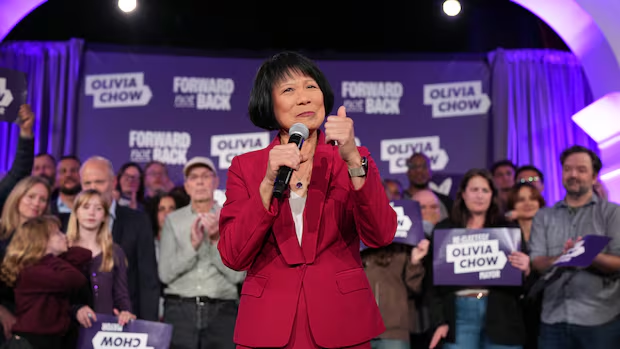
Olivia Chow is preparing to lead Toronto for another four years, after an emphatic victory over former councillor Brad Bradford Monday night.
Chow will oversee a progressive, new-look council with several of her key allies elected, putting her in a strong position to pursue her agenda.
The returning mayor started the year looking comfortably ahead, before it appeared Bradford could surge into the mayor’s chair.
In the end, she won a massive victory — netting roughly 530,000 votes, according to the unofficial results (official results will come once they’ve been certified by the city clerk).
A close race and new messaging
While Bradford received just one per cent of the vote in the 2023 mayoral byelection, he gained on Chow through 2026.
As the race heated up after Labour Day, the gap between challenger and incumbent appeared to narrow significantly.
The timing of the surge seemed like it would be good for Bradford, coming toward the end of the race, when advance voting appeared to be more than 70 per cent higher than the 2023 mayoral byelection.
But as polling suggested the wind was in Bradford’s sails, the Chow campaign settled on a clear message about the challenger and his platform, particularly his pledge to create a public utility company to handle the city’s water and wastewater.
WATCH | The Toronto election race was frenetic. Here’s how it looked at the end:
Toronto mayoral candidates make final push ahead of election day
With just three days to go until election day, Toronto’s leading mayoral candidates were back on the campaign trail, making their final push Friday. With the finish line in sight, Olivia Chow and Brad Bradford took time to reflect on their humble beginnings. Dale Manucdoc reports.
Bradford said the plan would help raise funds for city hall and cut costs for residents, but Chow said it would mean the city losing control of an asset that is working well and opens the door to privatization.
That message may have struck a nerve with Torontonians, said political strategist Blue Knox, who served as former mayor John Tory’s director of communications.
“Canadians like for their public institutions to stay public,” she said.
“Her campaign was able — whether you agree with it or not — to very clearly distill their attack on one of Brad Bradford’s promises.”

Olivia Chow, left, and Brad Bradford were the two front-runners to be Toronto’s mayor in a race polls suggested was close at the end. (CBC)
Erin Morrison, vice president of Texture Communications and a Chow supporter, said she thought the policy was a “serious mistake” from the Bradford campaign.
“That really started to play a role in the campaign with about 10 days to go,” she said.
“Chow, to her credit, really knew that that was problematic to her voters … and made an issue out of it.”
Strong get-out-the-vote operation
The Chow campaign was able to rely on a formidable team to help spread her campaign message and her criticism of her opponent.
She ran a “disciplined campaign,” Knox said.
Even the Bradford campaign acknowledged on election night the combination of Progress Toronto, Ontario NDP supporters and unions backing Chow was a formidable force to reckon with.
WATCH | Olivia Chow celebrates victory with supporters:
‘I will work every day to earn your trust,’ says Chow during victory speech
Speaking to a crowd at The Great Hall, newly re-elected Mayor Olivia Chow made her promise to the city: “I will stand up for you and I will work every day to earn your trust.”
“It’s tough organizationally,” Bradford’s head of communications Laryssa Waler said shortly before polls closed.
“They know how to get them out to vote. They have union support, they’re very, very organized.”
Mandate to stay on the same path
While Bradford’s camp had offered a slew of new ideas, particularly around the city’s finances, Chow’s camp stayed close to her record: renters, transit fares and a school nutrition program.
Knox said the Chow campaign’s decision to stick to a few key promises building on the work of her first term in office will make for a smoother transition.
It means Chow’s “hands aren’t tied” to a series of rigid campaign pledges and she will get to “be flexible to different circumstances that come up.”

Bradford conceded to Chow on election night. (Prasanjeet Chaudhary/CBC)
Chow pledged a 10-ride fare cap for riders on the TTC, enhanced protections for renters, a school lunch program and tax cuts for independent grocers. She also said she would continue work to build more affordable housing.
Delivering those promises will be made easier by a council still relatively aligned with Chow’s core goals.
A number of high-profile progressive allies, including Nate Erskine-Smith and Mike Layton, Chow’s own stepson, will join her at city hall.
WATCH | Why Olivia Chow thinks ‘the cost of living is a problem’:
‘The cost of living is a problem’: Olivia Chow’s pitch to Toronto (in her own words)
Olivia Chow is making her pitch to stay in office, anchoring her platform on affordable housing and a city-wide lunch program. Speaking on CBC Radio’s Metro Morning with Chris Glover, the incumbent detailed her vision for a second term — following our interview earlier this week with candidate Brad Bradford
Morrison said the 2026-2030 council should be one Chow can lead on most issues — getting her agenda through without needing to resort to strong mayor powers, which she has said she will not use.
“I think that tonight is good news for Chow in the sense that she’s got even more progressive allies on council,” she said.
“I think she’s going to find it an easy council to work with.”