
Open this photo in gallery:
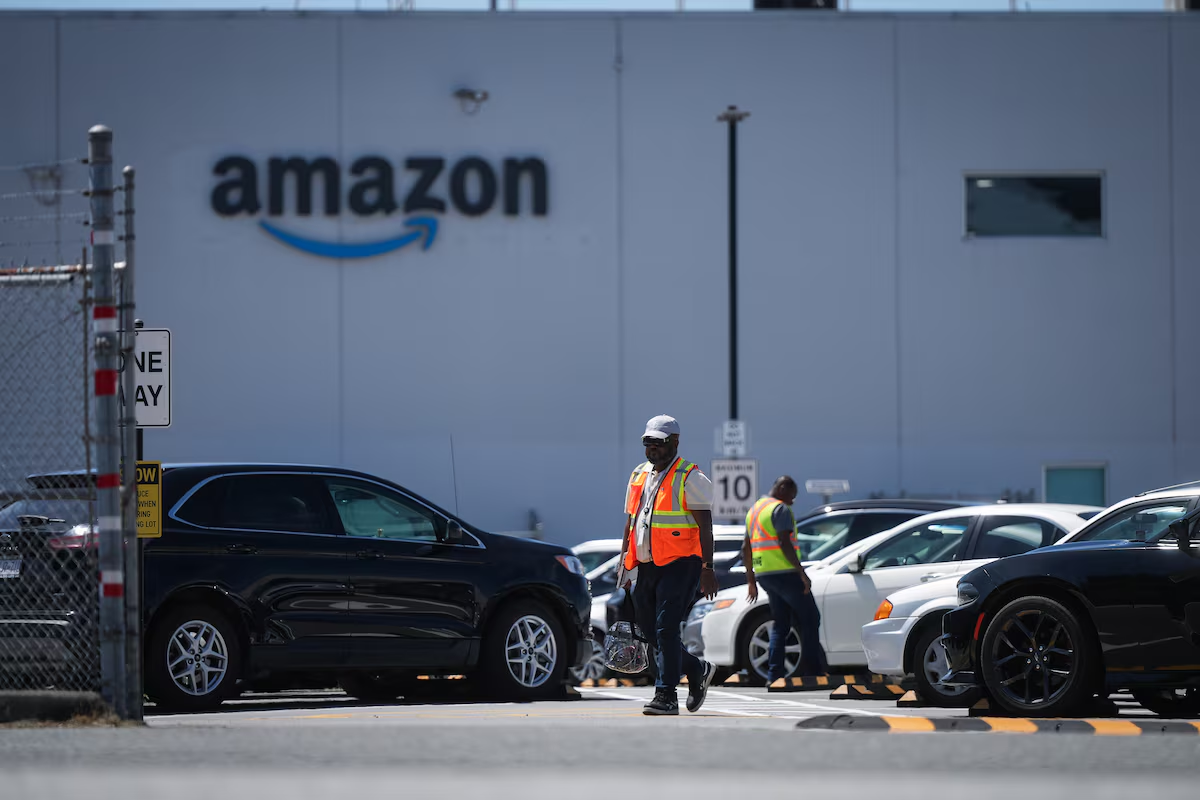
Unions have tried to make inroads at numerous Amazon warehouses across North America and Europe.DARRYL DYCK/The Canadian Press
Amazon.com Inc. AMZN-Q used an artificial-intelligence tool in Canadian warehouses to assess the likelihood of workers unionizing, assigning a “labour risk” score to each of its facilities.
Internal company documents obtained by The Globe and Mail, as part of hearings between Amazon and Unifor at the British Columbia Labour Relations Board, outline the use of an AI tool called Atlas in recent years across more than 50 warehouses in the United States, Canada and Europe.
The tool, according to the documents, uses hundreds of data points to design a “labour risk framework,” which then allows Amazon to evaluate “emerging workforce issues,” “labour union targets” and “internal or external labour threats.” The documents do not indicate what exactly the data points are, or how Amazon collects them.
In a statement to The Globe, Amazon spokesperson Sam Stephenson said the information gathered helps the company identify trends and prioritize them accordingly. “This framework helps us listen to our teams’ suggestions to drive continuous improvement, and how we act on their feedback is determined by the teams responsible for driving that improvement, not AI.”
Amazon raises warehouse wages by $1 an hour across Canada amid union dispute
Mr. Stephenson did not respond specifically to a query about whether Atlas was still being used across its warehouses in Canada, or whether any other AI surveillance tool was being used.
For years, unions have tried to make inroads at numerous Amazon warehouses across North America and Europe. Most have been unsuccessful, both because of the high employee turnover at facilities (which makes it harder for union organizers to cultivate sustained relationships with workers) and the general fear employees have that participating in union activities will affect their job security. Amazon representatives have also been vocal about their preference that employees not join unions, arguing that workplace improvements are tougher to execute with unions in the picture.
Currently, only a handful of Amazon warehouses globally are unionized. One of them, in Delta, a south Vancouver suburb, officially formed a union that was certified by the provincial labour board in July, 2025. But since then, Unifor, the union representing Delta warehouse workers, and Amazon have been in a heated labour dispute over terms of a first collective agreement.
According to the documents, the “Atlas model” classifies Amazon sites on a five-point scale, with 5 as “no risk of workplace disruption” and 1 as “workplace disruption reported.” A secondary scoring system, ranging from 100 to 900, gives the company more insight into the likelihood that a facility will vote in favour of unionizing. For example, YVR2, the Delta warehouse, was categorized as a Tier 1 site, with a labour-risk score of 169 (the higher the score, the better, according to the documents).
Amazon calls for greater AI safety, but stops short of urging slowdown
Amazon’s definition of a “high severity employee relations event” includes active union card signings, worker protests, and walkouts or work stoppages, the documents show. YVR2 and another Vancouver-area warehouse, YVR3, were the two Amazon sites with the highest volume of “high severity events” – 52 and 47, respectively.
It is unclear, however, when these internal company documents were produced, how Amazon currently ranks warehouses according to the likelihood of workers unionizing, and whether it still uses Atlas or another, more sophisticated AI tool.
Justin Gniposky, director of organizing for Unifor, estimates that the documents date back to late 2024 or early 2025, because they refer to “active card signing” at YVR2, which the union was involved with almost three years ago.
“This information just proves to us what we have always thought and what we have always heard from workers: that Amazon views unionization as a threat and a risk to its business,” he said.
Mr. Stephenson, the Amazon spokesperson, pushed back against Unifor’s characterization of Atlas as a surveillance tool. He emphasized that the AI system relies on data that encompass the daily employee experience, including safety incidents, leadership availability and training completion. “Interpreting this feedback requires human review, not automated decision-making,” he said.
He did not respond specifically to a question about whether employee behaviour and communications are monitored to enable the system to produce these labour-risk scores.
Mr. Gniposky said Unifor organizers are careful about how they communicate with Amazon employees, contacting them only through their private phones and e-mail addresses. He said the union is not aware of Amazon monitoring employees without their knowledge or consent in Canadian warehouses.
Group of B.C. Amazon workers tries to decertify union on verge of securing historic agreement
Privacy laws on employee data collection vary according to province, but British Columbia has one of the strictest sets of rules, said Menachem Freedman, a Vancouver-based labour and employment lawyer. “Before employers collect personal information, they need to tell employees beforehand what information they are collecting, why and how it will be used.”
Mr. Freedman added that any collection and use of personal information must meet a test of reasonability under the law. “So employers need to be clear on how much information they are sweeping up when using AI, and whether this is something they even need to be doing in the first place.”
The documents obtained by The Globe also shed light on Amazon’s internal messaging to managers – specifically how to recognize when workers might be trying to form a union, and what to say to discourage them from unionizing, while still respecting local labour laws. For example, one document tells managers: “You can’t spy, but stick to your routines if they are truly routines, e.g. if you routinely eat lunch in the employee break room you can continue to do so.”
Another document tells managers how to speak to employees about unions, and to remind them that unions cannot guarantee the outcome of collective bargaining negotiations, and that workers could end up with the “same, less or more.”