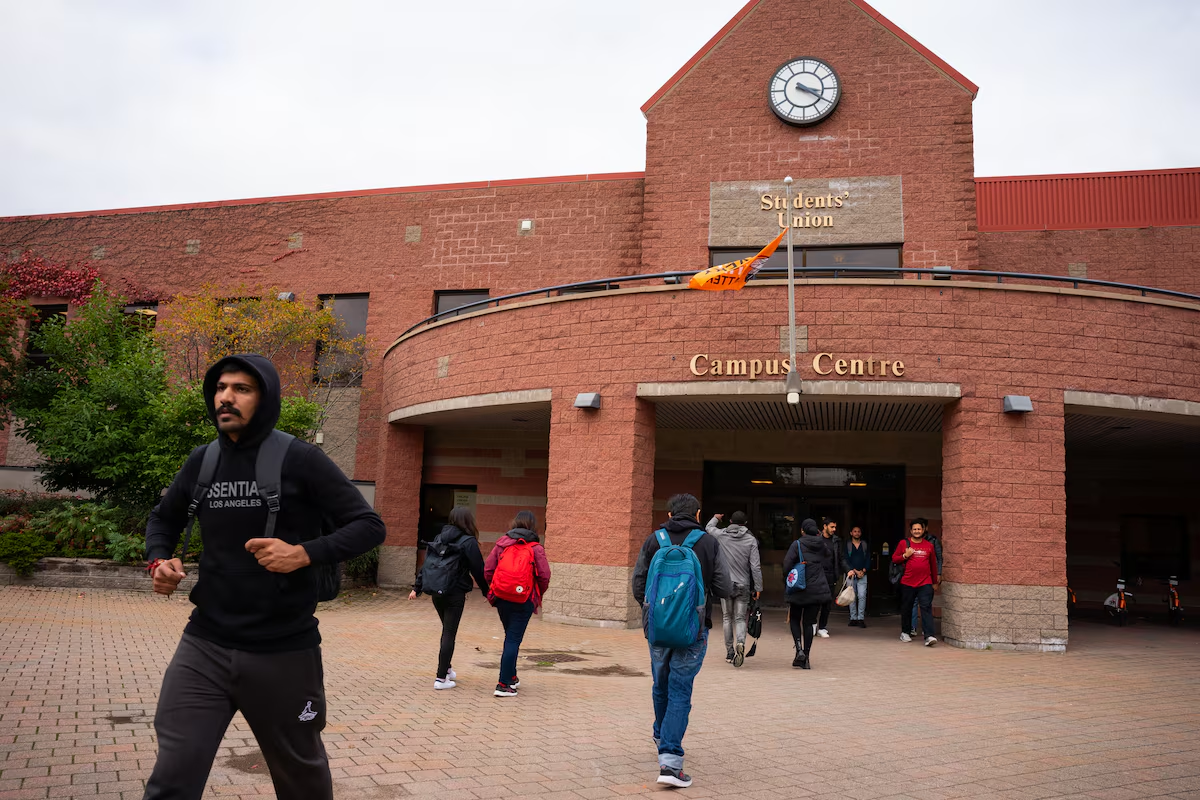

Open this photo in gallery:
The Campus Centre at Cape Breton University in Sydney, N.S. The school has seen the sharpest decline in foreign students of any university in the Atlantic region, according to a preliminary enrolment survey.Steve Wadden/The Canadian Press
The number of foreign students studying at universities in Atlantic Canada has dropped by nearly 48 per cent since 2024, a steeper decline than the federal government intended and a reflection of the body blow Canada’s reputation has suffered on the international education market.
There were 13,775 full-time visa students enrolled in undergraduate and graduate programs at universities in the four Atlantic provinces as of Oct.1, an 18-per-cent reduction from 16,795 at the same time last year, according to new data released Wednesday.
The Association of Atlantic Universities’ annual enrolment survey offers one of the first looks at postsecondary education trends in Canada for the 2026-2027 academic year. This fall’s survey – much like last year’s – shows that East Coast schools that used to rely on high tuition paid by foreign students continue to struggle.
As international student numbers tumble, domestic postsecondary enrolment rebounds
“Atlantic Canada is the most severe example of a huge challenge we see across the country, which is our universities are fighting to make Canada competitive again in the race for international talent,” said Gabriel Miller, president and chief executive officer of Universities Canada, which represents postsecondary institutions nationwide.
“That’s taking an enormous amount of work and a lot of time because of the damage that was done by radical changes made by the previous federal government.”
In January of 2024, the Liberal government of Justin Trudeau began capping the number of international study permits it would grant annually.
The policy change was one of several Ottawa made in the ensuing months and years to curb an international student program that had grown so large it sparked a public backlash over temporary residents competing for housing, jobs and health care.
Canada’s international student cap helped lower rents. But will it bring colleges and universities down as well?
But many in Canada’s higher-education sector say the pendulum has swung too far in the opposite direction. The federal government’s target is to receive 155,000 new international students this calendar year. As of the end of July, only 28,200 had arrived.
“I will go as far as to say that if we don’t have population growth in the Atlantic region, it could jeopardize some of the big programs that the prime minister has announced in national defence [and] in energy,” said David Dingwall, the president of Cape Breton University and a former Liberal cabinet minister. “You need people. You need intelligent people, and without that, we are in a very difficult situation in the Atlantic.”
Cape Breton University has seen the most precipitous decline in foreign students of any university in the Atlantic region, according to the preliminary enrolment survey.
In 2023-2024, when international enrolment was at its peak, nearly 7,000 full-time visa students studied at the institution in Sydney, N.S. This year, 1,388 full-time visa students are enrolled at Cape Breton University.
International student enrolment has also declined at some of the largest universities in Eastern Canada, including Dalhousie University in Halifax, the University of New Brunswick and Memorial University of Newfoundland.
Ava Czapalay, chief executive officer of the Association of Atlantic Universities, said fewer overseas students are applying because of Canada’s tarnished reputation and because they fear visa requirements might change again.
On top of that, Ms. Czapalay said federal visa officers are rejecting international students bound for Atlantic universities at rates higher than for universities in larger provinces.
“We don’t know why that is,” Ms. Czapalay said, “since our universities offer a great program, great experience, great value for money.”
In a March report on international student program reforms, federal Auditor-General Karen Hogan noted that smaller provinces were “disproportionately impacted” by lower study permit approvals, although colleges were hit harder than universities.
Opinion: Canada does not owe international students a path to residency
Immigration, Refugees and Citizenship Canada, the department that processes visa applications, told The Globe and Mail by e-mail Wednesday that it recently provided a list of best practices to designated colleges and universities about what they can do to improve the quality of study permit applications.
“Designated learning institutions are responsible for their own recruitment and enrolment practices, which affect study permit approval rates,” spokesman Jeffrey MacDonald said.
He also said policy changes designed to raise the share of international students in higher-level programs “have shown promising initial results,” with university students accounting for 40 per cent of new study permit holders in 2025, up from 30 per cent the year before.
Despite the decline in numbers of international students at Atlantic Canadian universities, there was some encouraging news for those institutions in the new data. Overall enrolment among full-time, first-year students was up by 3.4 per cent across the 16 universities in Nova Scotia, New Brunswick, Prince Edward Island and Newfoundland and Labrador.
“We think that is a positive sign because our universities offer an exceptional first-year experience for undergraduate students,” Ms. Czapalay said.