
Open this photo in gallery:
Outgoing Quebec Premier Christine Frechette speaks at the Coalition Avenir Quebec party’s election night headquarters in Trois-Rivieres, Que., on Monday. The CAQ was wiped off the map, losing every one of its 79 seats.Mathieu Belanger/Reuters
Outgoing Quebec Premier Christine Fréchette says she is leaving politics with her head held high despite a crushing defeat in Monday’s provincial election.
She told reporters she had resigned as leader of the Coalition Avenir Québec Tuesday afternoon, less than a day after her party failed to win any seats.
“I accept Quebeckers’ decision and take responsibility for the results,” she said at a news conference in Quebec City.
The CAQ was in power for eight years in Quebec and held 79 seats in the provincial legislature before Fréchette triggered the election campaign in August. But the Parti Québécois capitalized on voters desire for change, winning enough seats in the election to form a minority government.
Five takeaways from the Quebec election results
Opinion: The PQ is back. The rest of Canada will need to brace for that
Fréchette said she would remain as premier until the premier-designate, PQ Leader Paul St-Pierre Plamondon, is sworn in.
Fréchette spent about six months as premier, after replacing François Legault as leader of the CAQ in April.
Throughout the campaign, she said that Quebeckers needed the CAQ’s approach as a so-called “autonomist” party, suggesting it was allowing the province to make more gains by shunning the old labels of federalists and sovereigntists.
But the approach also opened her up to criticism from her rivals who noted how she had repeatedly declined to say how she would vote if there was another referendum on sovereignty.
“I remain deeply convinced that the third way is the right way for Quebec,” Fréchette said. “When it comes to defending and promoting Quebec’s interests, we must do so in our own name, by ourselves, for ourselves.”
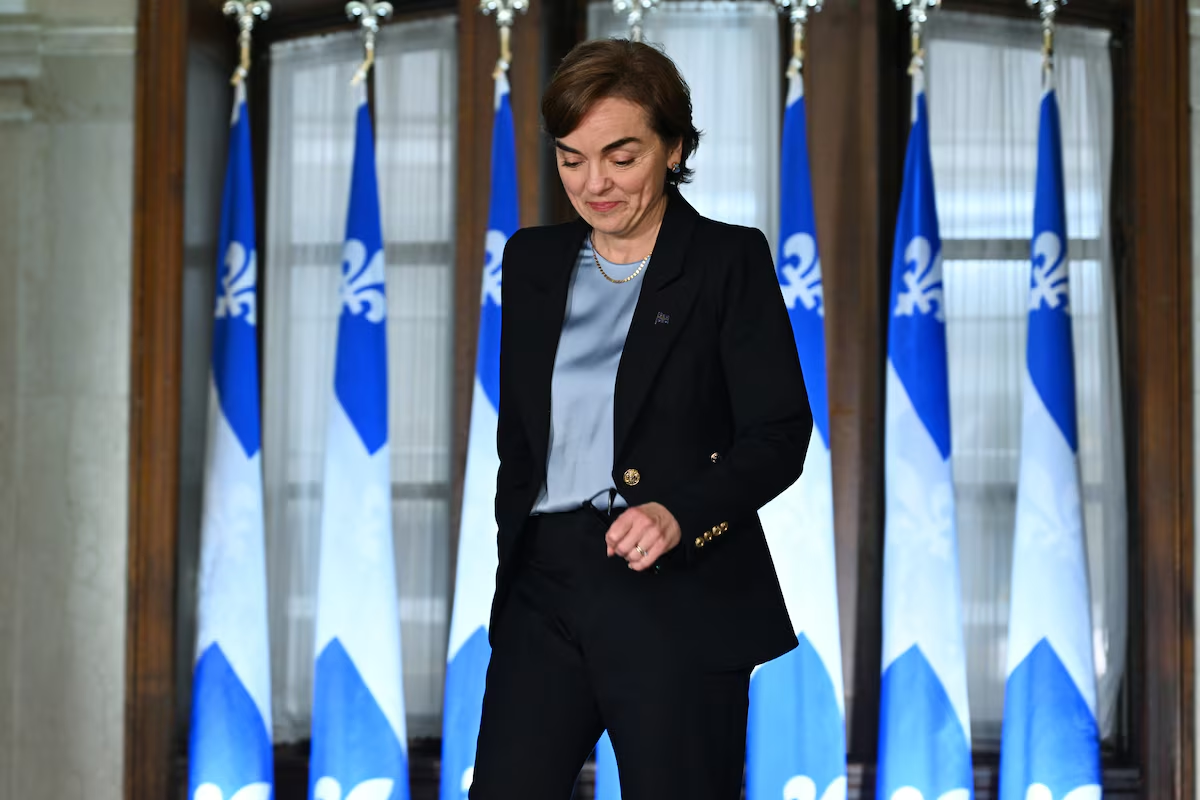
Open this photo in gallery:
Fréchette walks down to a post-election news conference at the premier’s office in Quebec City on Tuesday.Jacques Boissinot/The Canadian Press
She is the first woman to serve as premier since PQ leader Pauline Marois, who won a minority government in 2012. Fréchette said she hopes her short time in office will open the door to more women in political leadership roles.
“Quebec was led by women for a total of 25 months in 159 years,” Fréchette said. “It’s too little.”
Experts are divided on whether the CAQ can survive after being wiped off the political map following a vote that handed the sovereigntist Parti Québécois a minority government.
Université Laval political science professor Thierry Giasson says many Quebeckers still believe in the CAQ’s core autonomist position.
His colleague André Bodet agrees, saying the PQ was also expected to disappear after the last election.
But Université de Montréal political science professor Martin Papillon points out that Legault did not have the same deep historical roots.