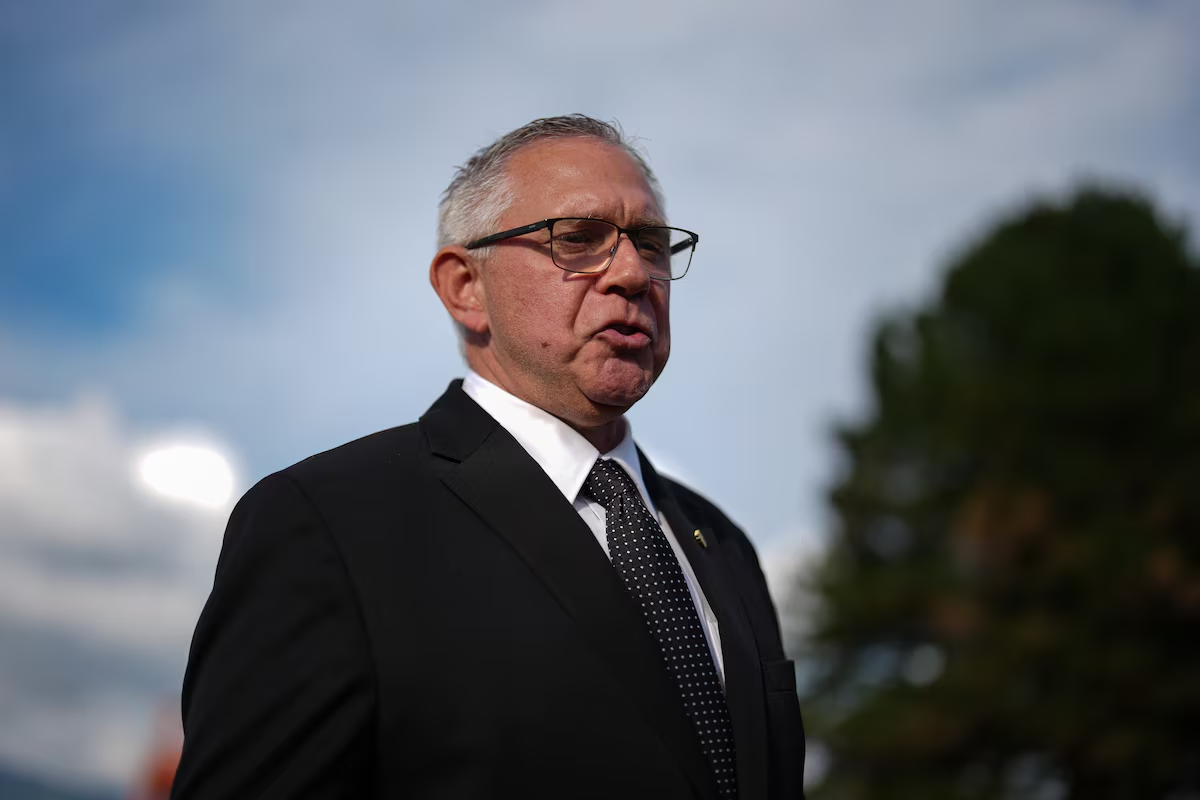

Open this photo in gallery:
B.C. Conservative interim Leader Lorne Doerkson leaves after a campaign announcement, in Vancouver, on Tuesday.DARRYL DYCK/The Canadian Press
Lorne Doerkson spent his birthday on Thursday doing media interviews as the new leader of the Conservative Party of B.C., a role he did not seek out but was suddenly appointed to last week, and that could see him elected premier by Halloween.
The two-term Cariboo-Chilcotin MLA was named interim leader of the beleaguered party last Sunday, after the sudden resignation of Kerry-Lynne Findlay amid a caucus revolt. Conservative MLAs selected Mr. Doerkson to replace her and the party’s board approved.
Mr. Doerkson, however, was in South Africa for a conference last weekend and learned of the developments during a layover in Amsterdam as he was travelling home.
“I had a call asking if I would accept the nomination,” Mr. Doerkson, 58, said in an interview between collecting signatures to get on the ballot and delivering items to the Clinton Food Bank.
“I knew the seriousness of the situation, of course, with rumours of a snap election being called, so at that point, I said yes.”
Opinion: Is David Eby about to gamble away his government?
His unplanned ascension caps a remarkable few weeks for a party battered by defections, controversy and internal warfare. On Friday, the provincial NDP seized on another complication, accusing the Conservatives of failing to make clear to voters that keeping Mr. Doerkson on as leader permanently would require a change to the party’s constitution backed by two-thirds of the same fractious membership that elected Ms. Findlay.
A spokesperson for the B.C. Conservatives did not respond to a request for comment.
Mr. Doerkson, a former newspaper publisher, small-business owner and bareback rodeo rider, has been handed two daunting tasks: to restore order to his party and persuade a skeptical electorate that Conservatives are not only ready to govern, but offer a better alternative to the incumbent NDP.
The Conservatives enter the race stronger than their recent turmoil might suggest. An Angus Reid Institute poll released on Thursday, two days after provincial NDP Leader David Eby called an early election for Oct. 24, put the Conservatives at 43 per cent support among decided and leaning voters – eight percentage points ahead of the NDP.
The results appear to reflect the frustration with Mr. Eby calling the election two years early, the institute said.
But the same poll captured the challenge confronting the new Conservative Leader: A majority (56 per cent) of respondents believe his party is “not ready to govern B.C.”
Mr. Doerkson himself remains an unknown entity to most – a factor that could be either hurtful or helpful, said Hamish Telford, a political scientist and professor at the University of the Fraser Valley.
“He’s a bit of a blank slate, and you can read into him whatever you want,” he said. “And he seems like a decent bloke.”
Mr. Doerkson’s appointment drew positive comments online, many from constituents who praised him for the daily video updates he provided during this summer’s wildfires. Others pointed to his votes to allow the introduction of bills to repeal B.C.’s Human Rights Code, and restrict gender-affirming care for minors and prevent students from changing pronouns at school. (Mr. Doerkson has said the votes allowed debate and did not signify support.)
British Columbia Premier David Eby has called an Oct. 24 election that he is framing as an urgent necessity to respond to the threat posed by U.S. President Donald Trump and his trade war, calling it an ‘existential moment’ for the province.
The Canadian Press
At an introductory press conference earlier this week, he said his No. 1 priority if the Conservatives formed government would be to repeal the province’s Declaration on the Rights of Indigenous Peoples Act. The legislation passed unanimously in 2019, with the help of three current Conservative candidates who were then MLAs: Peter Milobar, Teresa Wat and Ian Paton.
He added in an interview that the Conservatives would also prioritize the broader economy, health care and crime.
Mr. Doerkson also pushed back against Mr. Eby’s effort to make U.S. President Donald Trump a central theme of the campaign. The NDP Leader has spoken repeatedly of the existential threat posed by Mr. Trump’s trade war, casting the Conservatives as Maple MAGA and his NDP as the only party able to stand up to him.
“He’s going to have to find some new material,” Mr. Doerkson said. “I’ll tell you right now: I think Donald Trump is an absolute bully, and the reality is that David Eby and his team have had an opportunity to strengthen this province and have chosen not to.”
Prof. Telford said the question of how the Conservatives will do extends beyond Mr. Doerkson himself to the ideological divisions and internal power struggles that have consumed the party and its two last leaders. Ms. Findlay lasted just 113 days – less than four months – before stepping down after an exodus of MLAs and a bitter revolt over her leadership. John Rustad, before her, resigned last December after an extended period of strife within the party, and to avoid a further “civil war.”
That conflict reflects a broader shift in B.C. conservatism, Prof. Telford said. Modern conservative populists are increasingly motivated by divisive social issues, whereas centre-right coalitions once bridged differences on social issues by focusing on shared fiscal and economic priorities.
The snap election and a new leader have, for now, brought those factions back under one roof. But the fault lines that so bitterly fractured the party remain, Prof. Telford said.
“They can probably hold it together for 30 days,” he said. “The question is: Could they hold it together if they form a government?”
The big B.C. reshuffle continues ahead of snap election
Mr. Doerkson also acknowledged the need to maintain order. Asked how he would handle a member who made inflammatory or otherwise unacceptable remarks, he drew a distinction between inadvertent mistakes and deliberate conduct.
“I think there has to be, obviously, some control around that for sure,” he said, adding that he would assess such incidents individually.
Mr. Doerkson began making phone calls the moment he arrived back in Canada from his conference. He contacted MLAs who had left the party, including the 13 who exited as a result of Ms. Findlay’s leadership, and invited them back.
“My pitch, really, was that we’ve got to be unified. Let’s get back together.”
Most took him up on his offer. Mr. Rustad, expelled from the caucus by Ms. Findlay the previous Friday, accepted the invitation to rejoin on Monday, but announced two days later he would not seek re-election.
Elenore Sturko, a former RCMP officer whom Mr. Rustad booted from caucus last September, said she would not return because too many members hold bigoted and conspiratorial views.
Ms. Sturko, who is now leader of the fledgling CentreBC party, said she likes Mr. Doerkson from their time serving in the caucus of the former BC Liberal party. But she said his rise to leadership is indicative of the instability typical of the Conservatives.
“I do have respect for Lorne Doerkson, but I can tell you that he’s been there the whole time, and yet the chaos within the party has existed during that time as well,” she said.
How Mr. Doerkson says he intends to keep the newly reunited caucus together starts with a philosophy more conciliatory than commanding: Listen and leave room for disagreement. He described himself as broad-minded, and says he subscribes to the maxim of “two ears and one mouth.”
“I can dig in on something that I might believe in, but I can certainly, through debate, have my mind changed,” he said. “I think nothing happens without a good conversation.”
Mr. Doerkson could also face another test of party unity over his own leadership. On Wednesday, he said he intended to remain leader if elected premier; however, because the party’s constitution bars an interim leader from seeking the permanent position, members would have to amend the rules by a two-thirds vote.
The announcement has already rankled some members, who argue that it is undemocratic to effectively install Mr. Doerkson just months after Ms. Findlay was elected.
NDP candidate Niki Sharma, who was attorney-general in the last cabinet, held a news conference on Friday to criticize the Conservatives for not explaining the internal votes needed to cement Mr. Doerkson.
“The bottom line is the B.C. Conservatives have no way of guaranteeing who would be the Premier if they won this election,” she said.
Prof. Telford said the move risks deepening the alienation of grassroots members who already believe party elites overturned their choice of leader. That poses a particular problem for a populist party whose appeal relies partly on the idea of ordinary people challenging elites, he said.
Mr. Doerkson acknowledged that the membership had elected Ms. Findlay.
“But the reality is, Kerry-Lynne resigned, and it left us in a position that we needed to address immediately,” he said. “With a looming rumour of a potential snap election, whatever were we to do?”