
Listen to this article
Estimated 3 minutes
The audio version of this article is generated by AI-based technology. Mispronunciations can occur. We are working with our partners to continually review and improve the results.
The Assembly of First Nations is still waiting for uncensored access to the government’s historic intelligence dossier on the organization, six months after a CBC News investigation revealed the RCMP’s now-defunct spy agency infiltrated the group in the 1970s.
Released under access to information law, some 6,000 pages of formerly secret “Red Power” and “racial intelligence” files reveal how Mounties targeted Indigenous political leaders and activist movements through the so-called “Native extremism” surveillance program.
Following the revelations, the AFN, which represents First Nations chiefs in Canada, asked the public safety minister for those documents but has yet to receive them, National Chief Cindy Woodhouse Nepinak said Tuesday in Ottawa.
“That’s very worrisome and First Nations are wondering: What is this? Who were they tracking? And where are the documents?” she told reporters on Parliament Hill.
Despite the age of the files, the federal government heavily censored the papers citing potential harm to Canada’s national security — withholding in their entirety nearly 300 pages from the dossier on the assembly’s forerunner, the National Indian Brotherhood.
Potentially up to 100,000 pages of relevant records are locked away in government archives, Library and Archives Canada said.
The released files show the RCMP’s Cold War-era Security Service was monitoring Indigenous political activity as early as 1968, amid concerns about outside influences and communist meddling.
Mounties created their “Native extremism” countersubversion program in 1973 as the Red Power activist movement was surging.
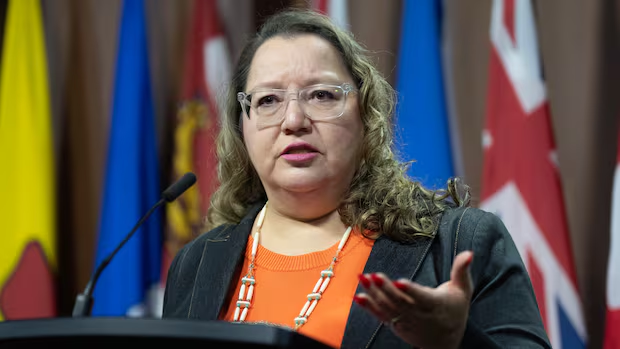
 National Chief Cindy Woodhouse Nepinak responds to a reporter’s question during a news conference on Parliament Hill in Ottawa on Tuesday. (Adrian Wyld/The Canadian Press)
By 1975, Mounties had a code-numbered secret agent penetrating the National Indian Brotherhood under Secwépemc leader George Manuel, who was surveilled for roughly five years.
After that, the force launched a previously secret intelligence operation in Yellowknife, where Mounties paid five informers to target the Dene Nation political organization and its president, Georges Erasmus, who later became AFN national chief and an officer of the Order of Canada.
“It was triggering to a lot of people during that time period, a lot of leaders that came before me that raised all of us up to be the leaders that we are,” Woodhouse Nepinak said.
“I feel for them. We’ve asked for the uncensored documents and we have yet to receive them.”
Woodhouse Nepinak added that was going to be “our no. 1 ask” during a meeting with Public Safety Minister Gary Anandasangaree later on Tuesday.
WATCH | How Mounties infiltrated Indigenous movements:
The secret RCMP program to spy on Indigenous organizations
Newly declassified documents obtained by CBC Indigenous confirm that the RCMP infiltrated and sought to disrupt legitimate political Indigenous organizations in the 1970s, in an extensive program of covert surveillance, informants and countersubversion.
The minister’s office said Wednesday Anandasangaree is working with Library and Archives Canada, Canadian Heritage and others to support the release of the requested documents, including addressing the processes required to make records available.
“He recognizes that these records concern a painful and deeply personal period for many First Nations people and leaders,” wrote spokesperson Simon Lafortune in a statement.
“The minister and the RCMP understand the importance of engaging respectfully with those affected and ensuring this work is approached with the seriousness it deserves.”
The RCMP Security Service was also following prominent Métis leaders like Jim Sinclair and Tony Belcourt as well as Inuit leaders like John Amagoalik, who said Mounties “stuck to us like glue” during the early push to establish the territory of Nunavut.
RCMP Commissioner Mike Duheme issued a statement of regret for the surveillance in March.