
Open this photo in gallery:
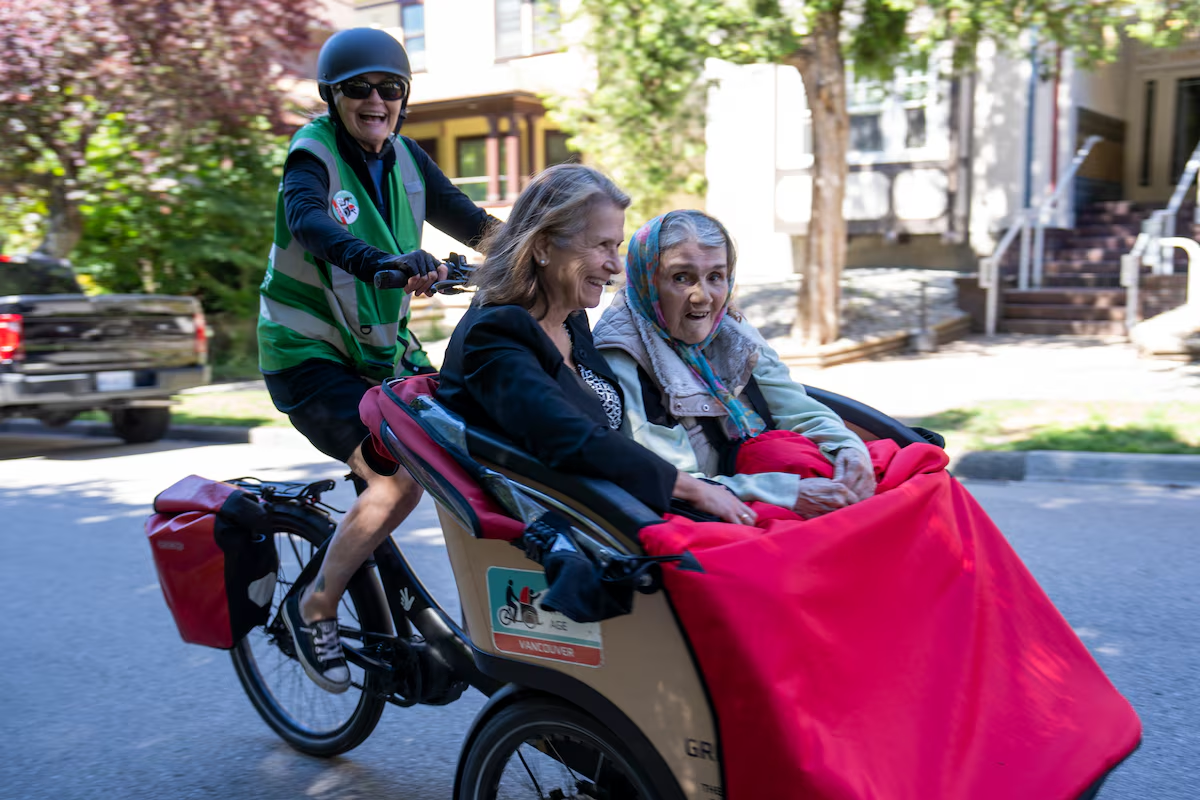
Volunteers with Cycling Without Age take seniors from care homes on bike rides on custom-built trishaws in Vancouver, B.C., on June 17.Jimmy Jeong/The Globe and Mail
On Sept. 17, health editor Caroline Alphonso and national health reporter Alanna Smith answered reader questions on what health care volunteers are doing across the country, and how the Canadian system can better care for its patients.
Over the summer, we featured the stories of volunteers in Canadian health care in our Care Between the Lines series. From a non-profit organization in Saskatchewan that drives locals to their medical appointments, stylists giving free haircuts in a Charlottetown hospital, cyclists taking seniors out for outdoor excursions and many more stories, the series celebrated these volunteers while highlighting the gaps in a system that can feel isolating for patients.
Readers asked how these volunteers got involved, what they can do for their own communities and how the clinics and hospitals can better care for their patients. Here are some highlights from the Q&A.
Care Between the Lines
How did this series come to be? What has stuck out to you about these stories?
Caroline Alphonso: Kristy Kirkup had written a lovely piece around the Christmas holidays on a woman who volunteered her time in an infant cuddling program at St. Michael’s Hospital.
That sparked the series idea. We wanted to tell stories of volunteers who showed kindness during what can be a scary and isolating time, while also showcasing some of the gaps in the health care system.
I have loved assigning and editing this series. The news cycle can feel bleak at times. But these stories have been some of the bright spots throughout the summer. The stories are heartfelt; the pictures and videos are beautiful.
Open this photo in gallery:
Nanette Godbout near her residence in Winnipeg’s Exchange District on July 28.Shannon VanRaes/The Globe and Mail
I was moved by the story featuring Nanette Godbout and the work she did sitting beside dying patients who didn’t have family and friends nearby. What prompted you to look for a volunteer in the area of end-of-life care?
Alanna Smith: This volunteer role was first brought to my attention by someone working in Alberta’s health care system and it immediately sparked my interest. Death is still very much a taboo topic and I thought that bringing this important work to light would encourage difficult but important conversations.
It looks like most of the volunteers in these stories are retirees. Why is that?
Alphonso: It’s true that many of the volunteers we featured were retirees. Many of them have more free time after leaving their careers and perhaps want to maintain a sense of purpose and connection. I loved reading about the woman who made finger puppets at Stevenson Memorial Hospital in Alliston, Ontario.
However, there are many younger people who also spend time volunteering in the health care sector, and I know they are warmly welcomed by patients and health care staff.
At this Ontario hospital, a volunteer corps preserves small-town warmth
In one story, you wrote that the number of volunteers in the hospital sector has dropped in recent years. What’s the reason for the decline and what can we do about it?
Alphonso: I asked health science reporter Jennifer Yang about this, as she touched on it in her piece. This was her response:
I posed this exact question to Michelle Nelson, a professor with the University of Ottawa who studies volunteers in health care.
Dr. Nelson said that this trend is something researchers are still trying to better understand, but the COVID-19 pandemic definitely had an impact. Many volunteer programs shut down in the early months and years of COVID-19 – and many volunteers just didn’t return in the aftermath. Hospital volunteers tend to be older adults and many didn’t feel safe returning to a hospital environment. Volunteer programs that were shuttered also had to be rebuilt, with new volunteers recruited and retrained.
Women’s Auxiliary Volunteers at SickKids bring warmth to patients and their families
But Dr. Nelson pointed out that there could be something happening specifically around women, who make up the bulk of volunteers within hospitals. The impacts of COVID-19 were gendered, and women disproportionately shouldered a lot of the unpaid caregiving work that was needed during peak-pandemic years. This made it a lot harder for women to shift back to their volunteer commitments even after the pandemic eased up.
There are likely many other structural issues at play. The current economic environment and job market is perhaps making it more difficult for people to volunteer their time. Caregiving demands and pressures remain high, especially for women. There are also differences in how younger people volunteer; they tend to give their time more episodically, whereas hospital volunteer programs often require volunteers who can commit to regular hours.
Open this photo in gallery:
Al Sutherland, a volunteer with the Gravelbourg Cares Shuttle Service, after transporting a client to and from Moose Jaw, SK for a medical appointment on June 29.Liam Richards/The Globe and Mail
The series has made me wonder how I can get involved in my own community. But how can I find where my efforts will be most needed?
Smith: People who spoke to me for this series came to volunteering in different ways. In Saskatchewan, locals in the community of Gravelbourg created their own volunteer-led transportation network to help residents get to medical appointments after a provincial bus service shut down. Another volunteer we profiled in Alberta contacted a nearby hospital directly to offer her artistic talents to decorate radiation masks.
But I recommend starting your search by visiting the websites of local health organizations, regional health bodies and/or provincial authorities. Volunteer positions and applications are typically listed on these sites. In Alberta, for example, you can search for volunteer opportunities here.
Canada’s health care system
Are volunteers just patching up the gaps in Canadian health care that should be handled by more funding and government attention?
Smith: You’ve hit at the heart of a debate across Canada. There are definitely some areas (long-term care comes to mind) where volunteers are filling gaps that arguably should be handled by funded health care workers. Part of the issue is that there is a significant staffing problem in this field, which leads to a greater reliance on volunteers.
That being said, there are many volunteer positions that don’t fit into that box. I’m thinking about the ventriloquist at the London Children’s Hospital in Ontario, volunteer baby cuddlers at Toronto’s St. Michael’s Hospital and the charitable group in Vancouver that takes seniors from care facilities on recreational bike rides. These volunteers play a unique role in patient care.
Open this photo in gallery:
Volunteers with Cycling Without Age with their senior riders stop to enjoy the view in Stanley Park in Vancouver, B.C., on June 17.Jimmy Jeong/The Globe and Mail
Where are volunteers most needed in the health care system?
Smith: That’s a tough question. I think what this series has highlighted is that volunteers are relied upon in all areas of the health system, both inside and outside of traditional care settings. But some high-need areas are transportation, hospital navigation and long-term care.
Alphonso: I don’t think there’s only one place within the health care system. What became apparent as we reached out to hospitals and organizations is how volunteers have made themselves a fixture in all facets of the system.
Opinion: We are making the exact same mistake in health care as we did in housing
The medical profession has pointed out numerous solutions to deal with health care problems. Why are these expert solutions ignored?
Smith: You are spot on. There is a significant gap between evidence-based recommendations and policy execution. When I talk to physicians and experts in the health care system, they often point to political will and funding as major barriers to implementing long-term solutions.
Another hurdle is the jurisdictional divide between the federal government, which provides funding and enforces the Canada Health Act, and provinces and territories, which manage their own health care delivery. Canada’s health system is deeply fragmented.