
Open this photo in gallery:
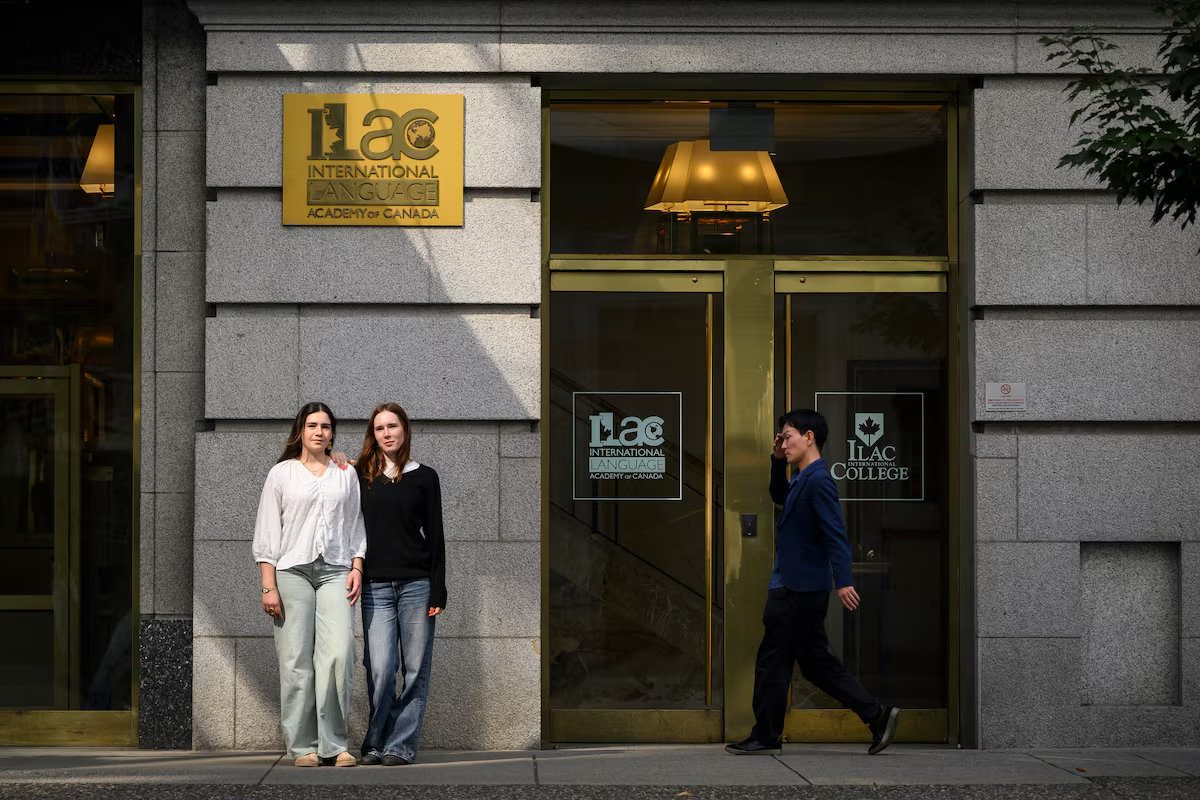
International Language Academy of Canada students Berta Alonso (left) and Annabell Wittan outside of ILAC in Vancouver, on Monday.Jennifer Gauthier/The Globe and Mail
When Berta Alonso received an e-mail on Friday from the International Language Academy of Canada telling her the school had filed for bankruptcy and was closing immediately, she figured she had been hacked.
The 18-year-old student from Barcelona was two weeks away from completing a marketing diploma at ILAC’s Vancouver campus. She couldn’t fathom that ILAC, one of the largest private language-instruction schools in the country, would file for bankruptcy and shutter without warning, stranding at least 1,362 students studying in Toronto and Vancouver. Some are at risk of losing accommodations and work permits tied to ILAC.
“Everybody thought that it was fake because it was, like, a crazy thing that no one expected,” Ms. Alonso said. “I was so scared and frustrated.”
The sudden closing of ILAC is the most recent fallout from the federal government’s U-turn on international student policy, even though many of ILAC’s students were in Canada on visitor’s visas, rather than study permits, according to Languages Canada. The organization represents private English and French language schools nationwide.
When the federal government began imposing restrictions on student visas and postgraduate work permits in early 2024, private schools that taught Canada’s two official languages to people from overseas saw demand dwindle. The number of students learning English or French as a second language at a private school has fallen nearly in half since 2019, down to 81,636 students last year from 150,112 in 2019, according to Languages Canada.
Less than a week before ILAC closed, EC English, an international language school with campuses in Montreal, Toronto and Vancouver, abruptly shut its doors as well. That closing affected 471 students across the country.
“Canada’s linguistic infrastructure is disappearing, and without it, we actually can’t build,” said Gonzalo Peralta, executive director of Languages Canada. “It should be part of the talent strategy for Canada’s future.”
Mr. Peralta said other language schools have closed since Ottawa reined in the international student program. It did so in response to public concerns that a surge in temporary residents had made housing, entry-level jobs and other resources harder for Canadians to access.
But previous shutdowns were orderly, he added. “What is really concerning right now is that we have these two large schools that have closed in a disorderly fashion, without assuming the responsibility for the students.”
Open this photo in gallery:
Ms. Alonso (left) and Ms. Wittan both received emails from the university informing them that the school was closing immediately.Jennifer Gauthier/The Globe and Mail
Bankruptcy documents obtained by The Globe and Mail show ILAC had just over $1-million in cash on hand, plus $6.9-million in securities. The company had just over $135-million in liabilities when it filed for bankruptcy on Friday.
ILAC chief executive officer John DeFranco informed staff of the closing in a brief video call at 4:15 p.m. ET on Friday, according to a student-services worker who had been with the company for four years.
The Globe has agreed not to name the former employee because he hopes to keep working at language schools and fears that speaking out will hurt his career prospects.
Before their e-mail and internal messaging access was cut off, ILAC staff scrambled to share personal phone numbers with co-workers who had become like family, he said. Teachers who had developed curriculum rushed to print copies before the printers were shut off.
“Everybody who worked at ILAC did not know this was going to happen, and are horrified that it did,” he said, adding staff had just welcomed a fresh crop of overseas students to an ILAC high school in Toronto a few weeks ago. Friday was parent-teacher interview day.
Before the shutdown, ILAC ran traditional language classes in person and online, a diploma-granting career college and private high schools in Vancouver and Toronto. It also had long-standing partnerships, known as pathways programs, with dozens of publicly funded colleges and universities that helped students improve their French or English before starting postsecondary programs.
In 2019, ONCAP, the mid-market private equity platform of Onex Corp., acquired a majority stake in ILAC Education Group in partnership with ILAC’s founders and management.
One of those founders, Jonathan Kolber, wrote on LinkedIn on Monday that he left ILAC’s board a year and a half ago because of differences with the company’s new CEO.
He wrote that the closing was a surprise to everyone at ILAC, “and the hardest part is the sales team are being accused of knowing. Please know they were lied to until the last moment. They were promised ILAC would never go bankrupt. They were told to sell to clients right until the end.”
Mr. Kolber did not respond to an interview request.
Mr. DeFranco, the CEO of ILAC, told The Globe by e-mail: “Limits on international students mean fewer people can access the education and opportunities we were built to provide. We know how difficult this is for our students and staff. We are working closely with regulators to ensure students receive the support they need during this transition, and are doing everything we can to minimize impacts on our students, employees, and partners.”
Adam Shantz, a managing partner at ONCAP, added in a separate e-mailed statement that “sector-wide limits on admissions for international students have negatively impacted every language school in the country, including ILAC.”
Mr. Peralta said Languages Canada and its other member schools have promised to place every student whose education was disrupted by the EC Canada and ILAC closings in a Canadian language program as soon as possible at no charge.
But some students risk losing the thousands of dollars they paid to ILAC for accommodations and other services beyond tuition.
Annabel Wittan, a 19-year-old student from Berlin, said she paid ILAC about $11,000 for three months of English classes plus shared accommodations in residence in Burnaby, B.C. She moved in less than a week before receiving the same e-mail as Ms. Alonso informing her that ILAC was closing immediately.
“I have to move out or pay again because we don’t get the money back,” she said.