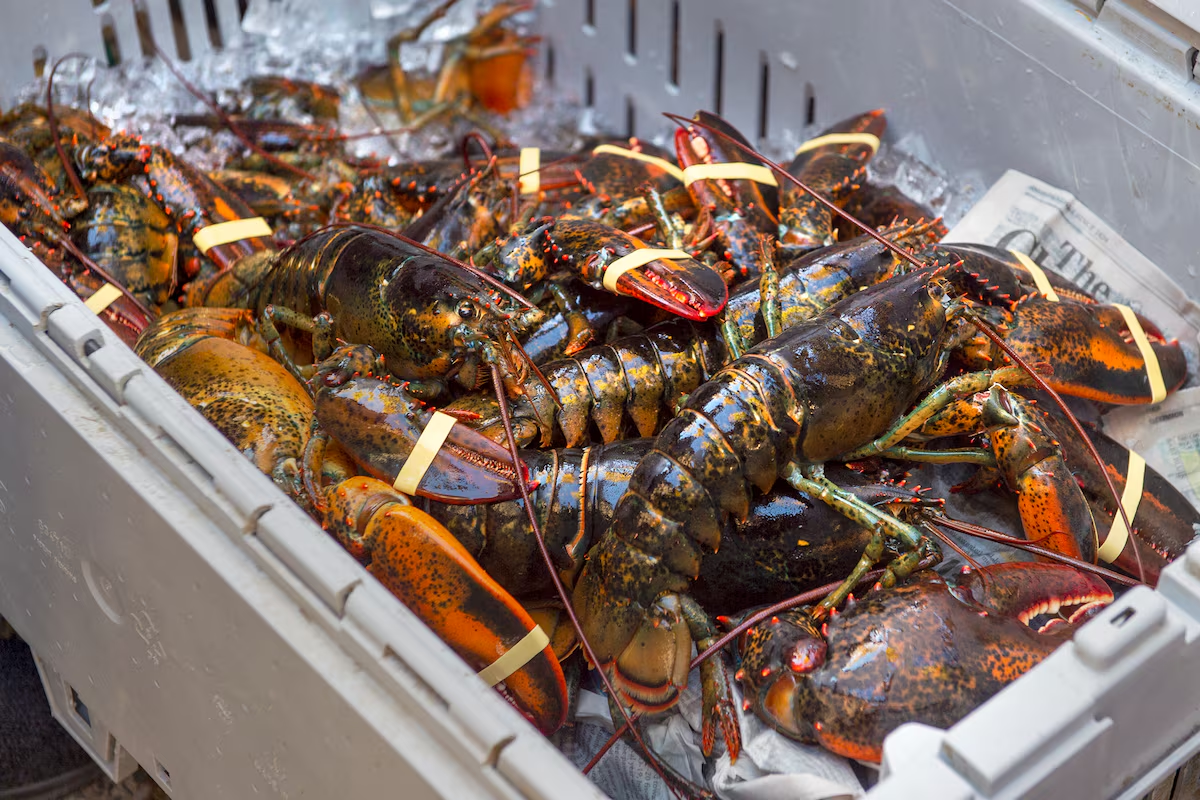

Open this photo in gallery:
Lobster is big business in the other Atlantic Provinces, but has traditionally been less valuable in N.L., with only 9,400 tonnes of lobster worth $137-million reported in 2024.Andrew Vaughan/The Canadian Press
Carl Hedderson has been fishing for 50 years, but never thought he’d see as many lobsters as he does now around Newfoundland’s remote and rugged Great Northern Peninsula.
Based in Noddy Bay, 300 kilometres north of Deer Lake at the peninsula’s northern tip, Hedderson says he’s gone walking on the beach at night with a flashlight looking for squid all his life.
“I never ever saw a lobster, but now you do it and you see lobsters crawl around by the beach in the nighttime,” he said in a recent interview.
“The weather (has) changed. The temperature’s changed. I guess it got right for them, and with (lobster) moving north, I guess they got a better survival rate and are growing faster.”
Lobster is big business in the other Atlantic Provinces, but has traditionally been less valuable in Newfoundland and Labrador. Nova Scotia landed nearly $962-million worth of the crustacean in 2024 according to Fisheries and Oceans Canada. New Brunswick brought in about $323-million while Prince Edward Island clawed in almost $318-million.
Newfoundland and Labrador’s reported landings were about 3,300 tonnes in 2018, worth about $48-million. The lobster catch has more than doubled since, with 9,400 tonnes worth $137-million reported in 2024.
Darrell Mullowney, a fisheries department research scientist, says lobsters prefer a “Goldilocks zone” where the water isn’t too hot or too cold. Traditionally that zone has been around the northeast waters of the U.S. and around the Maritime provinces, with Quebec and Newfoundland at the extreme north of the range. He says in recent years climate change has pushed the centre of that Goldilocks zone north.
“It’s becoming very important to us in terms of rankings of economic returns from important fisheries in Newfoundland,” Mullowney said in an interview. “Snow crab dominates, but lobster is now creeping up to number two or number three in recent years, kind of rivalling northern shrimp. So it’s put itself on the radar.”
Hedderson says officials opened other areas of the province to fishing for species such snow crab or northern shrimp when the cod fishery collapsed in 1992, but that didn’t happen in his area where just a handful of people have lobster licenses. He says participation in the local fishery has dwindled over the decades and that’s had a big impact in a rural area with few other economic options.
“All our young people are gone,” he said. “We would have been booming if they could have (fished) lobster. The young people could have stayed. They could have made some money.”
Fisheries and Oceans Canada announced dozens of new exploratory lobster licenses for Quebec for the spring of 2025 in order to assess the area’s ability to support additional catches. Ottawa has not done the same for Newfoundland and Labrador where there are currently 2,175 licenses.
The department did not directly answer when asked if it was considering an increase, saying in an e-mail that the province’s lobster fishery is limited entry “which means the number of licences is restricted.”
Sherry Glynn, secretary treasurer of Newfoundland and Labrador’s Fish, Food and Allied Workers Union, said its members have been clear that the value of lobster licenses are increasing with some fetching between $350,000 and $500,000.
“So what kind of precedent does it set when new licenses just get issued to harvesters? Does it have the impact of devaluing the licences that already exist?’” she asked in an interview.
Glynn said there’s also a lack of infrastructure in the province, noting there was a shortage of lobster crates available when the caches started to increase a few years back. That’s since been resolved, but airport capacity for exports remains another bottleneck, as is the number of lobster pounds and live holding facilities, which are much more developed in the Maritimes.
“It takes time for all parts of the industry to catch up (to the increased catch) and for the infrastructure to develop around it,” said Glynn.
She said the provincial government, which regulates seafood processing, has begun in recent years to allow buyers to purchase seafood, including lobster, for processing in other provinces such as New Brunswick and Nova Scotia. In the spring, the government moved to streamline applications for new processing licenses, including a conditional license for companies committed to buying or building a fish processing plant.
Meanwhile, Hedderson says fishermen in rural areas are getting older and there’s less interest from the new generation, who have watched their parents struggle.
“When people are just sitting around twiddling their thumbs, when you’re sitting around a couple of months with no income and just piddling around your door waiting . . . to start fishing, it’s not helping anybody,” he said.