
Open this photo in gallery:
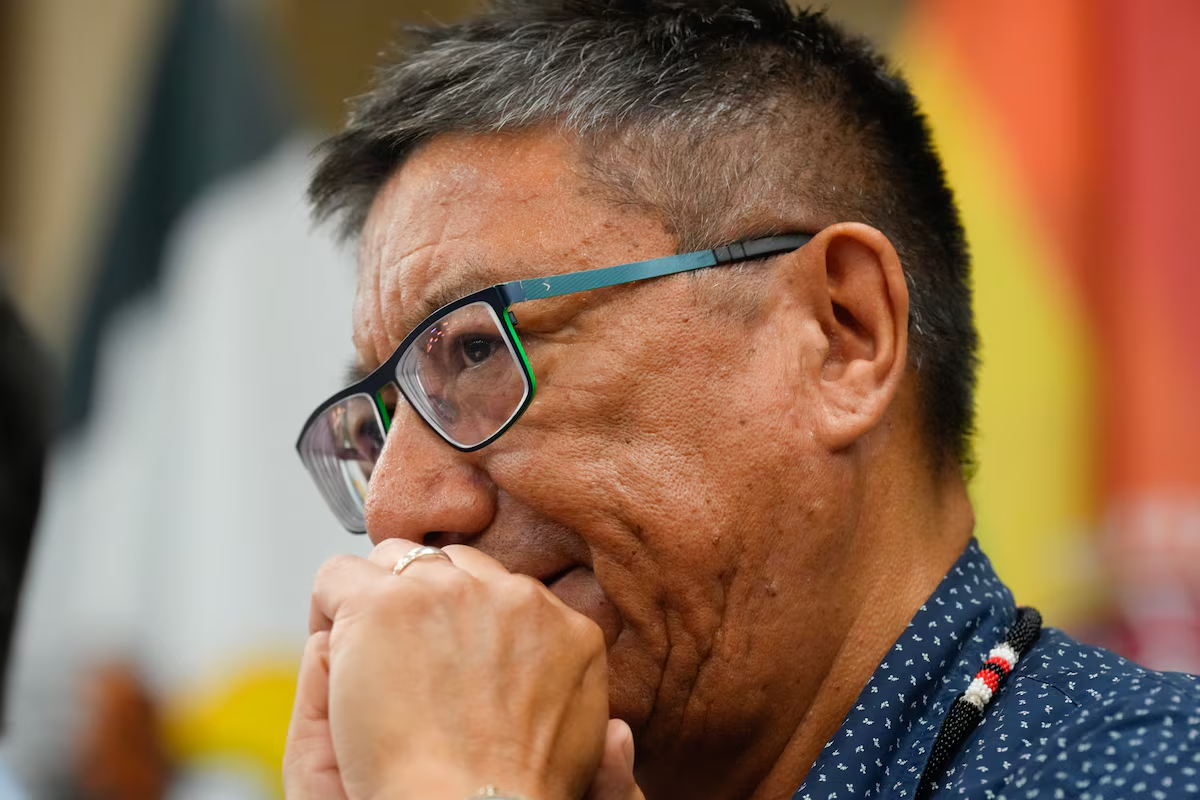
Grand Chief Alvin Fiddler, of Nishnawbe Aski Nation, attends a news conference in Thunder Bay, Ontario, on July 21.Chris Young/The Canadian Press
A couple of weeks before she died, Miranda Mamakwa described feeling abandoned by a federal agency that was supposed to help her get to crucial health appointments.
Ms. Mamakwa, 31 and a member of Fort Severn First Nation in Northern Ontario, had open-heart surgery in April.
She wrote on Facebook in August that the federal Non-Insured Health Benefits program failed her by denying her medical travel for follow-up care, only available outside of her community.
She had missed four appointments – on May 28, June 11, July 2 and Aug. 6.
The mother of three young children also made a haunting request: If she died, she wanted others to “go after” the NIHB, to seek accountability.
Ms. Mamakwa’s health deteriorated to the point where she could no longer wait for medical care. She went to her community’s nursing station for help and was airlifted by an Ornge helicopter from Fort Severn First Nation, a fly-in-only community located near Hudson’s Bay, to Thunder Bay Regional Health Services Centre.
She died last Tuesday.
Following her death, Ms. Mamakwa’s family is working with First Nations leaders and the Sioux Lookout First Nations Health Authority, which delivers health programs and services to First Nations across Northwestern Ontario, to demand answers.
“We will honour her dying wish by demanding full accountability,” said Alvin Fiddler, Grand Chief of Nishnawbe Aski Nation.
NAN, representing 49 First Nations in Northern Ontario, says that the NIHB failed to arrange medical travel for Ms. Mamakwa’s four follow-up appointments.
“It is outrageous that Miranda’s travel was denied,” Mr. Fiddler said.
“There is no doubt in my mind that her life may have been saved if she had been allowed to travel to her appointments.”
Federal Indigenous Services Minister Mandy Gull-Masty on Friday called for a review to learn what happened with Ms. Mamakwa’s requests for medical travel.
“I have instructed Indigenous Services Canada officials to urgently establish the facts surrounding Miranda’s death and the circumstances that led to it,” she wrote in a statement released on X.
Ms. Gull-Masty said she would meet with the Sioux Lookout First Nations Health Authority and NAN to discuss what needs to happen next. A date has not been announced.
The NIHB covers the cost of travel and accompanying expenses, including meals and hotel stays, when medically necessary care is not available in a First Nations or Inuit community.
The federal program, offered through Indigenous Services Canada, has been criticized by First Nations leaders, who have raised concerns about the bureaucratic red tape that makes it more difficult for Indigenous people to receive timely services.
Sonia Isaac-Mann, president and chief executive officer of the Sioux Lookout First Nations Health Authority, said Ms. Mamakwa’s death underscores much wider issues of system failures.
The health authority and NAN say they have spent years warning the federal government about how delays and administrative failures put lives at risk.
The organizations say Ms. Mamakwa’s death is the “clearest and most devastating proof yet” these were not exaggerated warnings.
Sol Mamakwa, the deputy leader of the Ontario NDP who is not related to Ms. Mamakwa, issued a recent statement that echoed the health authority and NAN’s call for accountability.
“Miranda deserved so much better,” he said.
He also noted how demonstrators held a rally in June in Sioux Lookout, urging Ottawa fix the NIHB program.
“Miranda’s death was not an accident, but a result of both individual decisions and systemic failures that continue to compromise the lives of First Nations people in this province,” he said.
“It’s time the NIHB program and the federal government take accountability in Miranda’s death and acts to ensure that no more lives are lost because of the program’s failures.”