
Good morning. Canada and the U.S. could be months away from getting back to the negotiating table. More on that below, along with the Canadian Army’s biggest overhaul in decades and how Russia is recruiting foreign nationals for its war in Ukraine.
Open this photo in gallery:
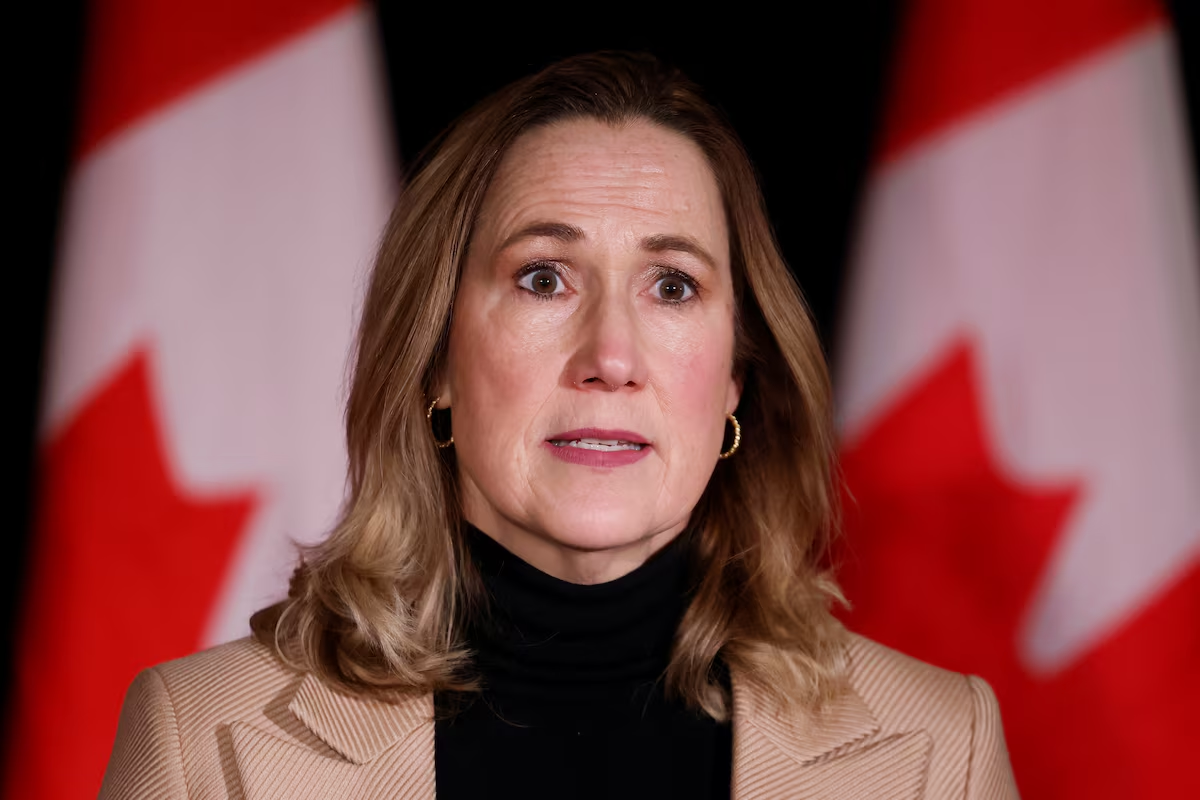
Former Canadian ambassador to the U.S. Kirsten Hillman speaks to the media during a Liberal cabinet retreat in Montebello, Que., in January, 2025.Blair Gable/Reuters
TOP STORIES
The latest from the trade war
Canada and the United States may be months away from returning to formal trade negotiations, according to Kirsten Hillman, a former Canadian ambassador to Washington. Hillman says Ottawa has reached the point where it is holding firm on its red lines, so talks are unlikely to resume until the U.S. accepts that Canada will not agree to a deal that would severely damage its auto, steel and aluminum industries.
Still travelling: The trade war may be keeping Canadian tourists away from the U.S., but business travel is moving in the opposite direction. Corporate bookings south of the border rose 16.5 per cent year-over-year last month, even as leisure travel remains down roughly 25 to 30 per cent. Companies say long-term contracts, clients and investment ties mean they simply can’t afford to stay away.
Keep reading:
Sign up for Morning Update:
Reading this online? Start your morning with context and insight on the day’s biggest stories, in your inbox every weekday.
Open this photo in gallery:
A pedestrian walks past a board promoting contract-based military service in the Russian Armed Forces, in Moscow, on Monday.Ramil Sitdikov/Reuters
Russia accused of trafficking fighters
Russia has recruited thousands of foreign nationals to fight in Ukraine through deception and coercion, Amnesty International says. The group found that many recruits were promised civilian jobs, legal status or Russian citizenship before being sent to the front.
The details: Researchers interviewed prisoners of war from several countries who said they signed contracts they did not understand, had documents confiscated or were threatened if they tried to leave. Some knew they had signed military contracts but believed they would be working as cooks or drivers and instead were sent into combat.
Open this photo in gallery:
Canadian Armed Forces artillery members load equipment onto a plane in Yellowknife. The Army is reorganizing into three divisions focused on foreign combat, home defence and infrastructure support.Carlos Osorio/Reuters
Canadian Army undergoes major overhaul
The Canadian Army is launching its largest reorganization in more than 30 years, replacing its largely geography-based structure with divisions focused on combat, domestic defence and support. Officials say the shift is meant to prepare the military for a more complex “future battlefield” shaped by great-power competition, new technologies and lessons from current wars.
What changes: A new Edmonton-based Manoeuvre Division will become Canada’s main fighting force, while a Montreal-based Defence of Canada Division will oversee territorial defence, mobilization, reserve brigades and the Canadian Rangers. The overhaul comes as Ottawa ramps up military spending and looks to reduce its reliance on the U.S. for defence.
Open this photo in gallery:
Endocrinologist Dr. Daniel Drucker is renowned for his pioneering GLP-1 research.Sammy Kogan/The Globe and Mail
The next GLP-1 questions
As drugs such as Ozempic, Wegovy and Zepbound reshape obesity treatment, researchers are turning to the questions the medications have raised rather than answered. A new Endocrine Society roadmap calls for more study into why some patients are “super responders,” why others lose little weight, how the drugs should be used around pregnancy and what long-term safety risks may emerge.
Why it matters: GLP-1s have become Canada’s top-selling class of drugs, generating $2.4-billion in sales in the first half of 2026 alone. Researchers say their widespread use could fundamentally change scientists’ understanding of obesity and how it should be treated.
The Take
It’s not wise to stoop to the level of insults coming from the Oval Office, but we need interlocutors who can convince Americans that there is only one guilty party in this war, since only Americans have the ability to change their government’s direction.
— Lawrence Martin, public affairs columnist
The U.S. media is getting soft on Trump in this trade war, writes Lawrence Martin
The Shot
Open this photo in gallery:
Mural of Steve Biko under a highway in Gqeberha, the city where he was tortured by police interrogators in 1977 in South Africa, leading to his death.Lulama Zenzile/The Globe and Mail
Almost 50 years after Steve Biko was killed in police custody, South Africa has reopened the case of the anti-apartheid icon, reviving a decades-long fight for answers and accountability.
The Wrap
What else we’re following
At home: A potentially historic El Niño is expected to keep much of Canada milder and drier than normal this fall, delaying winter’s arrival.
Abroad: A Russian strike on a shopping centre in Sumy, Ukraine, killed two people and injured 20, including three teenagers.
AI: An Anthropic researcher has resigned over concerns that leading AI companies are moving too fast and putting competition ahead of safety, warning that increasingly capable systems could become harder to control.
TIFF: Women now hold most of the top film-distribution jobs at Canada’s major studios, marking a striking shift in an industry long dominated by men.
Hockey: Sportsnet will charge some TV subscribers an extra $13 a month to watch Monday-night NHL games, which will air exclusively on Sportsnet+ this season.
Style: The Canada-U.S. trade war is showing up in closets, as “Canada Is Not For Sale” hats and other patriotic merch turn shopping local into a form of political expression.