
Listen to this article
Estimated 4 minutes
The audio version of this article is generated by AI-based technology. Mispronunciations can occur. We are working with our partners to continually review and improve the results.
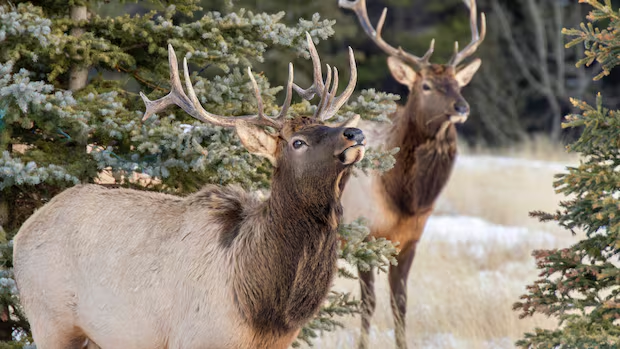
Elk were involved in nearly two-thirds of aggressive wildlife encounters, according to a new study of 25 Canadian national parks.
Researchers analyzed Parks Canada data collected from 2010 to 2023 on aggressive wildlife encounters and what people were doing when they occurred. The study found confrontations happened most often when people were doing quiet, everyday activities like hiking, wildlife watching, sightseeing and strolling in town.
Five animals were examined in the study: elk, mule deer, coyotes, grizzlies and black bears.
Elk were involved with more than 60 per cent of the nearly 3,000 aggressive encounters. They were involved in more than half of the encounters during adventure sports like mountain biking and 80 per cent of encounters at campsites. Elk were also involved in more encounters in town than any other animal.
Study author Shashank Balakrishna says the findings show people don’t always recognize which animals can be dangerous.
“Elk are herbivores, and so people tend to believe they aren’t as aggressive as a grizzly bear. The results show people are underestimating the power of large herbivores, ” he says.
Nick de Ruyter, program director at the Biosphere Institute of the Bow Valley, says the findings don’t surprise him.
 The study found mule deer encounters were more frequent in town and when a pet dog was involved. (Robson Fletcher/CBC)
Elk spend a lot of time in and around the Town of Banff, he says — in part to stay away from predators.
And because they’re used to being around people, de Ruyter says, people can start to see them as tame.
“People get too close. They try to feed them. They try to take photos with them — selfies. And that leads to attacks,” he says.
Eighty per cent of the encounters happened in Banff and Jasper, likely in part because millions of tourists visit the parks every year and there are towns within these two parks, says de Ruyter.
The data groups several types of interactions under “aggressive encounters,” including aggressive displays like stomping, bluff charges and animals chasing people.
Actual attacks made up only 1.6 per cent of encounters.
“The wildlife are actually quite tolerant of people,” de Ruyter says.
Many encounters, such as bluff charges, are actually defensive measures that can signal people are too close.
“So a lot of it comes down to the choices we make. But there should be healthy fear and respect of the wildlife here, because things can go wrong,” he says.
 The study found that black bears were involved in nearly as many aggressive encounters as grizzly bears. (Amir Said/CBC)
Bears accounted for 27 per cent of aggressive encounters.
Grizzly bear encounters were most commonly associated with low-impact activities, including hiking and walking. De Ruyter says when people are quiet on hiking trails, that leads to more surprise encounters with wildlife.
“Making noise is key,” he says, especially in areas where people can’t see far ahead. Turning a corner quietly, for example, can mean unexpectedly coming across a bear.
Coyotes and mule deer had the least amount of encounters, but when they did become aggressive it was often in town.
De Ruyter says hiking and walking are among the most common activities in the parks, which could be part of the reason why so many encounters happen during these activities.
Balakrishna agrees his study’s results do not mean hiking is more dangerous. He says they don’t have the data on how many people were doing each activity, so they can’t compare risk.
De Ruyter says people should give animals three school bus lengths of space and carry bear spray, even when walking through busy areas of town.
“People shouldn’t be scared. They shouldn’t be afraid to go out in the mountains, but they should make good choices and be properly prepared,” he says.