
Listen to this article
Estimated 5 minutes
The audio version of this article is generated by AI-based technology. Mispronunciations can occur. We are working with our partners to continually review and improve the results.
A black bear has been spotted roaming the streets of northwest Edmonton, and experts say the animal was probably simply in search of a pre-winter picnic in the city.
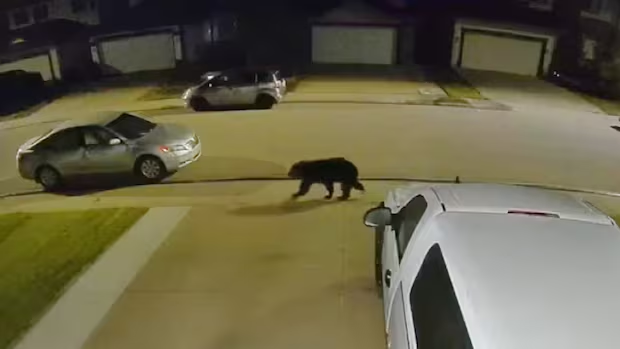
The bear was seen slowly loping down the sidewalk of a residential street in the Cumberland neighbourhood overnight.
Area resident Ken Turner said his front-door security camera captured the animal on the move around 1:30 a.m. on Tuesday in the area of 138th Street and 149th Avenue.
Turner, who shared the footage with CBC News, said he thought “Yikes” and reported the sighting to police out of a concern for public safety.
Mark Boyce, an ecologist and professor at the University of Alberta, said it’s not unheard of for bears to be spotted in Edmonton.
“I don’t think it’s all that unusual but it’s something interesting and cool to see,” Boyce said in an interview Tuesday.
“Bears are pretty effective at cohabiting with humans. They are able to keep out of view and sneak around.”
In a statement to CBC News, a spokesperson for Fish and Wildlife Enforcement Services confirmed the agency was aware of a black bear in the area, noting that Edmonton police reported several sightings between midnight and 1:30 a.m. Tuesday.
“There have been no reports of aggressive behaviour, property damage or access to attractants, and no additional sightings have been reported since that time,” the spokesperson said.
As black bears enter peak feeding season, they may travel through green spaces and occasionally into urban areas in search of food, the official said.
Residents are encouraged to clear their properties of anything that might attract the animals and to report any additional sightings directly to Fish and Wildlife officials.
WATCH | Bear spotted in the streets of northwest Edmonton:
Bear spotted in northwest Edmonton neighbourhood
A small bear was seen on Ken Turner’s Ring camera shortly after 1:30 a.m. Tuesday in the Cumberland neighbourhood, near 138th Street and 149th Avenue. Turner called the police due to safety concerns, as the location is close to walking paths and a school.
Boyce said Edmonton is surrounded by good bear habitat, and it’s fairly common for the animals to enter urban areas through the city’s wildlife corridors, including the North Saskatchewan River Valley or the park systems flanking the nearby Sturgeon River.
He said Alberta’s black bear population is thriving with an estimated 40,000 of them across Alberta, so it’s inevitable that some will come into the urban landscape.
‘They want to pig out’
The animal was likely drawn into the city by hunger pangs, Boyce said.
This time of year, he said, bears are ravenous. The animals enter a stage known as hyperphagia, a critical period before their long winter slumber.
The period is marked by nonstop eating.
“Winter is coming, and they’re needing to get fattened up as much as they can, so they’re going for every kind of food that they can muster.”
He said that at this time of year, bears become less “vegetarian” than usual and less choosy about what they eat, and they tend to become more active, even throughout the day.
As gaining weight is critical to their winter survival, this hunger makes them more vulnerable to attractants, he said.
“They want to pig out [and] put on weight to make it through the winter,” he said.
Boyce said he does not believe such sightings pose a major public safety threat and the bear can likely be left alone to find its own way out of the city.
He said, however, that if the bear becomes habituated to human sources of food and develops “bad behaviour,” it may have to be destroyed.
He urged people in the area to clean up any potential bear food on their properties including trash, bird feeders, fallen fruit and of course, honey — including hives and nests.
John Clarke, a retired wildlife officer who runs the Canadian Bear Safety Authority, said bears move into populated areas primarily due to habitat loss and the search for food before the seasons change.
He said that as natural food supplies dry up, bears rely on urban corridors like river systems and move into residential neighbourhoods for food.
Managing attractants and being proactive are essential to preventing habituation and potential conflicts, Clarke said.
He urged people in the area to take proactive measures and avoid making the neighbourhood a potential feeding ground. That may include keeping residential garbage stowed away or cleaning up anything, like roadkill, that may be luring the animals in.
“The whole thing about bears in particular is food, so it’s up to the community in that area … to get together and say, ‘OK, we have a bear in the area. Let’s figure out why it’s here.'”