
Open this photo in gallery:
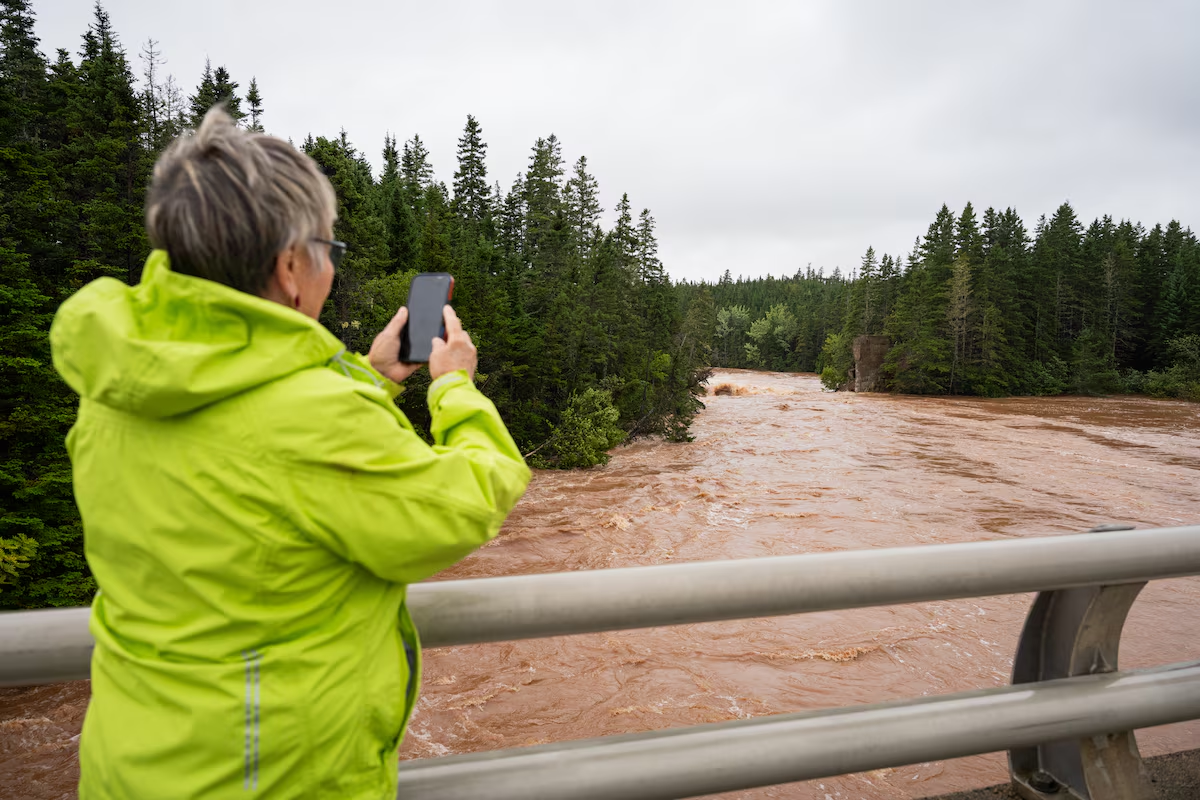
An onlooker makes images from a bridge over the flooded River Tillard, in Richmond County, Cape Breton, N.S., on Saturday.Steve Wadden/The Canadian Press
Heavy rain fell on parts of Nova Scotia on Monday as the province began to repair the damage left by a slow-moving storm that passed over Cape Breton Island, washing out roads, leaving thousands without power and one person dead.
Early Monday morning, Environment and Climate Change Canada issued a hazardous weather alert forecasting up to 25 to 40 millimetres of heavy rain, after 200 millimetres fell on the island and parts of the northern mainland over less than two days.
The ground could not absorb more rainfall and water would likely pool on roads and low-lying areas, the weather service warned. The alert ended in the afternoon on Monday.
“It just poured and poured, and then we had a lot of wind. It wasn’t a hurricane, but it wasn’t too far from it,” said Inverness County councillor John MacLennan. On Sunday, he left his home near Whycocomagh, N.S., to inspect the damage done by the storm.
Some roads nearby had two or three washouts, Mr. MacLennan said, on gravel and paved roads alike. He said the holes created by the washouts could be several feet deep and eight to 10 feet long.
“The rain, when it started late in the evening, it never stopped, and we had a lot of flooded roads. Roads wiped out. Culverts wiped out,” Mr. MacLellan said.
He said some of his constituents faced severe damage to their homes owing to flooding from the storm. A neighbour visiting their daughter in Alberta asked him to check up on their home.
Mr. MacLennan said he was met with four feet of water inside the house, a toppled water heater and cupboards pulled away from the wall. The stove had a fine layer of silt on it, hinting that the water level had previously been higher.
In hard-hit Richmond County, Scott Touesnard, who owns a dock-building company, said the biggest change since the storm has been the loss of a train trestle he used to sit on as a child.
“The train had stopped going there years and years ago. But half of that is washed in the water, and then the water washed behind it as well, and took out a big part of the land,” he said.
One dead after Cape Breton floods prompt state of emergency, cut power for thousands
Mr. Touesnard said there are some washouts near his business, but that it hasn’t stopped him from being able to get around.
A 46-year-old woman from Richmond County was found dead Saturday several hours after her abandoned vehicle was discovered near a flooded bridge. RCMP said Sunday the death is not believed to be suspicious and added they would not provide any more information.
On Saturday, Nova Scotia Power said in an online post that restoration of power may be delayed by washed-out roads. By Monday, all large-scale power outages in the area were resolved, though smaller outages persisted.
Lois Landry, warden of Richmond County, said a Zodiac rescue boat operated by a local fire department and a provincial helicopter were used to carry out daily wellness checks for any residents completely cut off by flooding.
Guests stranded at the Lakeside Luxury Domes camp in the Saint George’s Channel area created a makeshift, jerry-rigged exit route after the property was washed out, she said.
“We’re used to hurricanes on the East Coast, that’s not new to us. But there was wind coupled with rain we haven’t seen the likes of, really, ever,” she said.
Fred Tilley, Nova Scotia Minister of Public Works, said hundreds of provincial employees and local contractors are working to restore the entirety of Cape Breton Island’s road network within the coming days.
“It’s another one of these one-in-100-years storms that has wreaked havoc,” he said. “It’s always top of mind when we’re rebuilding to build for climate change where possible.”
While the province prepared for the storm, Mr. Tilley said, “there’s not much infrastructure that can handle that in Nova Scotia.”
At the peak of the flooding, according to a spokesperson for the province’s Department of Public Works, there were more than 120 closed or damaged roads on Cape Breton.
“Currently, about 44 are closed. The rest have either fully or partially reopened, including dozens overnight,” Toby Koffman, communications director for the department, said in a statement Monday.
Mr. Koffman said that two of eight bridges that were damaged will need to be replaced. As well, he said there are more than 200 culverts that were washed away, from driveways to major roads.
Ms. Landry said she’s lived on Cape Breton Island all of her 58 years, but she’s never seen so much flooding before.
A rainfall device in the area of Saint George’s Channel measured 230 millimetres of rain before it broke, she added.
“We really can’t even wrap our heads around that much rain … it compromised the ground beneath our infrastructure.”
With reports from The Canadian Press