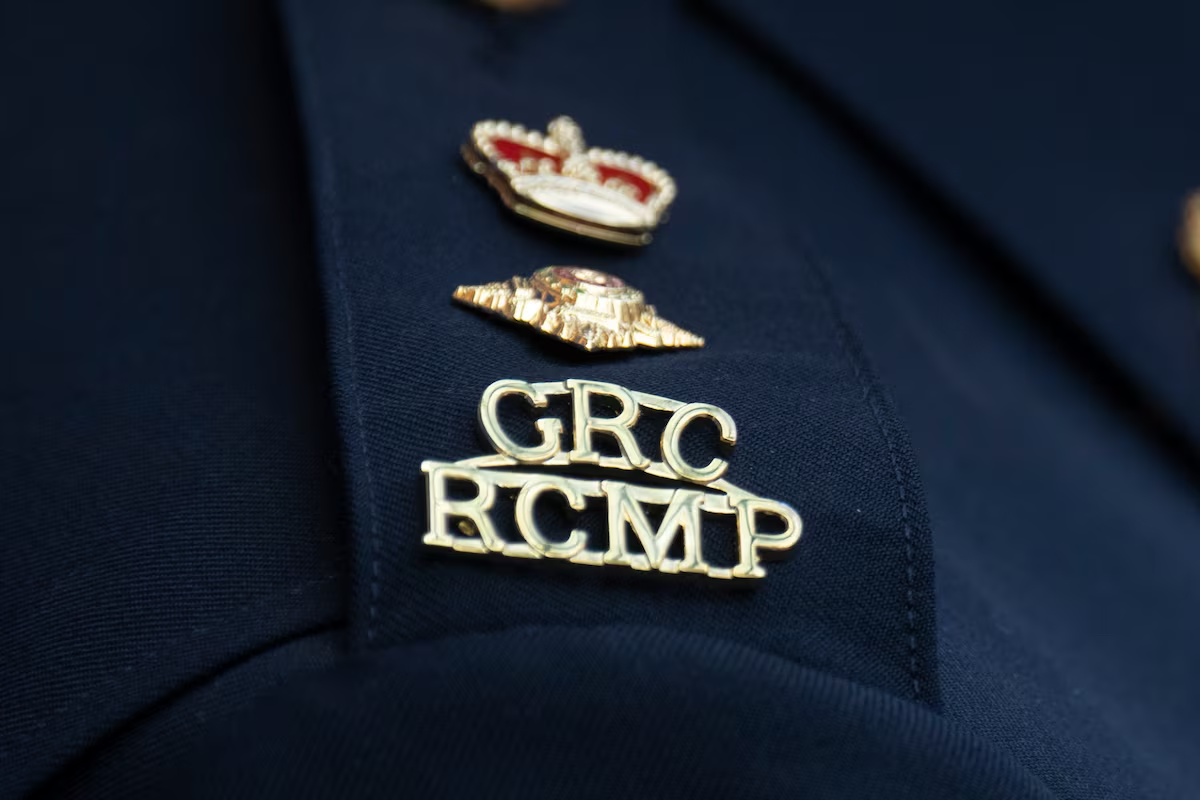

Open this photo in gallery:
The RCMP is the latest Canadian police force to no longer require name tags, as law enforcement agencies try to adapt to the changing threat of doxxing and internet harassment against officers.Adrian Wyld/The Canadian Press
The RCMP has quietly changed its uniform policy to no longer require officers to wear name tags while on duty, a move that has drawn criticism from advocates and experts who say it will limit police transparency, complicate the complaints process and fuel distrust in Indigenous communities.
The national police force made the change in a uniform policy amendment that has been in place since March 30, according to a briefing note obtained by The Globe and Mail through access-to-information legislation. The updated policy allows officers to instead display their regimental number, a change from the previous policy, which only permitted officers to remove their name tags when they were working at protests.
The briefing note, signed by RCMP Commissioner Mike Duheme, is dated April 26 and addressed to Public Safety Minister Gary Anandasangaree. It states the change was made to tackle officer safety concerns and deter doxxing, which is the act of publicly sharing someone’s personal information, while “maintaining accountability.”
However, the RCMP also acknowledged the change carries potential consequences.
“There is a risk that stakeholders may perceive numeric identifiers as reducing transparency and therefore there are potential impacts on community and Indigenous relations, particularly in small communities,” the document stated.
RCMP refused release of badge numbers, fearing convoy supporters would dox officers
The RCMP is the latest Canadian police force to no longer require name tags, as law enforcement agencies try to adapt to the changing threat of doxxing and internet harassment against officers.
Last year, the Calgary Police Service changed its policy to allow officers the choice of either name tags or badge numbers for their uniforms. Vancouver’s municipal police force also has a similar policy. In Winnipeg, the city’s police officers only display their badge numbers.
While Toronto police officers have been required to wear name tags since 2006, Toronto Police Service spokesperson Stephanie Sayer said the force is examining the policy.
“We recognize the increasing concerns around the online identification and targeting of police officers, including the potential impact on members and their families,” she said in an e-mail.
Mr. Anandasangaree was not available for an interview, according to spokesperson David Taylor, who said in an e-mail that questions about the policy change are “best addressed by the RCMP.”
The policy change does not impact the RCMP’s ability to identify members or hold them accountable, and the public complaints process has not been changed, the force’s spokesperson Jessica Kingsbury said.
Open this photo in gallery:
Calgary Police Insp. Darren Smith wears his name tag. Last year, the Calgary Police Service changed its policy to allow officers the choice of either name tags or badge numbers for their uniforms.Jeff McIntosh/The Canadian Press
“The RCMP is committed to accountability, transparency, and building strong and trusting, respectful relationships with the communities we serve — from large urban centres to rural, remote, and Indigenous communities across Canada,” she said in an e-mail.
But Gordon Bluesky, acting Grand Chief of the Assembly of Manitoba Chiefs, said trust can’t be assumed between First Nations and the RCMP.
“A number may identify an officer within an RCMP system, but policing in our Nations should be about more than identifying someone in a database,” he said in a statement.
“Our citizens should know the officers serving their communities, and those officers should know the communities they serve.”
The uniform change is a disproportionate response to a “handful of doxxing situations” related to protest policing and undermines public trust in law enforcement, said Shakir Rahim, a director at the Canadian Civil Liberties Association.
When a number is the only marker to identify an officer, Mr. Rahim said it can make tracking police misconduct more difficult, noting that court documents involving a police officer don’t always include their badge number.
“That raises an inherent conflict where you’re trying to hold an officer or an institution accountable, and you need information from them for that purpose. But now they are the ones deciding whether you will actually receive that information,” Mr. Rahim said.
Open this photo in gallery:
While Toronto police officers have been required to wear name tags since 2006, a Toronto Police Service spokesperson said the force is examining the policy.Keito Newman/The Canadian Press
Tandeep Sidhu, a criminologist at the University of Manitoba, said removing officers’ name tags can deter members of the public from filing complaints because it’s harder to memorize a number under stress than a name.
He said the move to apply a protest policing measure this widely could further isolate officers from the public when doing community police work, particularly in smaller towns.
“For those who already had a mistrust of the police, this is only going to further solidify their mistrust of the police,” Prof. Sidhu said.
But Chris Voller, vice-president for the National Police Federation, which represents RCMP officers, said he supports the shift away from name tags because the internet and artificial intelligence have raised the risk of threats against officers’ families.
Regimental numbers are also more precise when identifying an officer in the complaints process, he said, because it is a unique identifier and some members might share the same surname.
“If any of those [oversight] agencies actually need a police officer to be accountable, they have a Rolodex to find out exactly who that is,” Mr. Voller said in an interview.
RCMP officers have previously been criticized for removing their name tags.
The Civilian Review and Complaints Commission for the RCMP investigated officer conduct during the Fairy Creek protests on Vancouver Island that blocked a logging company from accessing an old-growth forest.
While enforcing a 2021 civil injunction barring protesters from blocking a road, RCMP officers removed their name tags and didn’t have an alternative identifying marker on their uniform, which a 2024 report from the commission determined was “unreasonable.”
The report recommended the RCMP ensure its officers are always easily identifiable, and noted that regimental numbers are permanently linked to officers and available on public documents, meaning “RCMP members could still fear being ‘doxed’ as a result of those numbers.”
In February, 2022, RCMP officers refused to release their badge numbers while clearing protesters during the convoy protest on the Ambassador Bridge, fearing doxxing and harassment, The Canadian Press reported.
Toronto police have also faced backlash for removing name tags.
After the June, 2010, G20 summit protests in Toronto, nearly 100 police officers faced disciplinary action for removing their name tags. One officer who was later convicted of assault for beating a protester didn’t have a name tag visible during the incident and, according to the Special Investigations Unit, the badge number he provided on an arrest document didn’t correlate with any police records.
The Toronto Police Service Board said in a 2012 name badge policy document it views the markers as a matter of “significant interest” because the public should be able to easily identify officers.
With a report from Canadian Press